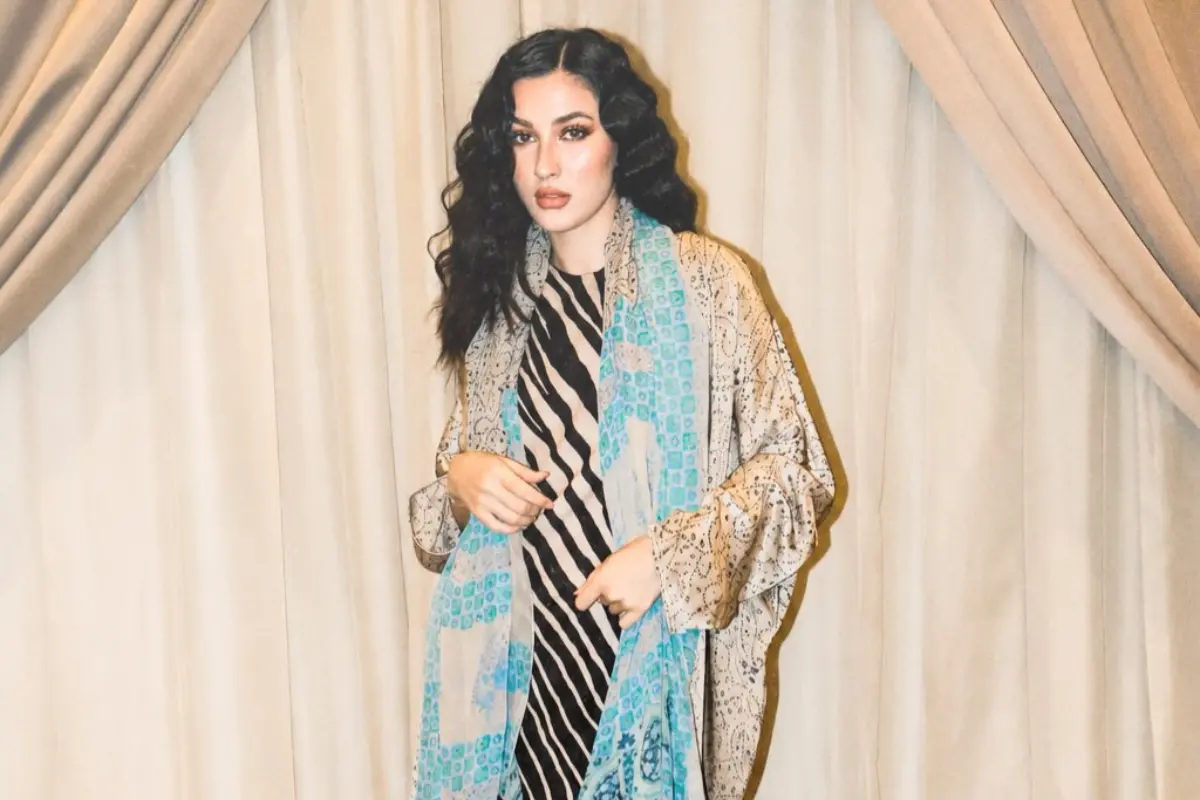

Scroll through your favorite brand’s website or latest campaign, and you might notice something different: some of the models featured aren’t real people. Instead, they’re AI-generated—created through algorithms designed to mimic the look, diversity, and poses of human beings.
Major brands like Mango, H&M, Levi’s, and Zalando have all begun experimenting with AI in their content production. Zalando, for example, reports that 70% of its product images are now generated with the help of AI, significantly reducing production timelines and lowering costs by up to 90%. For many companies, the appeal lies in efficiency and scalability.

This shift has sparked conversation across the industry and among consumers. On one hand, AI opens up new creative and logistical possibilities. Brands can instantly create visuals featuring diversity of skin tones, body types, and aesthetics—something that previously required a full team and considerable resources. Some see this as a way to embrace diversity more easily, while others question whether virtual representation truly counts.
The discussion also touches on the broader ecosystem of creatives—photographers, stylists, models, set designers—whose roles may be reshaped or reduced as brands explore digital alternatives. Some professionals have even started licensing their likenesses to AI platforms, suggesting a new kind of participation in the changing model landscape.
Debates around authenticity, representation, and the human touch in fashion continue to unfold. While AI-generated models offer brands an innovative way to meet demand, they also raise questions about what is gained—and what might be lost—when technology replaces traditional creative processes.
Case in point, in 2023, Levi’s introduced an AI-driven diversity initiative that generated mixed reactions. While the brand positioned it as a step toward broader representation, the campaign sparked debate online, with some observers raising concerns about the implications of using virtual models to reflect diversity. Discussions around digital bias also emerged, with critics pointing out that AI-generated features can sometimes be altered or homogenized, prompting questions about how authenticity and representation are interpreted in a virtual context.
One thing’s for sure, fashion is turning the page to a new chapter, where technology and creativity are learning to coexist. For some, it feels like progress, for others, it’s a disruption. Either way, it’s a shift that’s got everyone talking, and the conversation might only just be getting started.