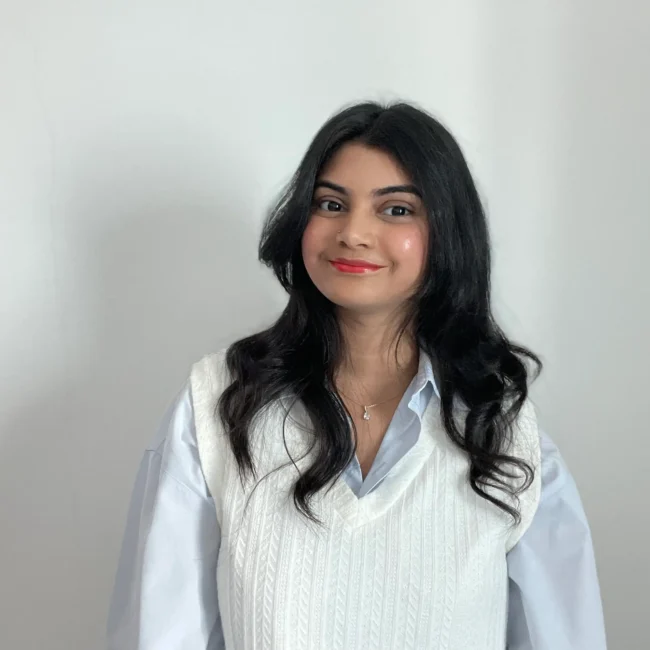

On a blank page, I can write my name to no avail. Squiggly, cursive, in big block letters with a 3D effect. But when I type it… a different meaning comes out of it. As a third-culture Indian woman, let’s just say my name is “unique”. But to autocorrect, it is plain wrong.
I’m not the only one to have this experience. Those born with names that are anything but Latin-derived will find the familiar red underline when typing their own names. Sometimes, autocorrect might fill it in, changing it to a word completely different. As if the name is too wrong, too “exotic” to ever be right.
But it isn’t just the keyboards. Growing up in Dubai, awkward introductions were a norm. We would repeat our names countless times, to get the pronunciation right, only for someone to finally say, “Don’t you have a nickname?” So our nicknames became our only names. The name saved for my friends and family, to those who cherished me, became the name teachers would call out when scolding, the name baristas would write on my cup, the name my boss would utter when assigning work. It seeped into every aspect of my life while my actual name was left in the shadows, bound by “difficulty”.

It was internalised in me till my introductions began with shaming my own name. “Hi, my name is Milrina. No-no, it’s not pronounced like that. I know it’s a mouthful, so just call me Milly,” I would say cheerily. After all, a little self-deprecation was harmless. Or so I thought till I finally got it back. The people I was introducing myself to would tell me their own new name, shortened and remade from the one they kept secret. In fact, as Dubai grew into the multicultural hub it is today, more and more diaspora came in with the same baggage—their name. I was surrounded by people who had either changed or shortened their names. The only difference was that I would still say mine out loud, soften it with bad humour, and offer my nickname as a consolation prize. The rest accepted the fact and moved on with a name that was a few syllables short.
Taking a look around, it made me think, ‘What’s in a name?’ Well, more than you would think. It carries heritage, history, symbolic meanings rooted in culture. There are names that carry out a family legacy, names that carry parents’ creativity, names that come straight from the Gods. And for a few moments of “difficulty”, these names are washed clean of their meaning, reshaped to fit across borders in a new society, dealing with new accents and new perceptions.

But beyond convenience, name changes were one of the few ways to push through prejudice. It’s how people moved up in the world and managed a successful life. That’s why Vera Mindy Chokalingam is known as Mindy Kaling. Or Farrokh Bulsara is known as Freddie Mercury. Beyond being palatable, names hold power, especially when trying to assimilate.
But names reflect the culture and history of their wearers. And assimilation doesn’t require ignoring that. With just enough nicknames, I have met those who refuse to take one. Unapologetically themselves, they’ve grown into their name, shaping it just as it shapes them. We sit in the inconvenience, sounding things out till it’s right, and I move on with a name that I will never forget.
I realised how silly it all is. After making a few blunders and sounding things out, the name sticks, so why opt for a nickname? If I give others just a little time, a little grace, and refuse to follow through with a nickname, they can get it right, and there is nothing to hide. So I let them, allowing myself to be who I am. No shortcuts, no refittings, and definitely no nicknames.
It’s Milrina, pronounced Mil-Ree-Na. It’s not a mouthful, just sound it out.