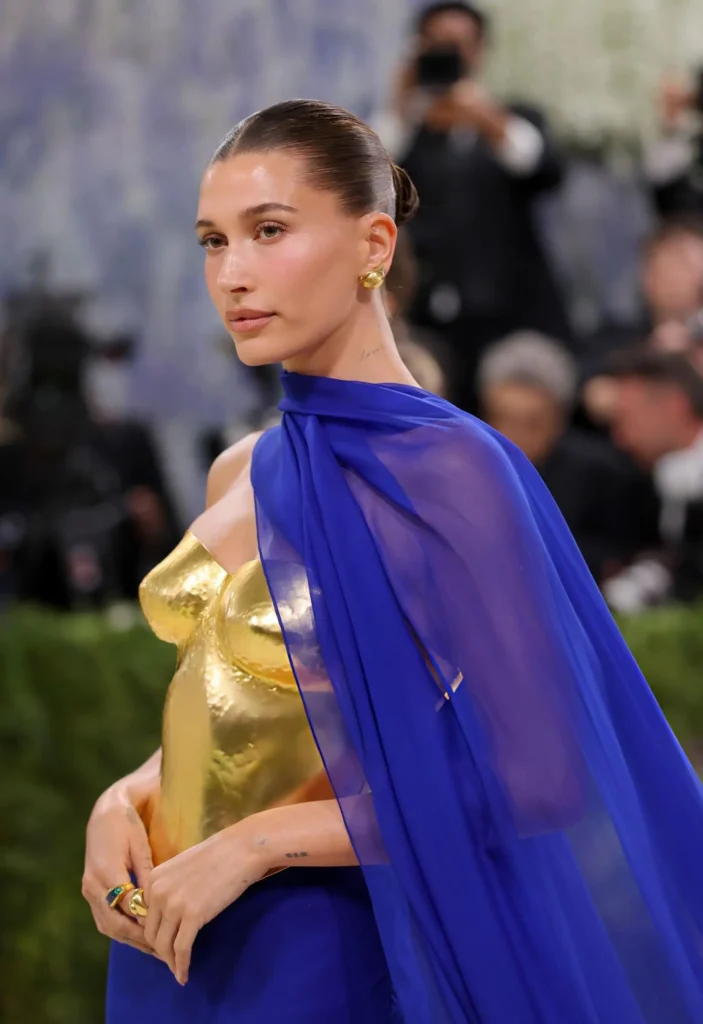
For the Met Gala, Hailey Bieber appeared in a gold sculptural bodice and cobalt blue maxi skirt. But the real detail that kept all eyes on the outfit was the matching scarf, delicately draped and transforming into a train behind her. Bieber isn’t the first, and certainly won’t be the last, to drape a scarf this way—the style has now become the new norm for mainstream audiences. But unlike other trends, this piece of fabric comes with baggage, where its resurgence is born from controversy rather than creativity.
In 2024, rental fashion company Bipty posted a now-deleted TikTok commenting about the style. Talking about plain sheer scarves draped over dresses, the post described the style as “European wedding fashion” and a “Scandinavian scarf”. The post quickly went viral for its obvious misinformation. To one community, this style wasn’t Scandinavian nor European; it was South Asian. Rooted in cultural memory, historical significance, and sometimes religious piety, the dupatta, as it’s called, is an integral part of South Asian fashion. For some, it’s a way to show off a particular pattern or embroidery, while for others, the dupatta serves as a form of modesty. It is worn over nightdresses, school uniforms, work clothes, and is synonymous with the community.
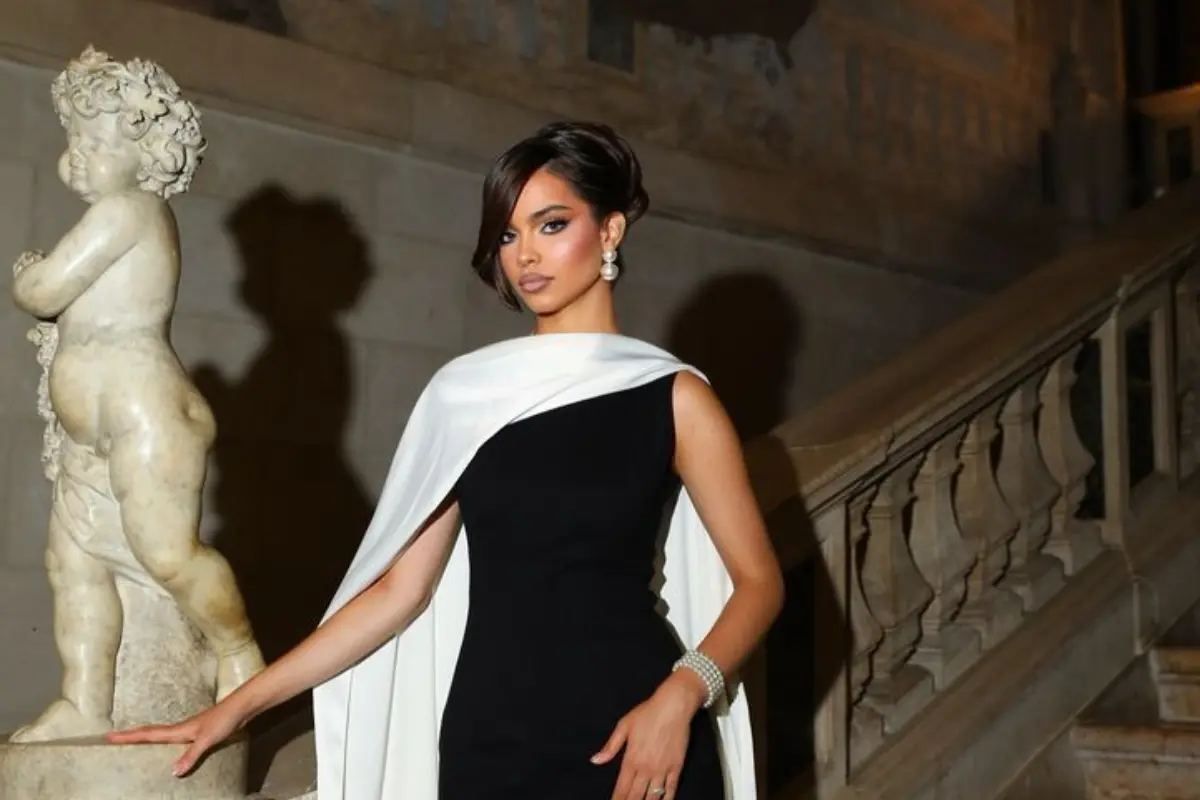
Until 2024 that is. Bipty immediately deleted the controversial TikTok and posted an apology, citing that they didn’t know the style’s true origins. But things never fully go away on the internet. While South Asians began humourously posting their dupatta-clad outfits, calling them Scandinavian scarves, the actual style did take off amongst Western bridal wear and occasion wear.
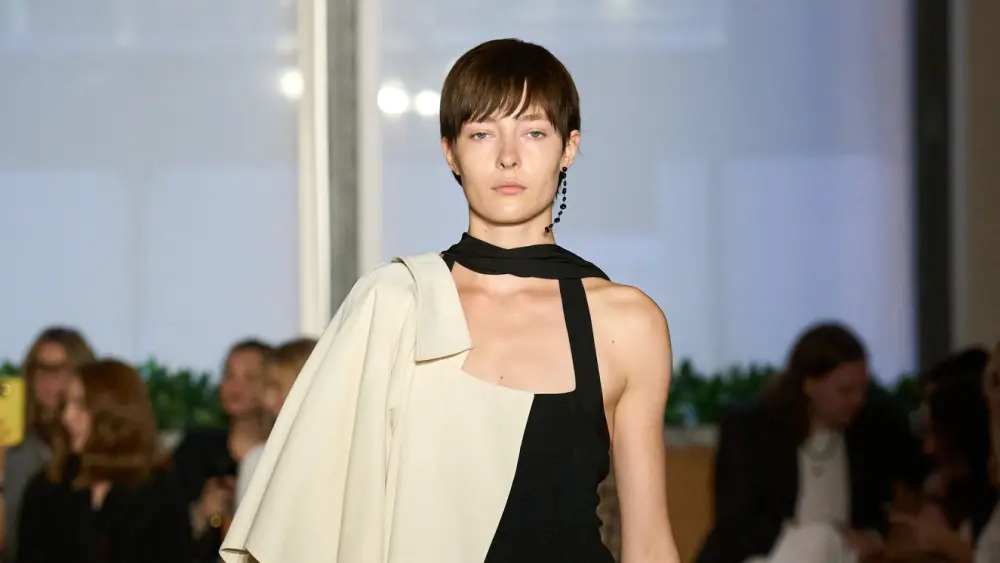
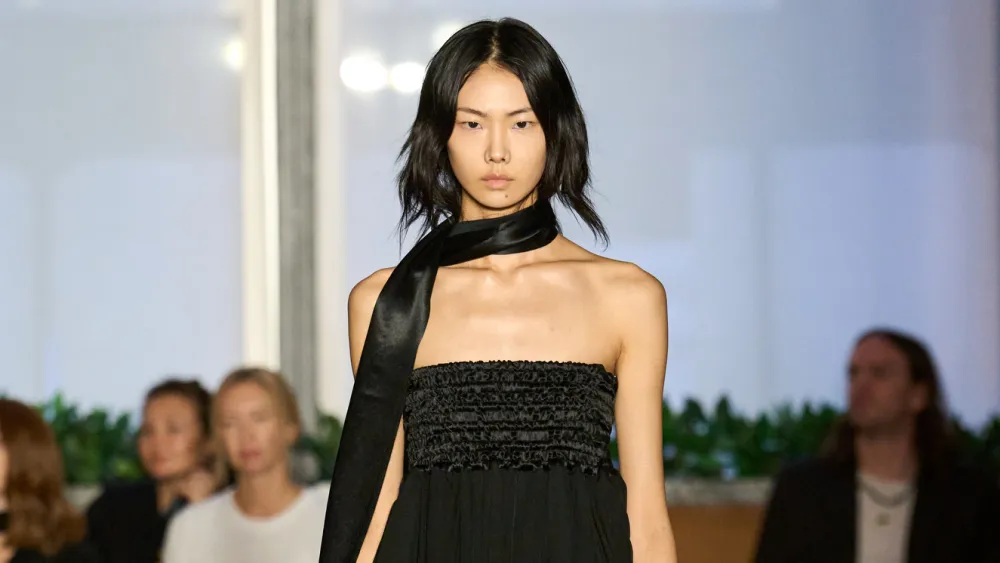
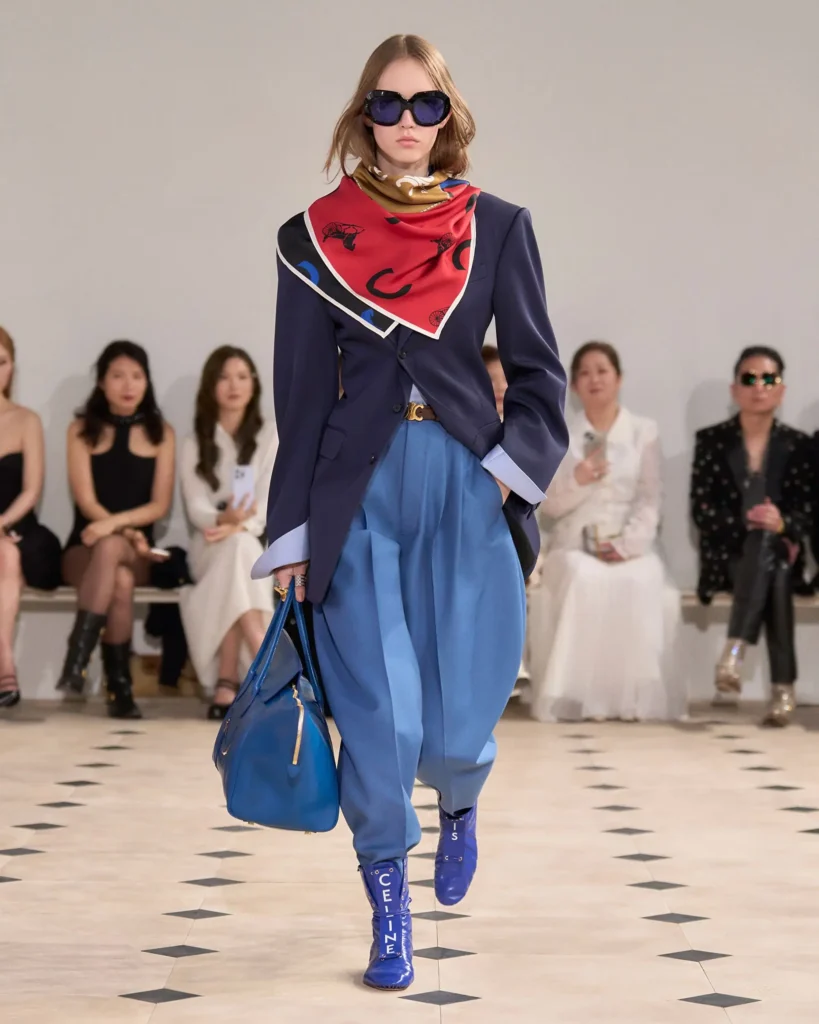
And while we’re yet to see the style across the major fashion capitals, runways across regional fashion weeks have begun to sport the style. However, scarves on their own are becoming more and more prominent in the fashion industry and the fashion-forward crowd. At Celine’s SS26 show, foulards or scarves were all over the runway. The same can be said for Hermes, who fashioned scarves into chokers and tropical tops.
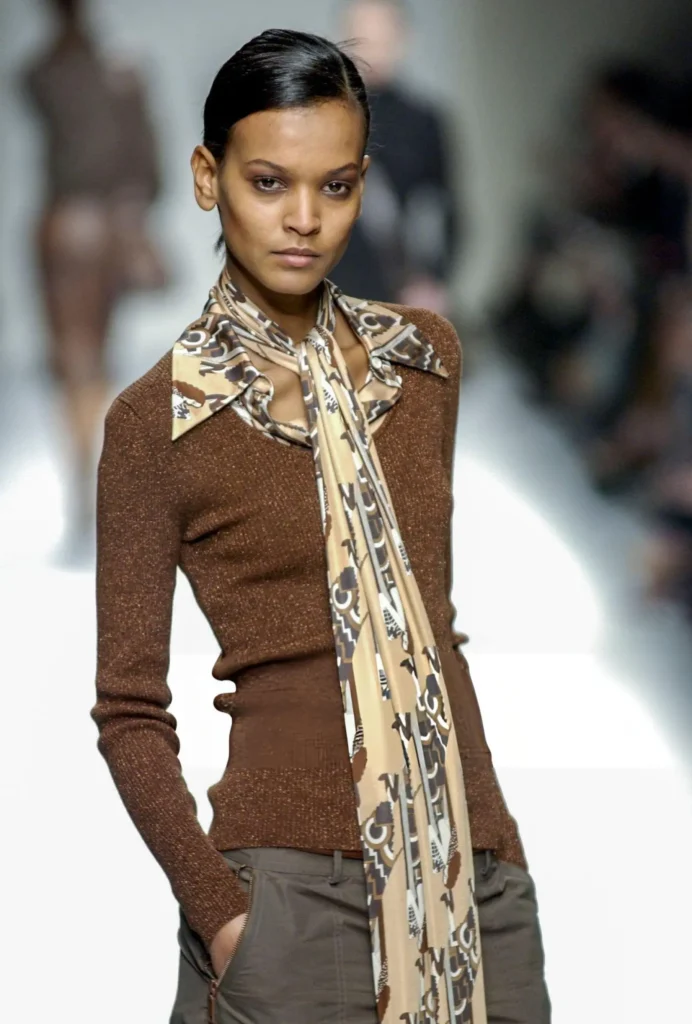
Whereas, when you look back at it, the dupatta style did have its Western parallel. While the current draped scarf style being used is an obvious reference to the South Asian style, scarves used as an accessory are not new. In the mid 2000s, the “thin scarf” or “choker dupatta” was all the rage. What we would call a microtrend of its time, this tie-meets-scarf was a skinny piece of fabric wrapped around the neck in place of a necklace. They were impractical and kitschy and brought the fun to dressing up. To mainstream audiences that have no knowledge about South Asian culture, this new scarf detail is just an evolution of that trend, especially considering that we are so culturally tied to the Y2K movement.

But for those in the know, this style of drapery didn’t come out of thin air. Even when making the argument that the scarves used are too plain to be called a dupatta, we can point to ‘90s Bollywood films where actresses like Kareena Kapoor and Aishwarya Rai Bachchan would pair pastel dupattas with spaghetti strap kurtis. It was far from ‘90s traditional wear, but over time, it became ingrained in the fabric of South Asian pop culture and style.
Despite its initial backlash, with the recent Hailey Bieber appearance, the style has made itself clear; it will be staying for the foreseeable future. And when we think about how the rising cost of living can impact our fashion purchases, switching a one-time necklace for a versatile scarf sounds like a no-brainer. But even when we look at it from a style perspective, the draped scarf has outlived centuries for a reason.