
Every summer brings a new swimwear trend. Tiny bikinis, nostalgic one-pieces, crochet sets, sporty silhouettes. Most arrive, dominate our feeds for a few weeks, and quietly disappear. The burkini has never enjoyed that same fleeting popularity.
More than fifteen years after its introduction, it remains one of the few clothing items that consistently sparks worldwide discussion, not due to shifting styles seasonal colors, but because of everything people project onto it.
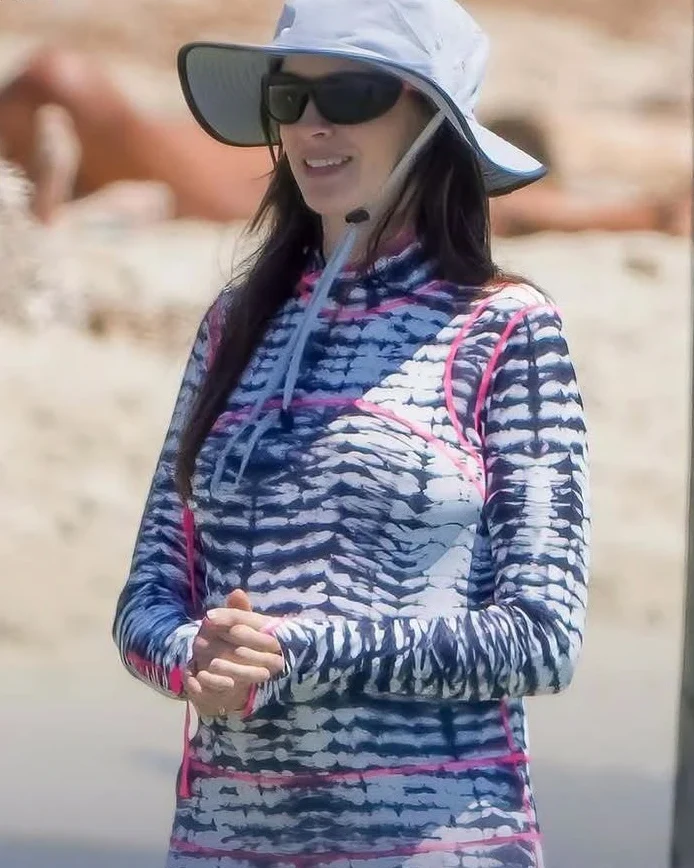
This week, that conversation resurfaced after Anne Hathaway was photographed in Saint-Tropez wearing a full-coverage red wetsuit. The internet was quick to draw comparisons between her beach look and the burkini, with many questioning why one version of modest swimwear is applauded as practical while another continues to provoke controversy.
Few pieces of clothing have gained as much cultural, political, and social significance as the burkini. Originally designed to allow Muslim women to enjoy swimming while dressing modestly, it has since become something much larger than swimwear. Depending on who’s looking, it has been interpreted as a symbol of religious expression, female empowerment, oppression, political identity, or resistance. Very few garments are expected to bear such a wide range of conflicting meanings.
Commentators are pointing that when celebrities wear full-coverage swimwear, the discussion typically focuses on practical aspects such as sun protection, athletic performance, privacy, pregnancy, and personal choice. However, when Muslim women opt for similar levels of coverage, the conversation often takes a different direction. The same style of clothing can suddenly become a subject of political discussion. This contrast highlights an uncomfortable reality: our judgments about clothing are often influenced more by the person wearing it than by its appearance. A long-sleeved swimsuit, for instance, does not inherently carry controversy. It is the individual who wears it that determines whether it is seen as a fashion choice or a statement of ideology.

Fashion has long been a reflection of society’s values and beliefs. This is why the burkini continues to make news years after its initial introduction. Unlike many other clothing items, the burkini represents a unique intersection of fashion, religion, identity, feminism, politics, and personal freedom. It raises questions that go beyond the realm of aesthetics. It challenges us to consider who gets to define what empowerment means.
It also prompts discussion about whether modesty can be a personal choice. Furthermore, it highlights how one woman’s understanding of freedom may differ from another’s. These discussions remain ongoing and unresolved. As a result, the topic continues to appear in the media.
The fashion industry increasingly embraces modest fashion on runways, campaigns, and luxury collections. Designers are recognising a global customer who has always existed. And yet, public conversations around modest swimwear continue to reveal discomfort whenever religious identity becomes visible. It exposes a contradiction between celebrating personal expression in theory and accepting every expression in practice.