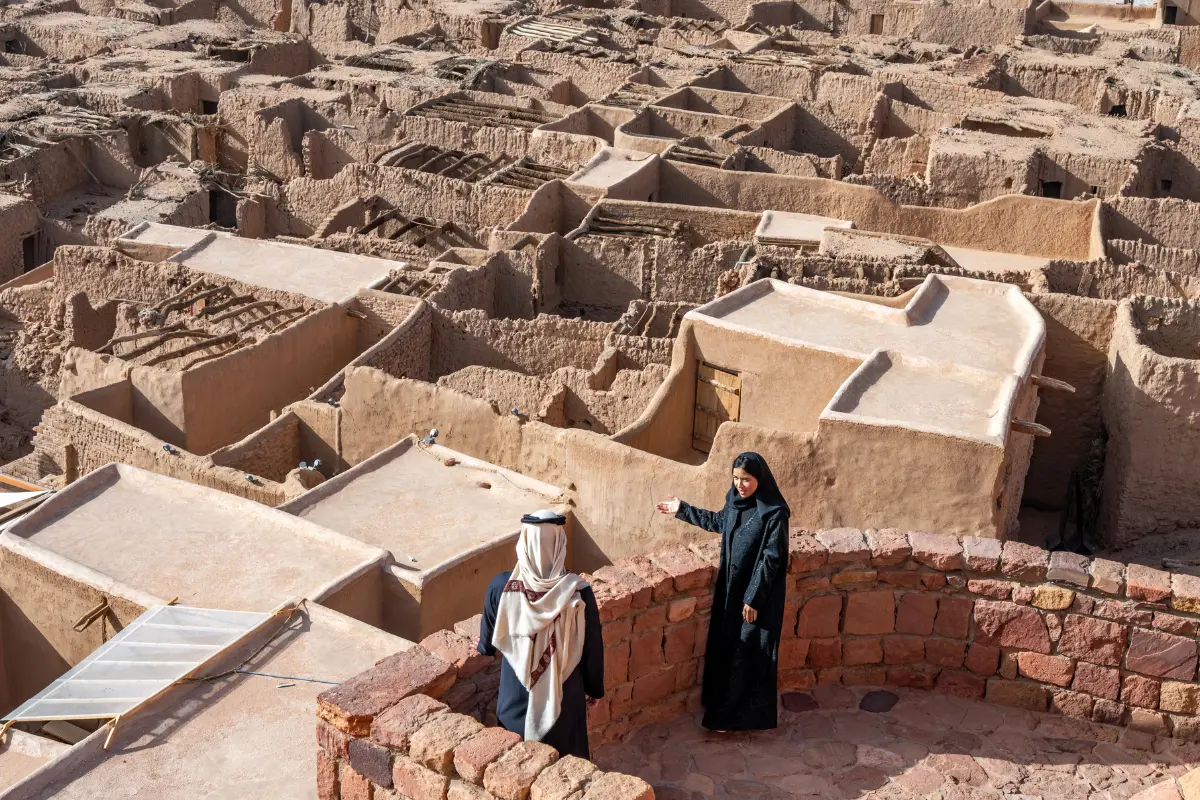
The ancient city of AlUla comes with fascinating desert landscapes that hold thousands of years of human civilisation. And with them come the Rawis, people of AlUla, trained and passionate to keep the tradition of storytelling alive. These cultural guides share their heritage alongside their own real-life experiences, allowing visitors to fully immerse themselves to life in AlUla. While understanding Rawis may not be common knowledge, UNESCO have bridged that gap with a public photography exhibition. Titled ‘I am a Rawi: Sharing Stories from AlUla’, the exhibit portrays the cultural heritage of AlUla in the Kingdom through the lens of its Rawis.
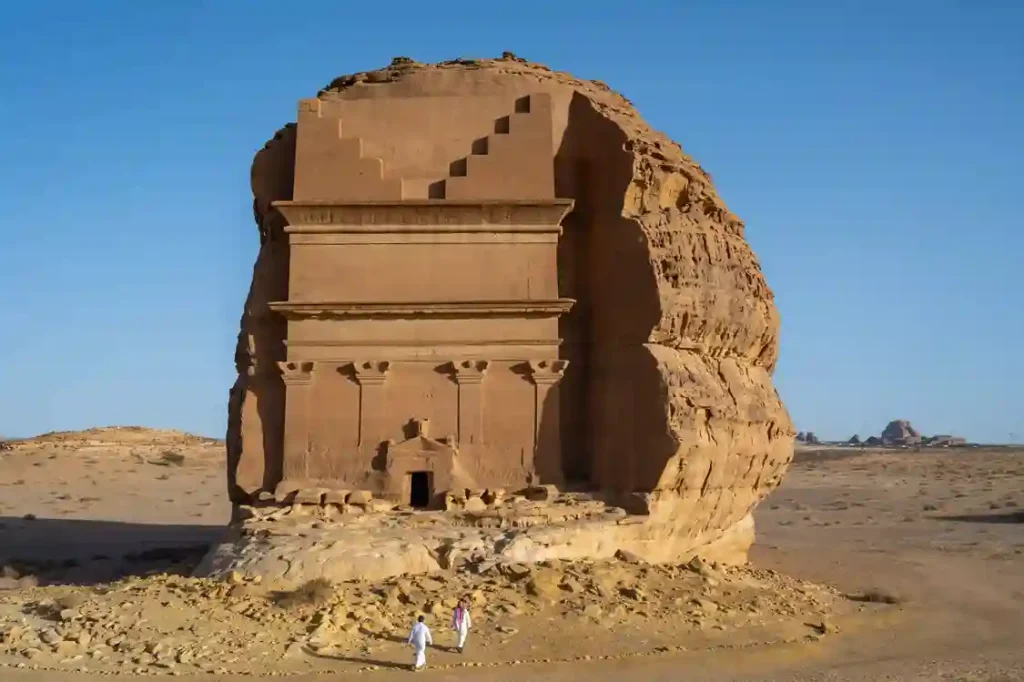
Photographed by Nick Jackson, the photos are wide landscape shots, with the camel-coloured AlUla environment juxtaposed by the Rawis. Presented at the external gates of UNESCO Headquarters in central Paris, the exhibition is set to run until August 31, 2026. The opening week featured some of the Rawis photographed. Rawis Adel and Amal led guided tours of the exhibition in a full circle moment.
Instrumental to Saudi Arabia’s cultural fabric, this isn’t the first time UNESCO have worked with the Rawis. More recently, the organisation collaborated with the storytellers, creating an interactive experience called ‘Qissa bi Qissa,’ or Swap a Story, a localised version of UNESCO’s Live Museum model, which turns heritage sites into platforms for dialogue, placing the people at the centre of heritage interpretation. The sessions, facilitated by the Rawis, involve using artefacts to discuss topics such as human migration, belief systems and shared cultural experiences.
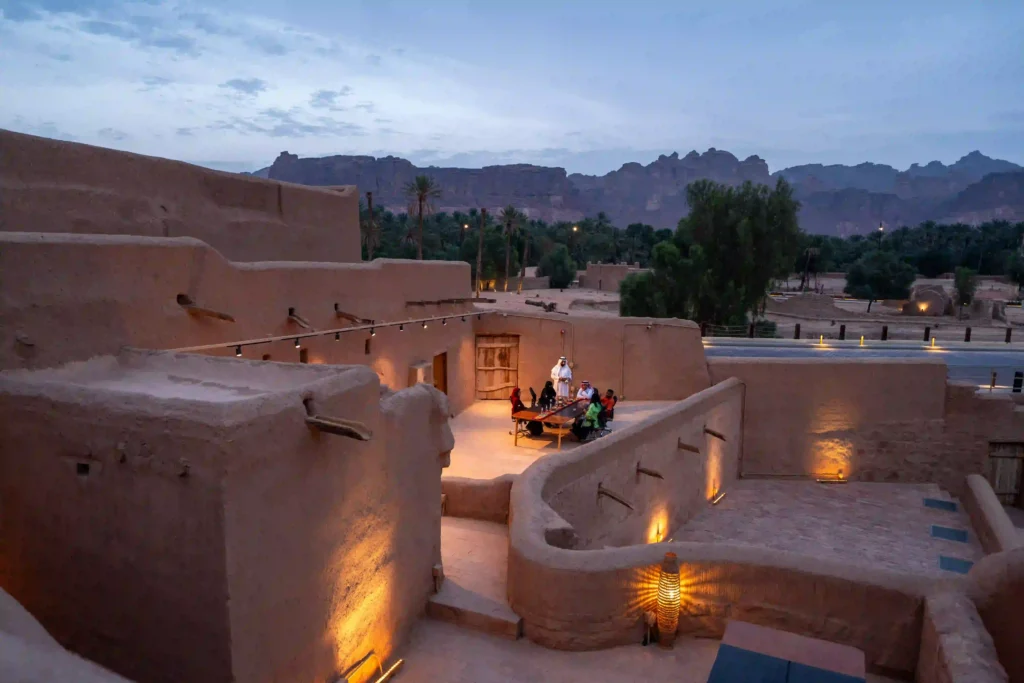
“In an era increasingly shaped by AI-generated experiences, the Live Museum model offers a compelling alternative,” said Phillip Jones, Chief Tourism Officer for the Royal Commission for AlUla. “It is grounded in human-generated stories and authentic encounters, creating moments of authenticity that foster meaningful engagement and lasting memories for visitors. Our own research indicates that 79% of leisure travellers want immersive cultural experiences. At its heart, the “Qissa bi Qissa” experience leverages dialogue and storytelling to encourage visitors to engage with heritage in ways that deepen understanding and genuine connection with peoples and places.”
And we cannot help but agree. As people continue to get exhausted by the digital world, cultural experiences like “Qissa bi Qissa” pull us into the ingenuity of human life, a facet AI cannot replicate. Between going analogue, the resurgence of print media, and the appetite for slower social media like Substack, it was only a matter of time that these habits bleed into our tourism cravings, looking for evidence of human heritage instead of the next trending space.