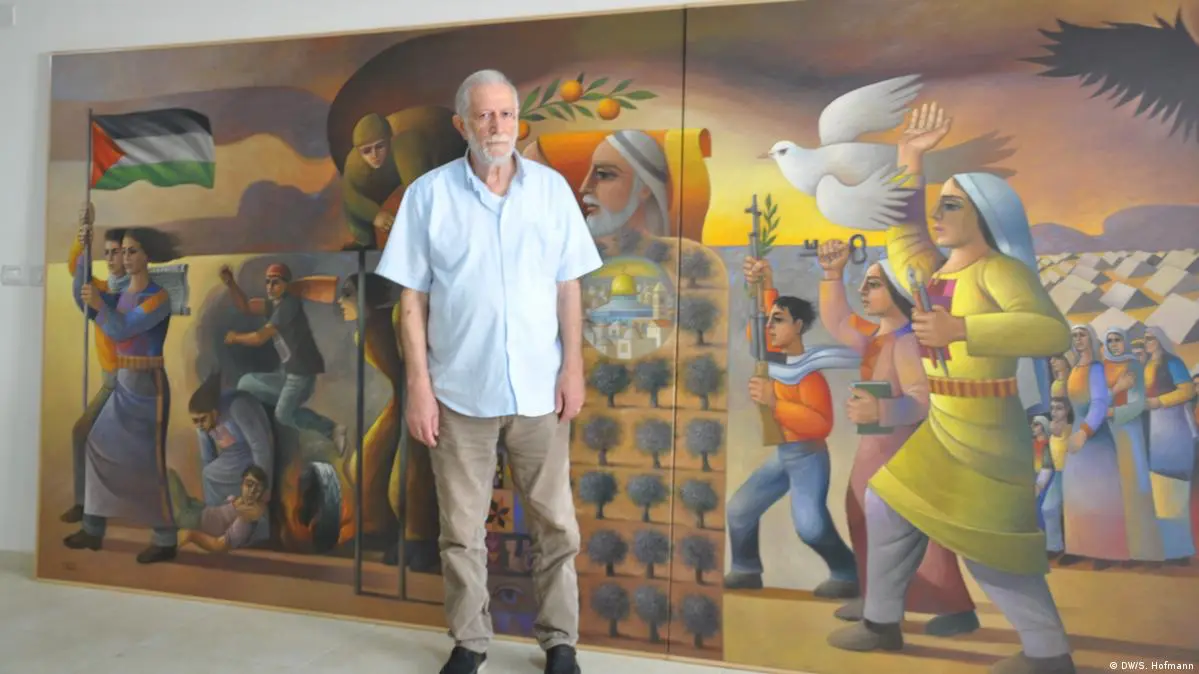
Palestinian artist Sliman Mansour, one of the most influential figures in contemporary Palestinian art, has died at the age of 79. His family announced his death on Monday, August 24, after earlier sharing that the artist was in critical condition. A cause of death has not been publicly disclosed.
“The final chapter has been written,” his family shared in announcing his passing, describing the legacy he leaves behind as one rooted in “beauty” and “memory.” Funeral and memorial details are expected to be announced at a later date.
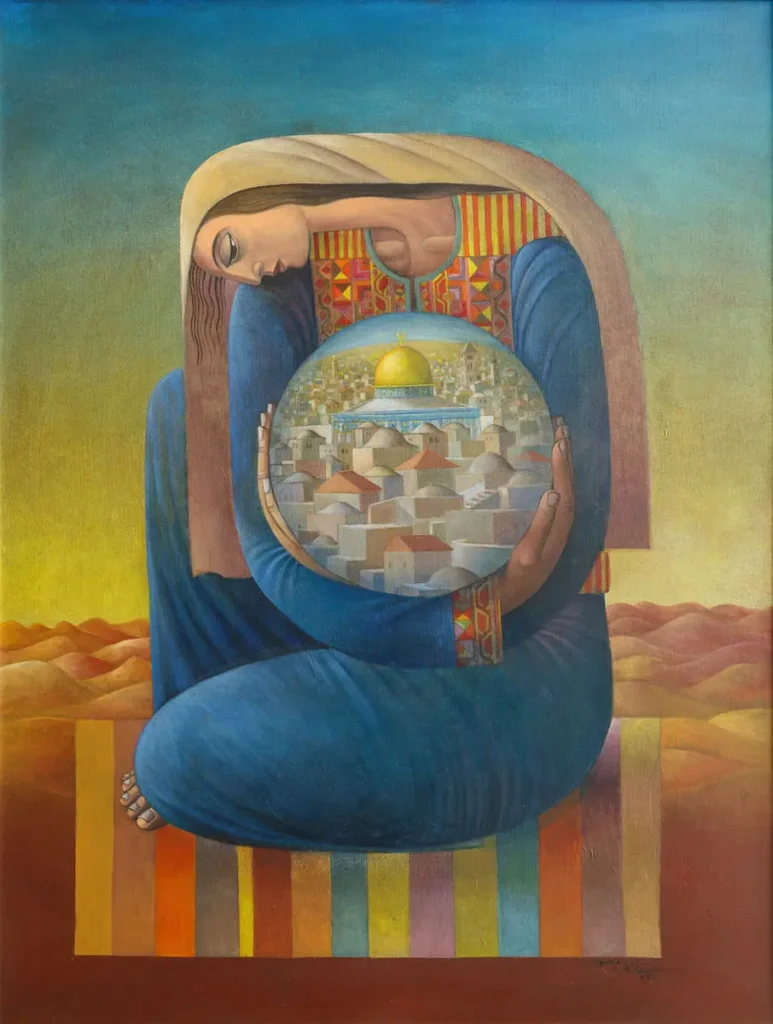
Born in Birzeit, Palestine, in 1947, Sliman grew up between Birzeit, Bethlehem and Jerusalem before studying fine art at the Bezalel Academy of Arts and Design in Jerusalem. Over a career spanning more than five decades, his paintings, sculptures and mixed-media works became closely associated with Palestinian cultural memory, depicting the land, olive and orange trees, Jerusalem, traditional embroidered dress and scenes of everyday Palestinian life.
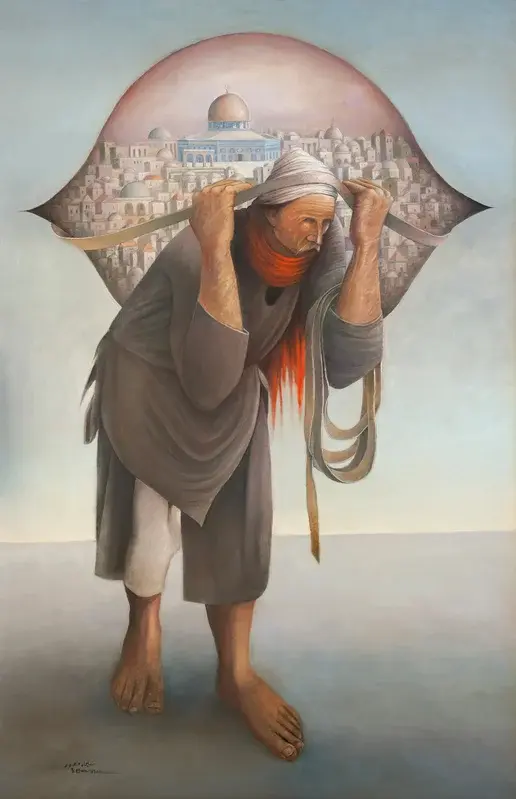
Perhaps none became more recognisable than Camel of Hardship, created in 1973. The work depicts an elderly Palestinian man carrying Jerusalem on his back, with the Dome of the Rock rising from the city he bears. Reproduced extensively as prints and posters, the image became one of the defining works of modern Palestinian art and a visual shorthand for displacement, endurance and attachment to homeland.
Sliman’s practice was never limited to representing Palestinian experience on canvas. In 1973, he helped establish the League of Palestinian Artists, contributing to the development of an artistic infrastructure in Palestine at a time when formal institutions and exhibition spaces were limited. During the First Intifada, he joined Vera Tamari, Tayseer Barakat and Nabil Anani in founding the New Visions group, turning away from imported art supplies and working instead with locally available materials including mud, straw and henna. For the artist, the material itself could become an extension of the land his work sought to preserve.
His influence reached well beyond Palestine. His work was exhibited internationally, including at the Sharjah Biennial, Institut du Monde Arabe in Paris and Cairo Biennial, where he received the Grand Nile Prize in 1998. In 2019, he was awarded the UNESCO-Sharjah Prize for Arab Culture in recognition of his contribution to Palestinian and Arab culture.
Yet the power of his work remained rooted in something deeply familiar, a woman in an embroidered dress, an olive harvest, a stone terrace, a view of Jerusalem. Through them, he created images that travelled far beyond galleries, becoming part of a shared Palestinian visual memory.
Sliman once described the land as his “main inspiration.” Across more than half a century of work, it remained exactly that, not simply a backdrop, but subject, material, memory and home.