If New York gave Fashion Month its opening act, London has wasted little time reminding us why its fashion week feels entirely different.
The Spring/Summer 2027 schedule officially kicked off on 17 September, and only two days in, London has moved from intimate hotel salons to Victorian churches, cavernous basement clubs, skate spaces and the Design Museum. There has been a 40-metre interactive H&M runway, a fashion debut 100 years in the making at M&S, a return to the catwalk after two years for Mowalola and an especially impressive showing from the city’s younger designers.
These are the shows and moments that are making the headlines.
Harris Reed Strips Things Back, Relatively Speaking
For a designer whose vocabulary usually includes towering platforms, architectural silhouettes and more than a little theatricality, Harris Reed opened his latest chapter with unexpected restraint.
His Spring 2027 show was also his first namesake collection since leaving Nina Ricci, and the change of pace was immediately obvious. For the first time in years, models were not balancing on 18-centimetre platforms. Instead, Reed staged an intimate salon-style presentation inside the Mandarin Oriental ballroom in Knightsbridge, complete with pre-show dirty martinis and a collection conceived around the women who actually buy his clothes.
Colour was almost entirely stripped away too. With the exception of a hand-painted creamy-gold duchess satin jacket, a sequinned corset and the finale, nearly everything arrived in white. The designer described it as a kind of “phantom” reflection on the 11 seasons he has spent building his label.
That did not mean abandoning his signatures. Caged constructions remained, but they no longer swallowed the entire collection. Attention shifted towards hand-painted organza, silk brocade, double duchess satin and panels of florals and animal markings worked into skirts and trousers. The closing bridal look, its crinoline deliberately exposed, delivered the Harris Reed drama regulars would have been waiting for without undoing the quieter mood that came before it.
On the front row: Ashley Graham was among the recognisable names in attendance.
There is a sense that Reed is editing his own mythology rather than trying to reinvent it completely, and it made this one of the more interesting shows of opening day.
H&M Turned Olympia Into Part Runway, Part Concert, Part Digital Experiment
Then came the complete opposite of intimate.
H&M closed the opening day at Olympia London with H&M&YOU&I, an enormous production creatively directed by Nick Knight and SHOWstudio. Although presented during the SS27 edition of LFW, the clothes were drawn from H&M’s Autumn 2026 womenswear offer, Studio line and Atelier menswear collection.
The scale was hard to ignore. Brazilian ballerina Ingrid Silva opened the show with choreography designed to activate the lighting along a 40-metre runway. Curved mirrors, moving imagery and interactive AI visuals developed from Nick Knight’s photographs surrounded the models, while Labrinth handled the soundtrack. Around 700 guests watched from inside Olympia.
And there were plenty of models to recognise. Alex Consani opened the fashion portion in ivory jacquard and lace, while Paloma Elsesser, Lila Moss, Karen Elson, Kristen and Lily McMenamy and Archie Renaux were among those walking. The clothes moved through three different moods, romantic Victorian and Edwardian references first, with ruffled blouses, cropped military-style jackets and corseted minis; sharper city dressing next; then a more eclectic wardrobe of denim, leather, layered accessories and pieces that looked deliberately collected rather than coordinated.
The finale pushed the show firmly into performance territory. Consani and Renaux delivered a spoken-word interpretation inspired by I Want to Know What Love Is before Labrinth performed the song live, with Consani appearing in a huge cream ruffled gown.
The guest list matched the production.Tems, Myha’la, Laura Harrier, Cruz Beckham, Kim Petras, Grace Van Patten, Jackson White, Audrey Nuna, Manu Ríos, Omar Rudberg and Leomie Anderson were among those spotted.
It was not the purest SS27 fashion proposition of the week, but as a Fashion Week moment, H&M understood the assignment.
Mithridate Went Clubbing With the New Romantics
Daniel W. Fletcher approached his fourth collection for Mithridate through the lens of the New Romantics — not simply their clothes, but their habit of taking whatever was available and turning it into a fantasy.
The venue helped. Guests descended into a cavernous basement transformed into a nightclub, arriving to Angelo Badalamenti’s Twin Peaks music before a David Bowie-heavy soundtrack took over.
On the runway, that translated to candy-pink tutus worn against structured shirting, military braiding, tiny knit shorts, gauzy knits, corsetry worked into menswear and a vivid red dress nodding to John Waters’s Pink Flamingos. One of the collection’s most intricate pieces was a tartan formed from individually counted strands of beads, while another dress built its shape through pointed feathers. A new Mithridate monogram also made its first appearance.
The front row had a particularly strong British screen contingent too, Hunter Doohan, Asa Butterfield, Douglas Booth, Shazad Latif, Victor Alli and Saffron Hocking were all photographed at the show.
Francesca Lake Made One of the Debuts Worth Remembering
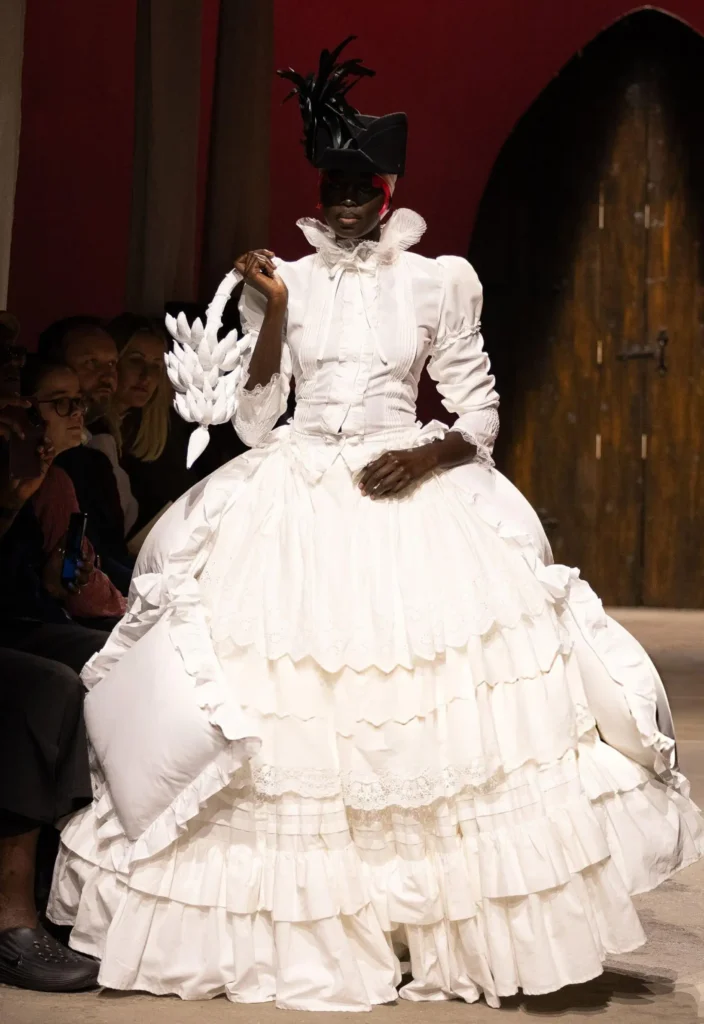
London Fashion Week is at its best when a new designer suddenly makes everybody look up, and BFC NewGen designer Francesca Lake delivered one of those moments.
Her collection, Wake the Town, looked to her Jamaican heritage and to the double meaning of a wake — mourning, but also a celebration of life. The resulting procession brought together towering feathered tricornes, crinolines, white lace and black mourning dress with snake-print leather, pearl corsetry and ornate denim.
Lake was particularly interested in the visual language of class. One crinolined figure carried a bunch of white-painted bananas in the manner of an aristocratic parasol, referencing a 1919 image of female market traders in Kingston and placing working-class Jamaican imagery into poses traditionally associated with wealth and status.
For a first LFW outing, there was already recognisable brand DNA. Personal and visually memorable without feeling like a collection designed solely to generate runway photographs.
Bora Aksu Found Romance Inside a Victorian Church, and Then Made It Darker
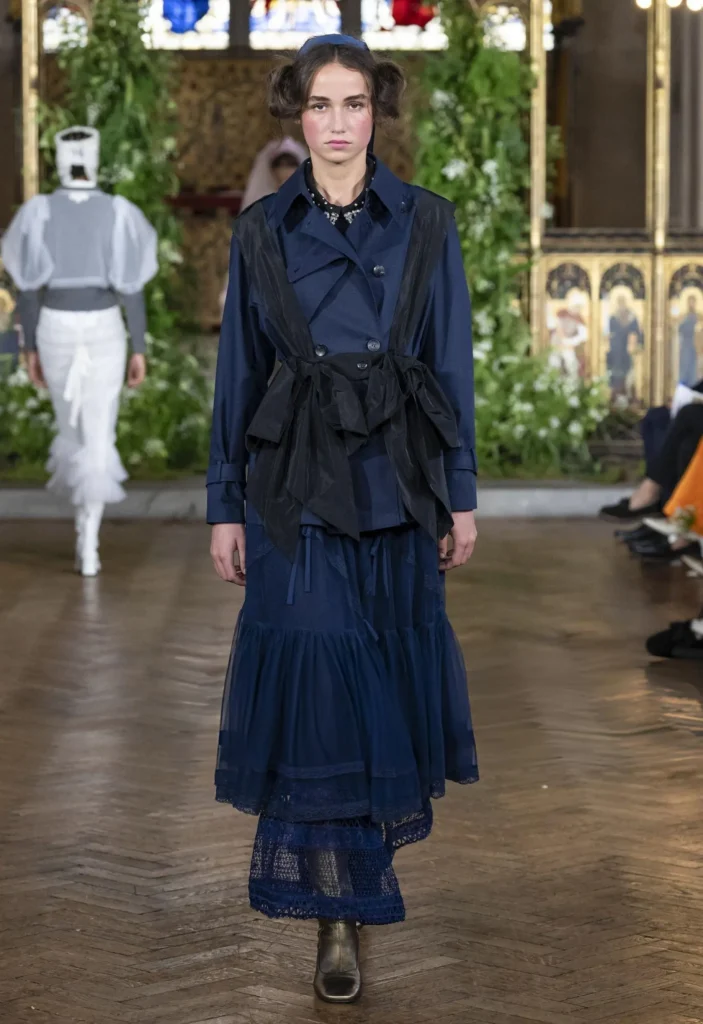
Bora Aksu knows his way around a romantic dress, but SS27 was most interesting when that romance started to turn.
Inside St Cyprian’s, Clarence Gate, the first models appeared almost like pastoral brides, puff sleeves, broderie anglaise, lace-edged ruffles and airy white layers drifting down the church aisle. Gradually, things became firmer. Tailoring and trench coats arrived, followed by bib-like harnesses, apron ties and tightly cinched sashes. By the finale, the palette had shifted into deep oxblood, with exposed corsetry and threads climbing across bodies like roots.
The historical starting point was Mary Beale, the 17th-century painter widely regarded as Britain’s first professional female artist. Bora drew from both her portraits and her unusual independence for the period, bringing elements of 17th-century menswear into his otherwise romantic silhouettes.
After visiting Gaziantep in Türkiye, the designer incorporated a centuries-old local lace-making technique created by women in the region. Traditionally used for household textiles, the painstaking method can take several months to complete; he brought it into clothing for the collection.
M&S Had Its Fashion Week Moment, 100 Years After It Started Selling Clothes
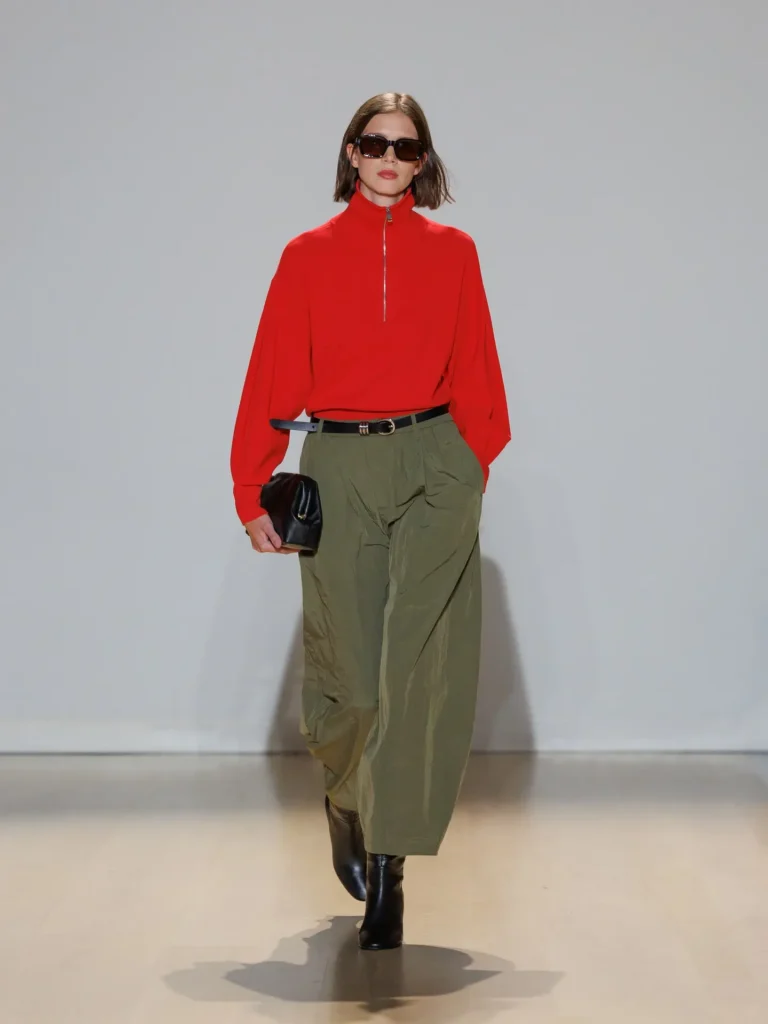
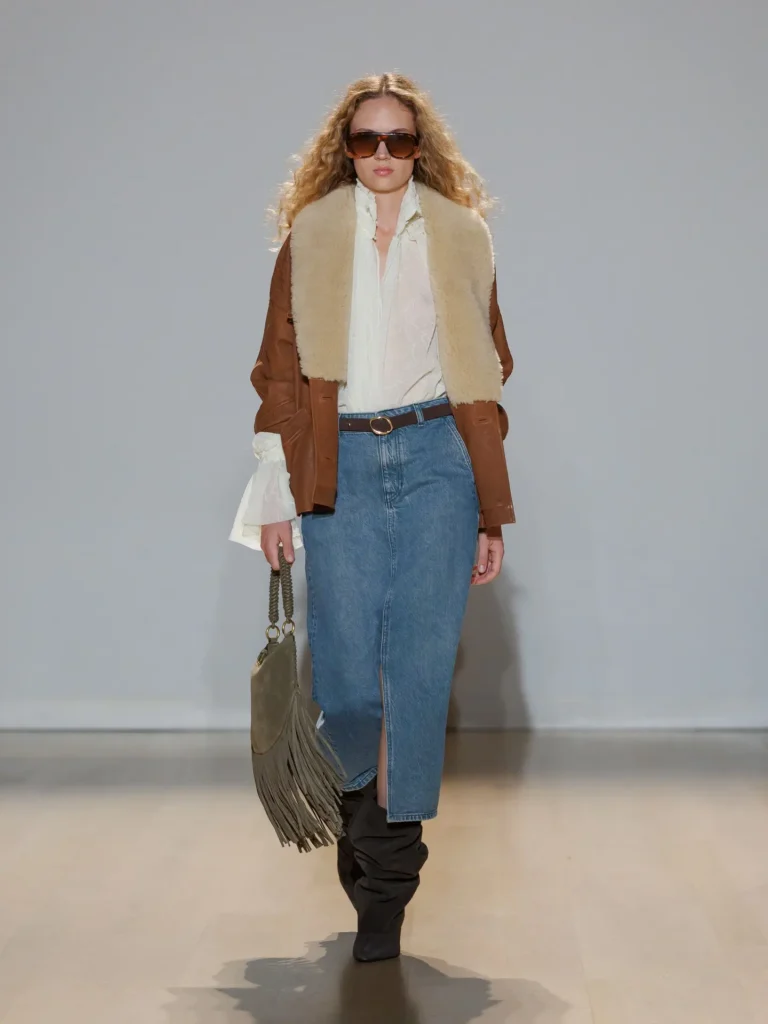
Perhaps no London Fashion Week sentence sounded quite as unlikely a few years ago as: Dame Joan Collins is sitting front row while M&S sends supermodels down the runway.
And yet here we are.
To mark 100 years since it began selling clothing, Marks & Spencer staged its first-ever LFW catwalk at the Design Museum. Like H&M, this was not technically an SS27 collection: the 59-look show centred on the retailer’s Autumn/Winter 2026 offer and went on sale immediately afterwards.
The archive supplied the starting point. Tuxedos, white shirts, twinsets, knitwear, trench coats, vintage florals and familiar St Michael references were reworked alongside black velvet, satin, sequins, suits and denim.
Fashion Week can sometimes feel as though it is speaking entirely to itself. M&S doing the opposite — putting immediately shoppable clothing in front of a huge mainstream audience — was precisely what made its debut interesting.
Ashley Williams Made Domestic Nostalgia Wonderfully Strange
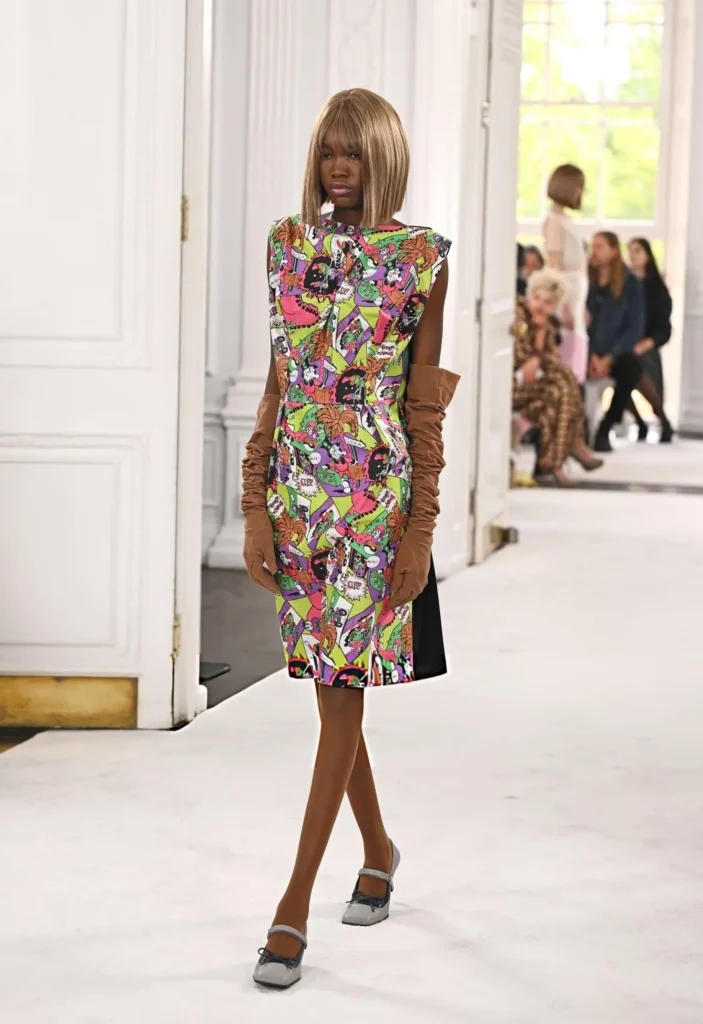
At the ICA, Ashley Williams once again proved that no one does unsettling girlhood quite like Ashley Williams.
Every model wore the same severe brown bob, setting up a collection that treated domestic nostalgia as something to pull apart and rearrange. Old-looking children’s bedsheets became house dresses and camisoles, soft toys were trapped inside hosiery, crumpled fabrics resembled wallpaper slowly slipping off a wall.
There were Scooby-Doo-like florals on tiny dresses, hot-pink frilled silk piled into backless shapes, exaggerated ’80s shoulders and sporty track tops abruptly meeting peach skirts and cheerleader pleats.
It was witty, slightly sad and intentionally odd, familiar objects from childhood made strange enough to become fashion.
Fashion East Reminded Everyone Why London Still Needs Fashion East
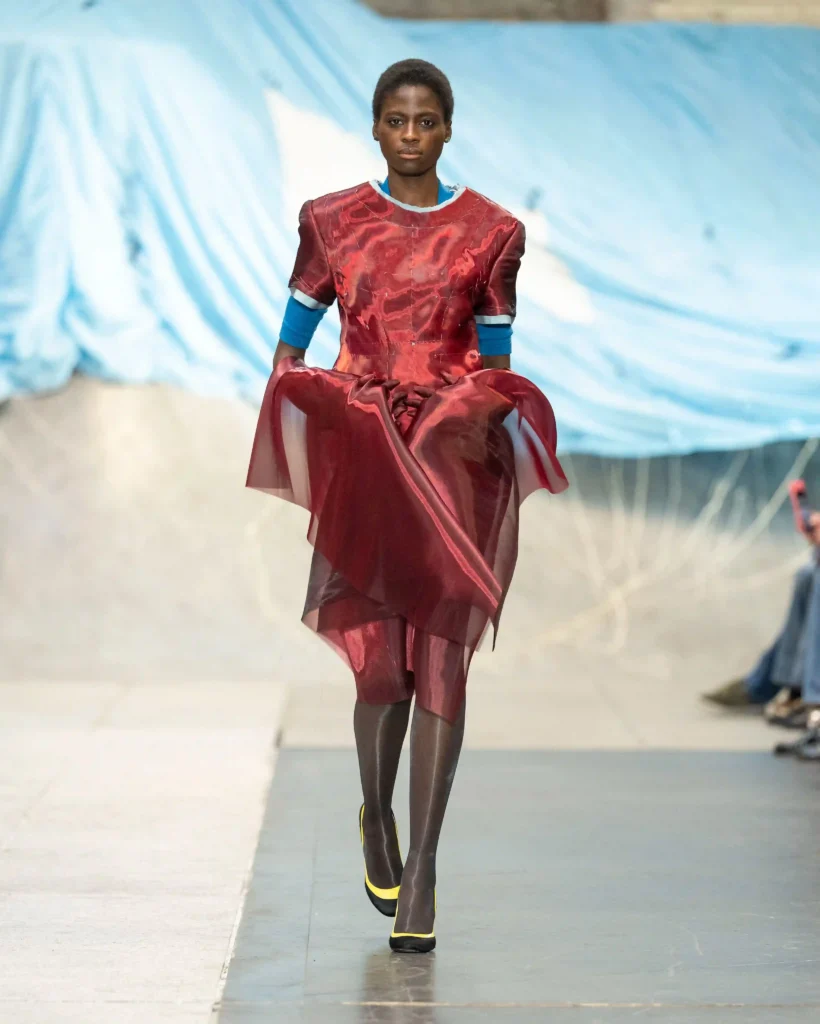
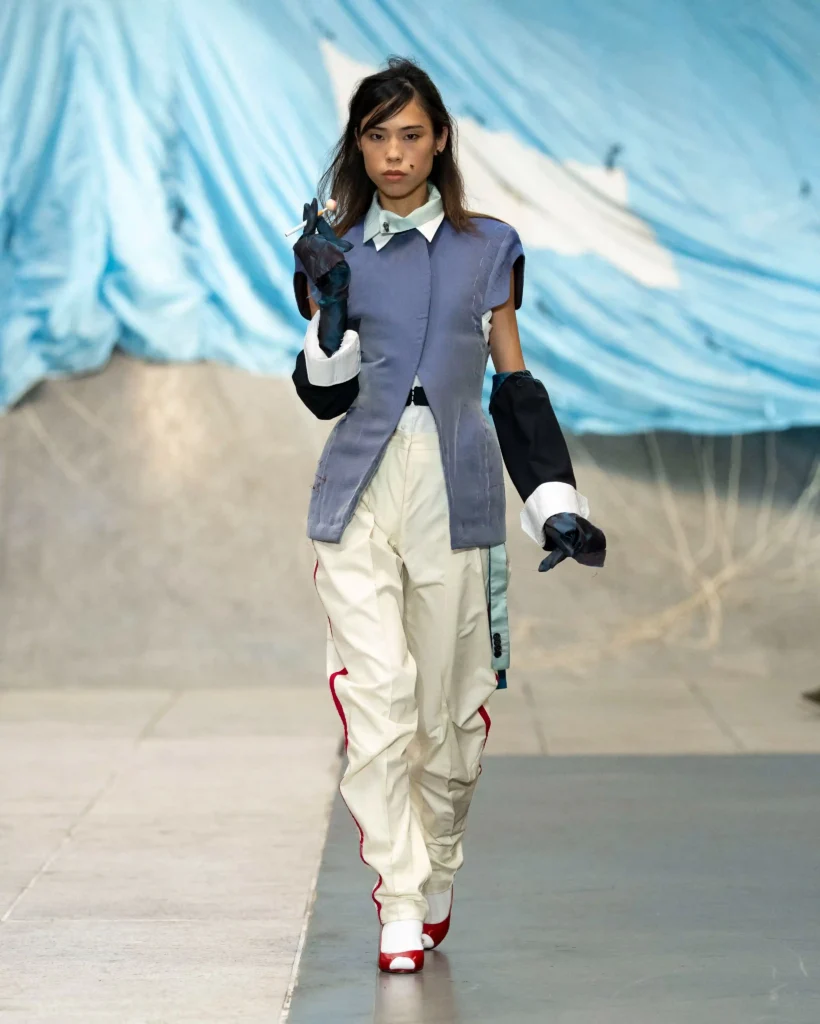
There are bigger shows on the London schedule, but very few institutions tell you as much about where London fashion might be heading next as Fashion East.
For its latest edition, Lulu Kennedy and Raphaelle Moore returned to the Palace x Nike skate space at Manor Place, this time suspending a huge blue paragliding canopy behind the runway.
The new arrival was Mé Mé, whose debut played with romantic clothes in various states of collapse, torn-apart organza, disrupted tailoring, netted veils and extraordinary headpieces covered with flies.
Jacek Gleba followed with cut-outs, lace and his now recognisable dancer-meets-pirate vocabulary, while Traiceline Pratt’s Goyagoma shifted between oversized workwear and narrow evening silhouettes, pulling in references to his Bahamian childhood — including a life jacket recreated in white leather. Louis Mayhew, meanwhile, marked what appeared to be his Fashion East farewell through a lookbook installed in the lobby rather than another conventional runway sequence.
Sabrina Elba and Miquita Oliver were among the names watching from the audience.
That mix of unfinished ideas, fully formed identities and designers still figuring out what they want to be is exactly why the show remains such an important London fixture.
Aaron Esh Explored the Less Obvious Side of Attraction
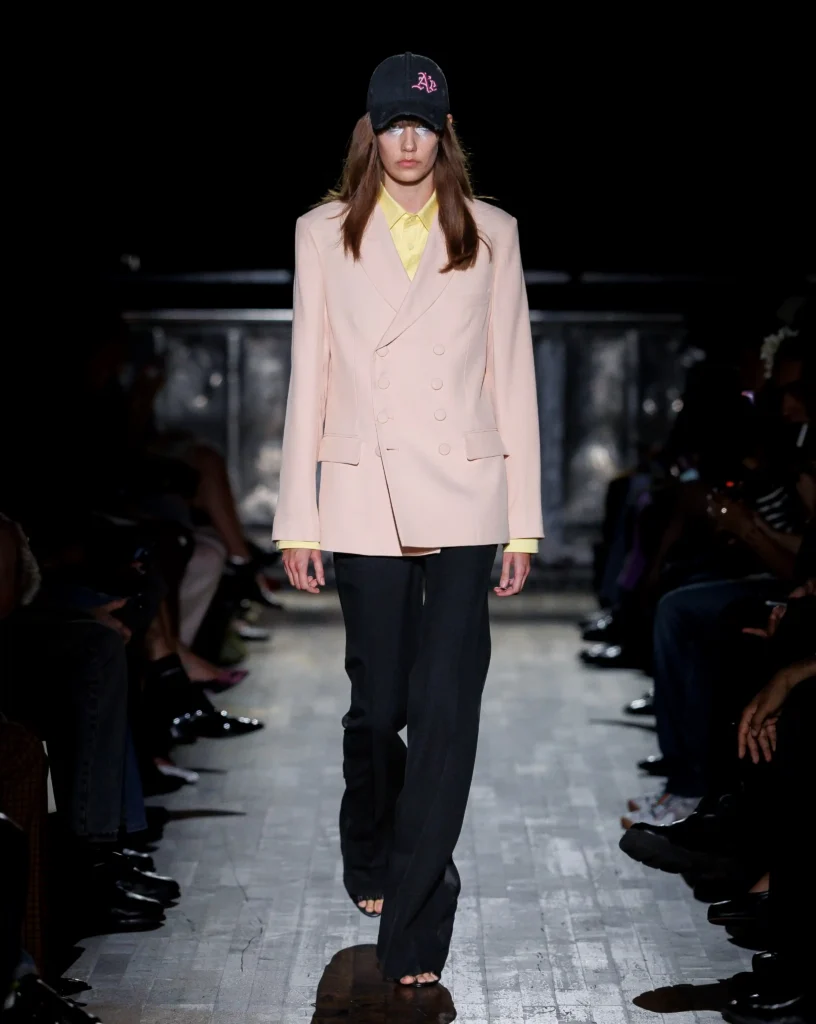
Aaron Esh called his collection Laws of Attraction, but conventional ideas of sexiness were not really what interested him.
Instead, he chased that slightly irrational moment when something awkward, warped or even a little ugly becomes appealing. Hence a bright red slip dress, a nude leather blazer, dizzying micro-dot prints, oddly stretched proportions and colours he described in deliberately unpleasant terms — including migraine yellow.
Up close, however, there was serious workmanship. A deep-purple organza coat that looked almost like shearling required more than 100 hours to construct, while washed silk military coats, quilted leathers, hot-pink feathers and louche tailoring pushed his familiar vocabulary forward.
The collection also arrives at an interesting point in Esh’s career: he is now simultaneously running his own label and serving as chief creative officer of AllSaints. His SS27 show suggested he is determined to keep the two worlds distinct.
Wet Leg’s Rhian Teasdale was photographed in attendance.
Mowalola Came Back, and Let the Clothes Do More of the Talking
After two years away from the runway, Mowalola Ogunlesi could easily have returned with one of the enormous provocations for which her shows have become known.
Instead, she did something more unexpected: she edited.
The venue itself hinted at the change. Rather than an industrial warehouse or nightclub, guests entered a grand Neoclassical building in Westminster, only minutes from Parliament. The floors were still Mowalola — blood-red, smeared with black and seemingly wet with spilled drinks — and a remix of Underworld’s Born Slippy quickly established that the party had not completely disappeared.
But the clothes took centre stage.
A barely-there crimson look combining mesh, satin and snakeskin opened proceedings before the collection moved through floor-skimming sequinned gowns, glitter-coated sets, waxed-cotton tailoring, foil-finished denim and sheer organza. Most notably, the obvious logo play was largely gone.
The finale turned smashed plastic plates by jewellery artist Tô Genesis into large reflective paillettes wrapped around the body. It was still unmistakably Mowalola — sex, club culture, glamour, Lagos and London all remained present — but the provocation came through cut, body and material rather than a slogan.
After a decade building her world, Ogunlesi seemed less interested in proving that she can shock people and more interested in proving just how well she can design.
One More Name to Keep Watching: Petra Fagerström
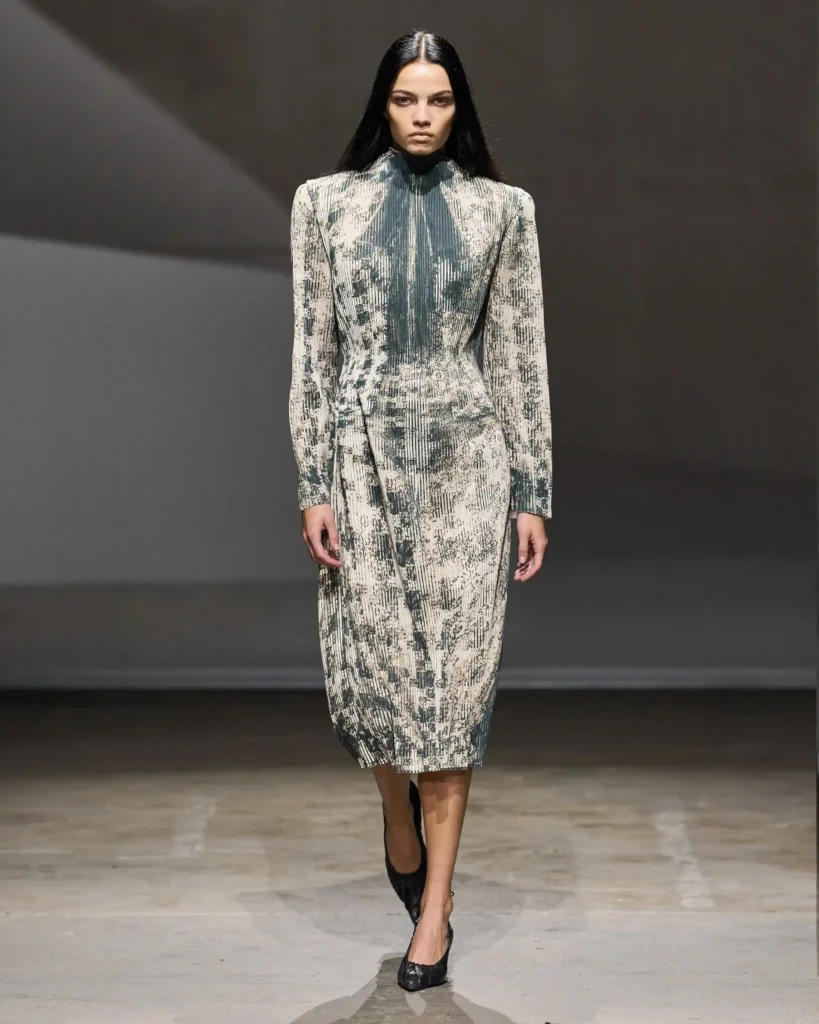
Petra Fagerström’s first NewGen LFW show deserves a mention precisely because it did not look like somebody cautiously testing the Fashion Week waters.
She called the collection Swedish Summer, with more than a hint of irony: flower-embroidered black leather and fur-lined-looking outerwear hardly screamed heatwave. But that tension was the point. Fagerström placed the visual codes of polished 1950s femininity against functional Scandinavian dressing and contemporary streetwear.
The cleverest moments played with perception. Lenticular prints appeared to change as models moved, while what looked like a traditional trench opened to reveal the image of a black leather suit and pleated skirt — only for the entire composition to be one fused garment. Fagerström has also spoken about deliberately taking the visual mistakes produced by AI and recreating them through physical tailoring and embroidery.
That tension between technology and very human making is already appearing elsewhere this Fashion Month. Here, it felt personal rather than gimmicky.
John Richmond Takes Light & Dark in His Signature Rock ‘n Roll Language
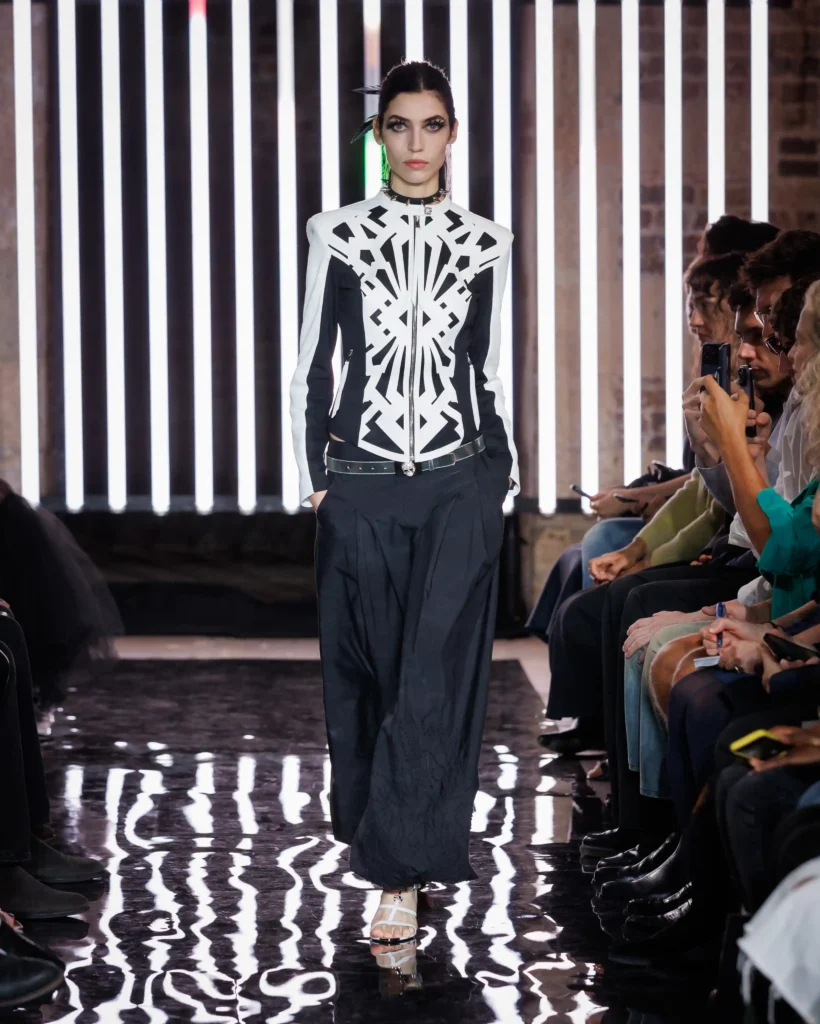
Leave it to John Richmond to stage a rock ‘n roll show. The designer, who has had his work seen on the likes of Madonna, George Michael, David Bowie, Mick Jagger, Michael Jackson, and more, has once again pulled his pop strings for his latest showing at London Fashion Week.
Titled, White Light White Heat, a reference to the Velvet Underground song of the same name, this collection reflected on the interplay between music, design, and how both shape cultural memory.
So it’s no wonder that the front row was filled with rock stars, and their kids too! Seated were Roger Taylor and Nick Rhodes from Duran Duran, Carl Barât from The Libertines, Louis Starkey and Sonny Starkey, the grandchildren of Ringo Starr, and Lennon Gallagher, son of Liam Gallagher. Dave Stewart of Eurythmics was also present, performing the Velvet Underground song after the show.
On the runway, the theme manifests in a black and white ensemble. Sheers are contrasted against opaque surfaces; lace details find themselves next to leather; and skirts, dresses, blazers, and harem pants are all complemented with eyewear that ooze attitude.
Simone Rocha Reframes Her Womenswear
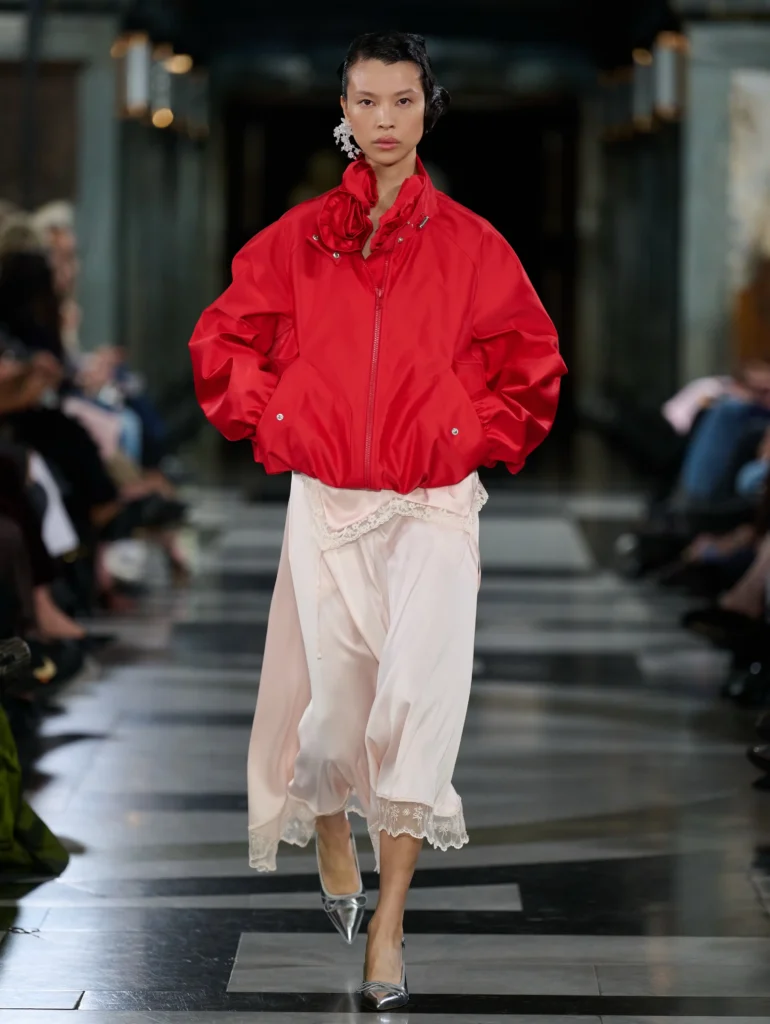
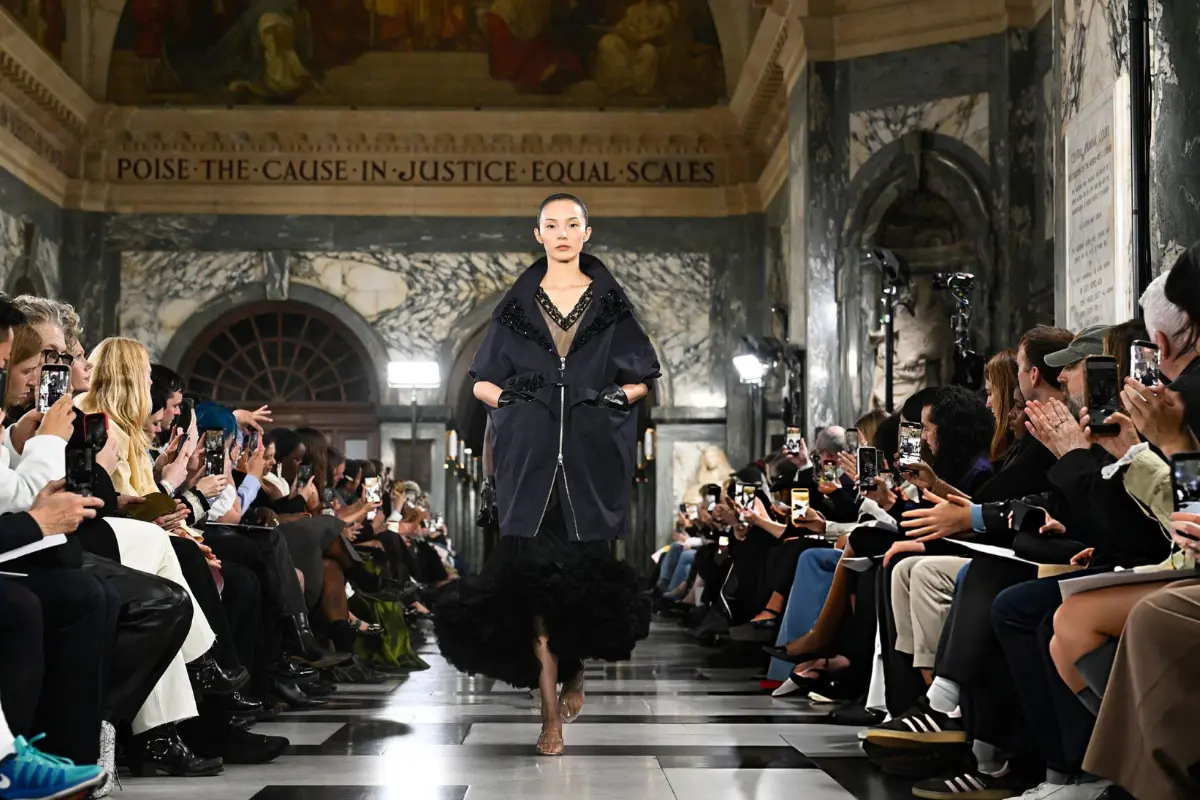
Choosing to solely focus on her womenswear, Simone Rocha’s SS27 collection created breathing room for the designer to reframe what that term even means. Presenting at the Old Bailey, Rocha takes slip dresses, bomber jackets, ballgowns, and fish tail dresses and turns each silhouette on its head.
In some places, necklines are cut. In others, the fabric is almost overflowing. Waists are dropped, while some pieces pull all the drama into their collars, where hand-made taffeta roses are sewn in. In fact, these roses are the common motif that pull the collection together. Elsewhere, irony takes form in leather outwear which is given an extra deep V-neck and a collared shirt and sweater vest is styled with leather shorts.
On the evening wear front, things take a romantic turn with sheers intercepted with micro sequins and lace. However the bold silhouettes power through, making each piece in the collection determined to oust the traditional takes on feminine tailoring.
Christopher Kane Makes His Mulberry Debut in Sleek, Sharp Focus
Since last year’s frenzy, it’s been a while since the fashion world has witnessed another major Creative Director change. Well now here comes Christopher Kane for Mulberry, presenting his debut collection, completely overhauled by minimalistic principles.
Set to explore the contrast and characters of British life, the collection is mainly centred on the tension between British establishment and subculture, between the utilitarian and the natural. Pieces come in an unexplainable sheen, while leather pieces are defined by the subversive laser cuts. Shirts and T-Shirts were boxy and oversized, ideal for a modest wardrobe, while sweatshirts and raincoats added to the enlargement in a dramatic fashion.
Starting a new chapter for the house, Kane’s collection works to reset the Mulberry canvas.
Seán McGirr Brings the Best of London’s Subversive Energy to McQueen
Closing the penultimate day of London Fashion Week, McGirr brings forth the best of what London has to offer: its subversive energy. With rebellious energy that dates back millennia, McGirr channels that into his SS27 collection. The show is staged at The Undercroft, Lincoln’s Inn Chapel, a place of worship, yet the models walking the runway sport devil horns in their hair.
Set to sounds produced by A.G. Cook, we saw London’s attitude in the form of smoked tulle, acid floral print, reflective glass organza, lacquered satin, and silk accented with leather. Diaphanous dresses stuck close to the body, while some experimented with curvy silhouettes. Suiting also made appearances, but not without strategic cuts and floral embroidery.
Looking into the synergy between the divine and the destructive, McGirr’s collection is a study on how divinity can also appear from the subcultural.