Diesel arrived on the opening day of Milan Fashion Week with more hanging over its Spring/Summer 2027 show than the usual new-season anticipation. Just days earlier, the brand confirmed that Glenn Martens would leave his role as creative director after six years, making SS27 his final collection for Diesel. The Belgian designer joined the house in 2020 and, during his tenure, pushed it firmly back into fashion’s conversation through experimental denim, provocative campaigns and runway concepts that rarely behaved like conventional runway shows.
So how does a designer like him say goodbye? Apparently, by refusing to make it feel too much like one.
The Diesel SS27 runway was staged inside Via Moncucco 35, a purpose-built club space, with the show unfolding alongside a series of interventions by Marseille-based artist collective (LA)HORDE. Some 200 performers were embedded within the audience, interacting with guests and one another through moments that shifted from strange and unsettling to intimate, sensual and impossible to ignore. Conceived with concept designer Dennis Vanderbroeck, the setting blurred the line between runway, performance and nightlife, very much in keeping with the world Diesel has built under his direction. The brand described the show as a celebration of “freedom, confidence, connection and desire”, tying it back to its long-running For Successful Living philosophy. Success, in Diesel terms, means having the freedom to live instinctively and on your own terms. It was an appropriate idea for his exit, leaving the door slightly off its hinges.
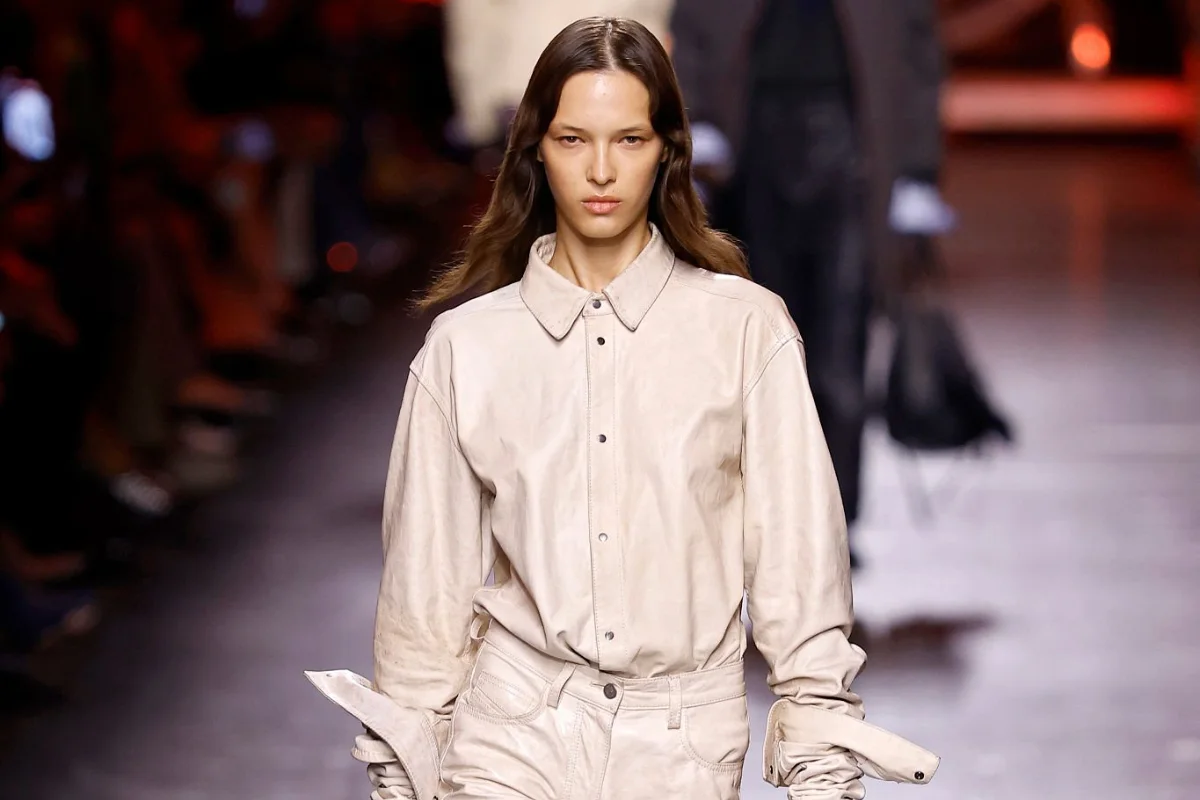
Familiar wardrobe pieces were pushed just far enough out of place to become unmistakably Diesel. One of the best examples came in a head-to-toe pale look, a collared shirt and straight trousers rendered in a light-catching finish, with exaggerated glove-like cuffs extending from the sleeves, trousers gathering around the ankles and a soft bag hanging almost collapsed from the hand. Against the red glow of the club-like runway, something seemingly simple became slightly strange.
That tension between the recognisable and the unexpected ran through the collection. Rather than making everything look deliberately destroyed or dishevelled, SS27 played with proportion, surface and styling. Sleeves extended beyond their usual boundaries, clothes sat close to the body while still appearing slightly distorted, and familiar shapes were made more interesting through details that interrupted how they would normally be worn. The rebellion was still there, it was simply less chaotic.
Accessories became part of that disruption too. Soft, unstructured bags appeared to fold and collapse around their contents rather than holding a rigid shape, while elongated gloves and extended cuffs almost became extensions of the clothes themselves. Nothing felt overly precious. The interest came from taking ordinary components of a wardrobe and making them feel a little unfamiliar.
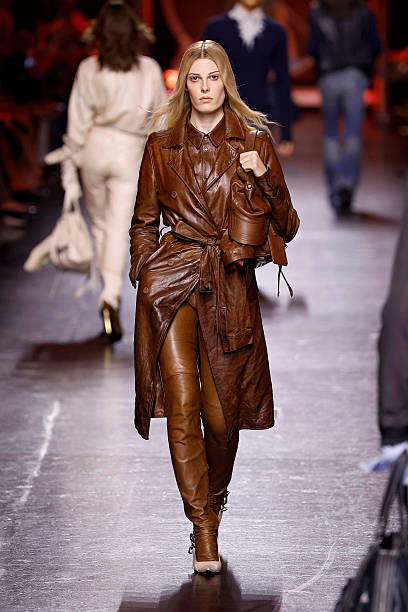
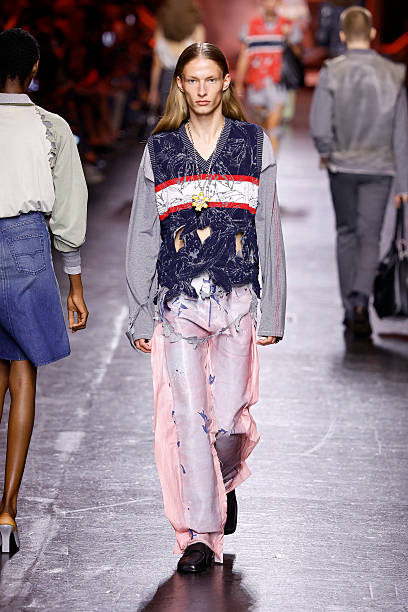
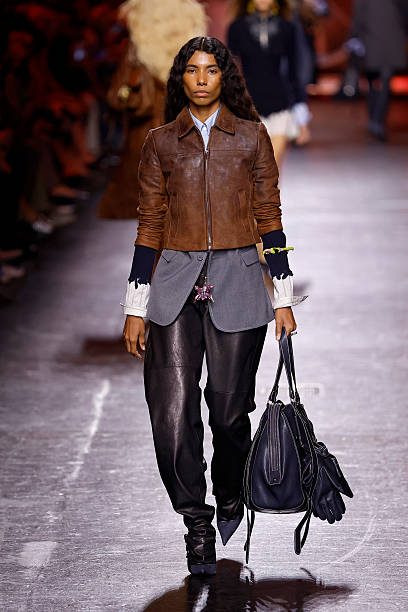
And while denim remains inseparable from Diesel, the SS27 runway was a good reminder how much broader the visual language has become under Glenn Martens. A shirt, a pair of trousers, a glove or a handbag could now carry the same disruptive energy traditionally associated with the brand’s jeans. The clothes made sense within the purpose-built club around them too, designed to be seen in motion, in close proximity and among people rather than isolated against a pristine runway backdrop.
That instinct for destabilising familiar clothing has defined much of Glenn Martens’ time at Diesel. Since joining in 2020, the designer has pushed the brand’s denim vocabulary through unconventional treatments, construction and proportion, while turning its runway shows into experiences that extended well beyond the clothes themselves. SS27 brought those codes together for one final outing: familiar pieces made unfamiliar, sensuality offset by something slightly off-kilter, and a refusal to let Diesel ever feel too neat or predictable.
Glen Martens now turns his full attention to Maison Margiela, where he has served as creative director since 2025, while Diesel has yet to announce who will follow him.