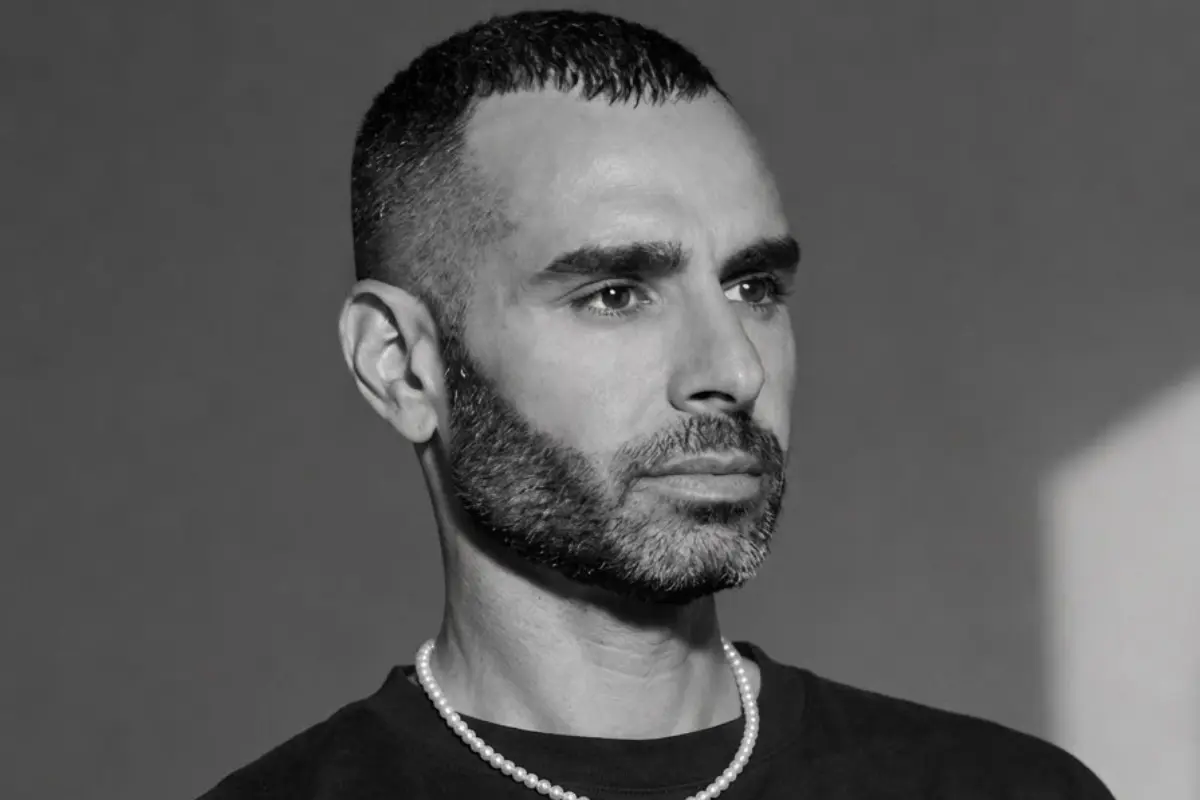
Yousef Akbar does not like being told what to do. It is a useful trait for a designer, and one he traces back to growing up in Jeddah, where becoming an artist once felt far less straightforward than choosing a conventional career. He chose the conventional route first, moving to Australia to study logistics and supply chain management. It did not last. Fashion kept pulling him back.
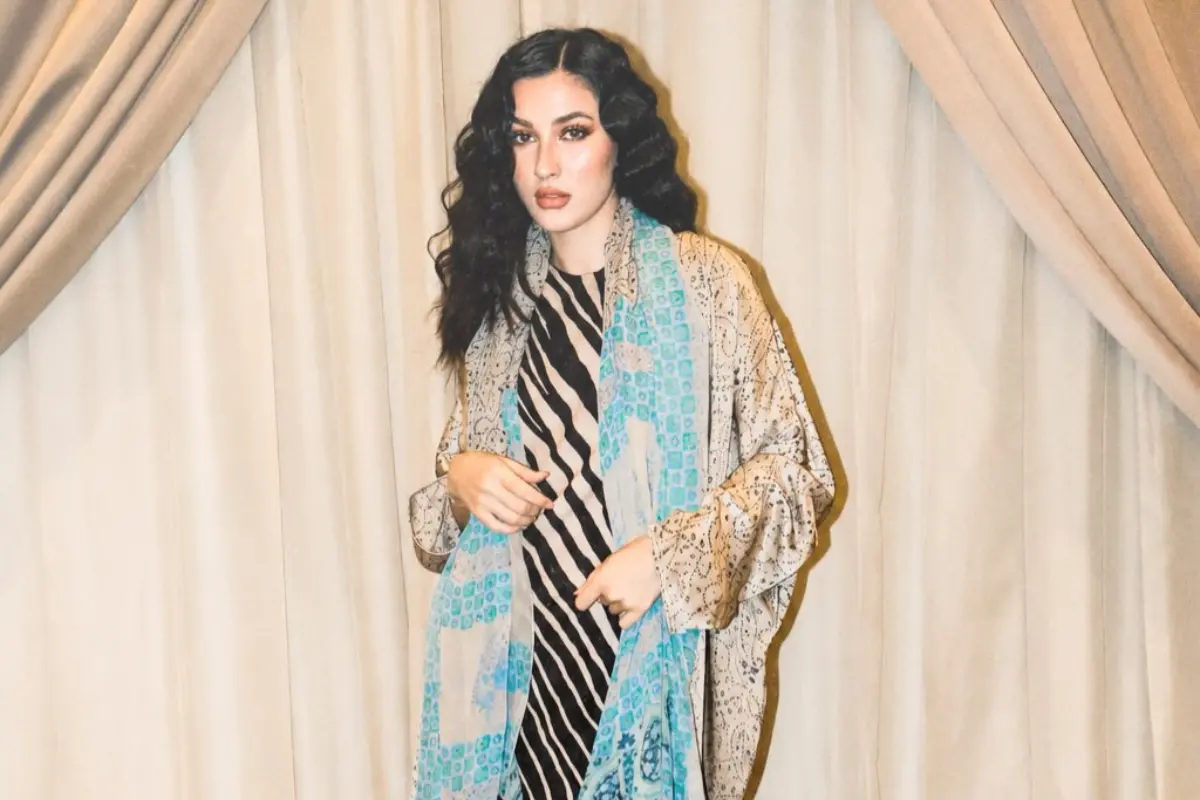
Beginning the Yousef Akbar label, he went all in on his suppressed desires, all visible in his work. Volume, saturated colour and cuts that are willing to test the limits of evening-wear. There is little interest in being agreeable. A dress can be sculpted, severe, revealing, restrained or all of those things at once. The common thread is a refusal to design by committee.
In 2020, he won the Fashion Trust Arabia Eveningwear Prize, and as the Kingdom opened up globally in line with Vision 2030, he was there to dress the Saudi woman. Now his pieces are seen on the likes of Nicole Kidman, Alicia Keys, Rita Ora, Chrissy Teigen, and the Saudi fashion forward. Ultimately, home made room for the unconventional to stay.
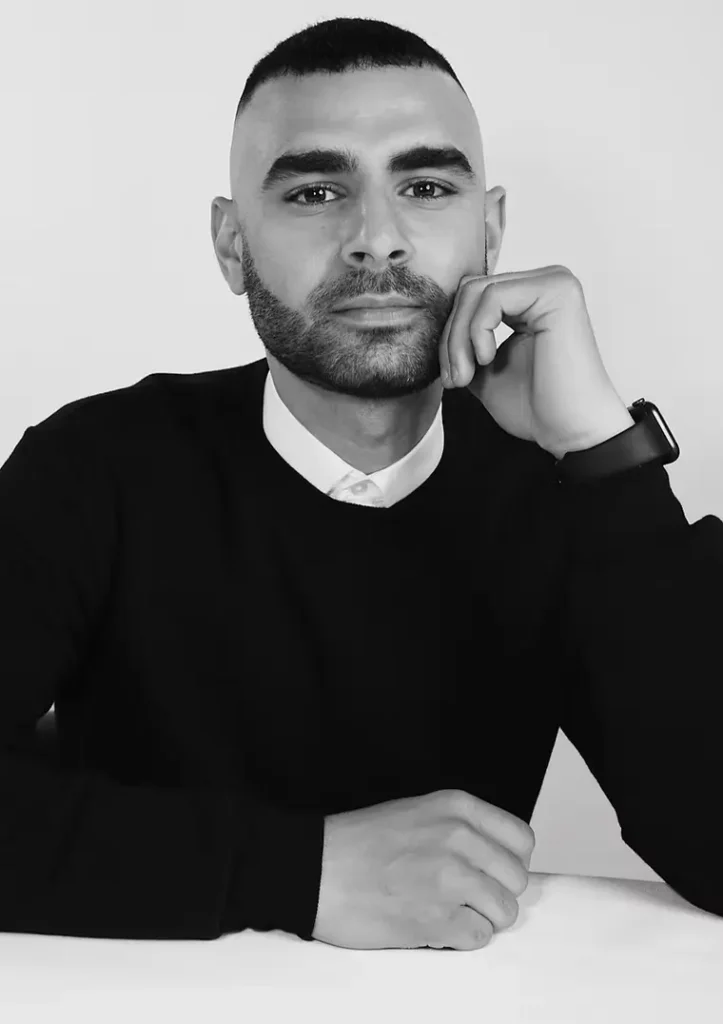
For Saudi National Day, Soigné speaks to the Jeddah-born designer about rebellion, the Saudi woman, cultural change and why he believes the country’s fashion identity is still being written.
You always had a desire to become an artist, but being in a conservative family made that dream sound impossible. Does that tension ever get explored in your work?
Always. My whole life as an adult has been a reaction to that. Funnily enough, it also left me with a problem with authority; I don’t like being told what to do. But it created an intense desire to be myself, without anyone deciding who or what I should be. It also created a rebellious spirit. It made me stubborn, determined, tenacious, and I never give up on a goal, especially the ones everyone tells me are impossible.
Having all this trapped energy to express myself, and finally being able to release it, you can see it run straight through the work. It dictates how I approach a collection, how a piece is constructed, in my colours and volumes, and also how daring I’m willing to make a cut.
As someone who is keenly attached to the creative process and self-expression, have you noticed any change in how Saudi culture responds to fashion and art, from your childhood in the 90s to the present?
Saudis have always had a great sense of style. I’d say we’ve had impeccable taste long before I was born. Look at old photographs from the 60s or 70s and everyone looks like they’re in a fashion campaign.
But the biggest shift in my lifetime has been the cultural change that came with Vision 2030, and having witnessed it, I definitely see people becoming more openly expressive with their style. More individuality, more daring points of view, less conforming to norms. I think that’s great to see.
You’ve mentioned that your creative process is autobiographical. As a Jeddah-born designer, does the architecture of the city play any role in inspiring your designs?
Possibly, subconsciously, or indirectly, by being part of a memory or a story. Maybe more the mood, or a smell, or the feeling within and around the architecture. But to be honest, I don’t intentionally draw on architecture or reference cultural motifs, at least not yet. Inspiration for me comes from somewhere with a much deeper emotional connection, where I feel the need to express something, or tell a story.
What does Saudi National Day mean to you? As the day brings emphasis on the country’s culture and traditions, what are the pieces that you keep close to you?
This day is extremely special to me, and to all Saudis. It’s a day we celebrate this country with an immense sense of pride. Having lived in Australia and travelled the world, I can say with confidence there is no better country on earth. All the achievements, all the reforms, all the progress, the vision, and the ambition, it’s truly amazing in every sense of the word.
As for pieces, I’m absolutely obsessed with Saudi coffee.
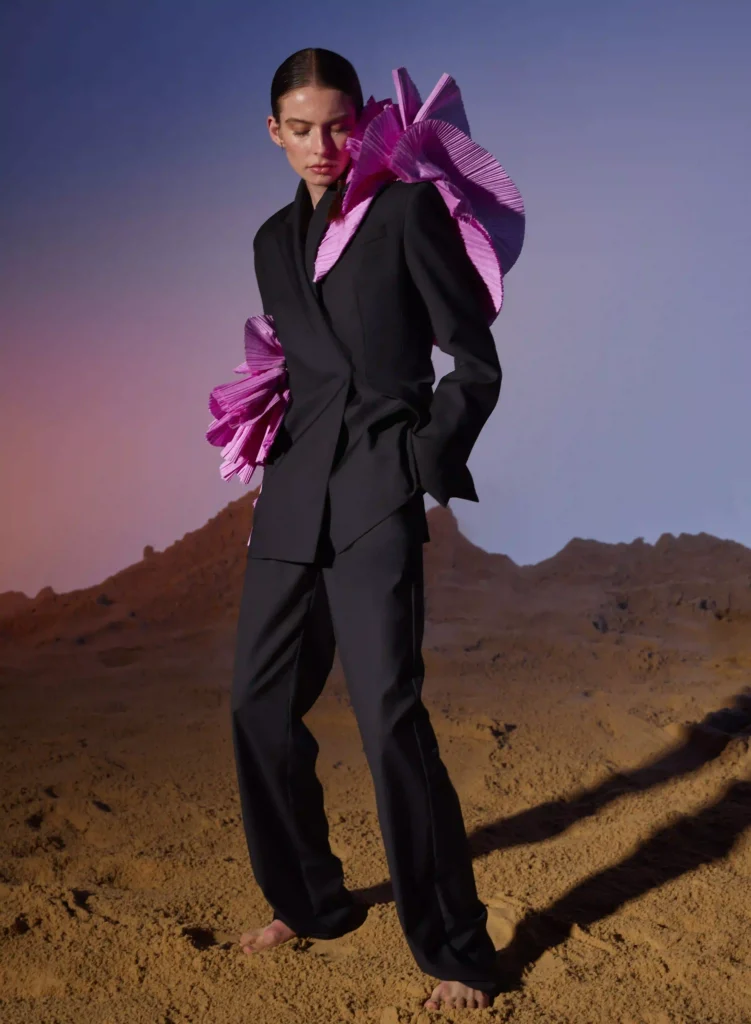
Your work explores femininity and celebrates the female form. Given the context of the Kingdom and its relatively new fashion industry, what kind of Saudi do you aim to dress?
Fashion as an industry here is perhaps new, still in its infancy. But Saudi women have been among the most stylish in the world. They have incredible taste and have had enormous buying power globally for decades, from high street to haute couture.
With my work, some of it is modest, and some is not. Ultimately, I design for a confident, strong woman who is an individual, maybe a rebel sometimes, but who isn’t afraid to express herself. A woman who walks into any room and you sense her presence immediately. And that woman is the Saudi woman.
Similarly, you’ve reportedly mentioned that your work rarely references Saudi culture, and instead focuses on emotions and storytelling. Do you think it’s important for designers to let their work forge a new path instead of relying on cultural shorthand, or can there be a balance between the two?
That’s a difficult question, because design is so personal. It’s unique to each person, it comes from the heart, and it can’t be faked. So I don’t think one approach is more valid than the other. A designer who builds from cultural references and a designer who builds from other sources can both be completely honest, and both can be hollow if the intention isn’t real. There can absolutely be a balance between the two.
Finally, the Saudi fashion scene is making a name for itself on the global map. In your opinion, how would you describe “Saudi style”?
It’s too early to define, and honestly that’s the interesting part. Saudi style right now is incredibly diverse, it hasn’t settled into one look or category, and I don’t think it should be rushed. What we’re living through is a significant moment in Saudi’s modern cultural story, and to be part of it is really special. I can’t wait for what’s coming ahead.