
Since tensions in the GCC began unfolding on February 28, many of us have been sitting with emotions that feel easier to carry than they are to explain. Outwardly, life has remained remarkably intact. We are still going to work, making plans, sitting through meetings, carrying on. But mentally, it is a different story. There is a kind of invisible weight in the air, a lingering uncertainty, a hum of anticipatory anxiety, a sense that even when everything looks fine, something does not feel entirely settled.
I have felt it myself, and in nearly every conversation I have had over the past month, I have heard some version of that same admission from others trying to make sense of what they are carrying. In moments like these, understanding what you are feeling is often the first real step towards finding steadiness again.
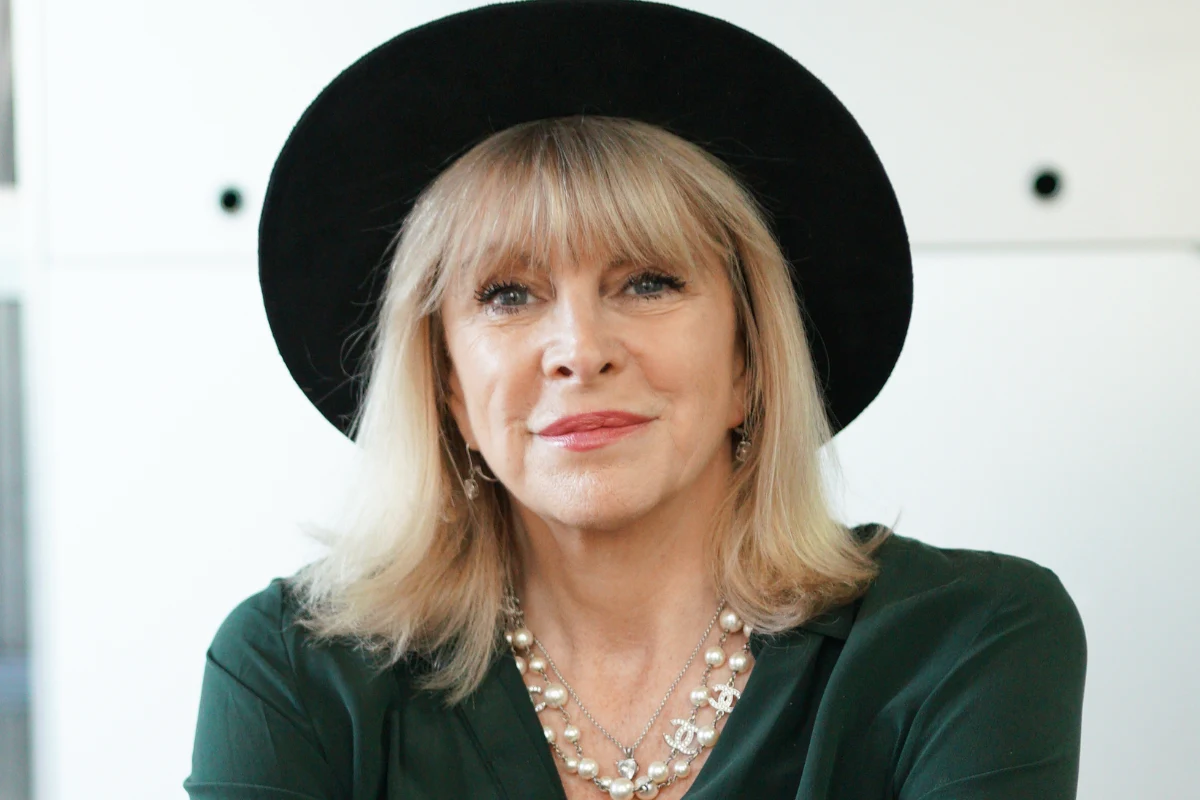
Few people could feel more relevant to speak to this moment than Marisa Peer. Having spent more than four decades helping people understand fear, restore calm, and challenge the beliefs that govern their emotional lives, the world-renowned therapist, speaker, and best-selling author has built her life’s work around exactly this kind of inner unrest.
At a time when anxiety feels ambient and emotional safety newly urgent, her insights offer both clarity and comfort around the emotional weight so many are carrying. The recent launch of UAE Cares, her complimentary support initiative created to help people navigate the emotional strain of the current moment, only adds to the timeliness of this conversation.
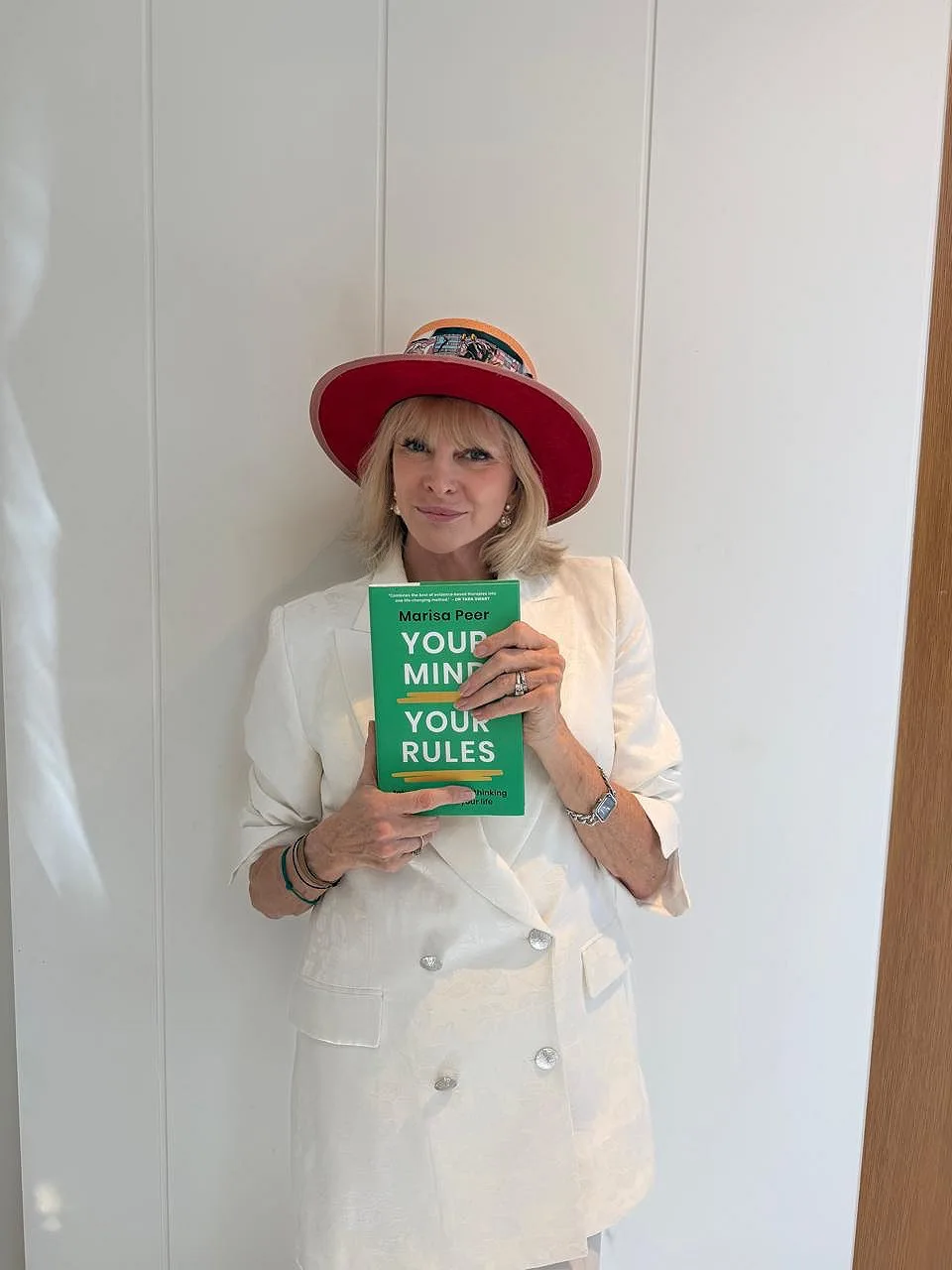
That sense of relevance also runs through her new book, Your Mind, Your Rules, which examines the formative beliefs we absorb early in life and the ways they continue to shape how we respond to stress, uncertainty, and ourselves. In an exclusive conversation with Soigné Middle East, Marisa Peer speaks about fear, hyper-vigilance, emotional care, and why learning to understand what you feel can be the first step towards loosening its grip. Read the full Q&A below.
You launched UAE Cares with complimentary support resources for people affected by the situation in the region. What made you feel this initiative was necessary at this particular moment?
We live in a world that feels like it moves from one crisis to the next, so it’s no surprise that so many people are carrying a sense of emotional heaviness and anxiety, fueled by fear and uncertainty.
It’s important to understand that your mind can’t tell the difference between a perceived threat and a real one, which means that even when you are physically safe, your nervous system can remain locked in high alert – flooding your body with cortisol and keeping you trapped in fear, exhaustion, and overwhelm.
At the heart of everything I do is a mission: to help people move away from pain and back to peace.
UAE Cares is my way of doing exactly that. I wanted to give people access to tools that help them reclaim a sense of calm and control and feel seen, safe, and supported, even during turbulent times.
At the moment, many people in the UAE seem to be living with anticipatory anxiety and hypervigilance. From your perspective, why do these responses take hold so strongly, and what is the first step in helping people feel emotionally safe again?
When you spend time worrying or imagining worst-case scenarios, you effectively train your mind to expect danger, so it begins to scan for evidence to support this until it finds it. This is what causes anticipatory anxiety.
In uncertain times, this instinct can go into overdrive, making that sense of threat feel constant and very real, as the mind begins to interpret uncertainty itself as danger.
This can show up in many ways, from spiraling negative thoughts to a body that feels constantly braced for impact, until you find yourself living in a state of hypervigilance, not because danger is present, but because your mind is convinced it could be.
While we can’t control what happens around us, we can always control how we respond and react to it.
The key is to build a sense of inner certainty – a calm, steady anchor within you that keeps you grounded, safe, and in control, regardless of what is happening around you.
This begins with gently interrupting negative thought patterns before they take hold, because your mind responds powerfully to the words you say to yourself and the pictures you make in your head.
So, try to shift your thinking from “What if something goes wrong?” to “At this moment, I am safe.” By bringing your focus to the present and consciously looking for evidence of safety around you, even in the smallest details, you can reassure your mind and allow your nervous system to settle.
In a region shaped by ambition, image, and constant motion, many people feel pressured to keep going no matter what. How can we reframe rest, calm, and emotional care as strength rather than weakness?
In the age of ‘hustle’ culture, we have been conditioned to believe that pushing through is a sign of strength and that slowing down means falling behind, but this is not sustainable, and why we see so many people struggling with burnout.
The truth is that you can’t perform at your highest level when your mind is overwhelmed, and your body is depleted. True strength comes from balance, not from constant pressure.
Rest allows the mind and body to reset, sharpens focus, improves decision-making, and builds long-term resilience.
The most successful and fulfilled individuals I have worked with have learned that looking after their inner world is not a luxury; it is a necessity, and so they recognize when to pause, recalibrate, and maintain emotional control rather than override it.
When you see rest and calm as tools for strength rather than signs of weakness, you begin to live your life from a place of power rather than pressure.
After more than four decades of working with people through fear, self-doubt, and emotional pain, what have you come to understand most clearly about the way people cope in moments of uncertainty?
People don’t respond to the events themselves; they respond to the meaning they attach to them. Two individuals can be in exactly the same situation but experience it in completely different ways. One may feel calm while the other feels overwhelmed.
The difference lies in their internal beliefs.
Many of these beliefs are formed early in life because, as children, you create mental rules to help you feel safe, accepted, and in control. These might include beliefs such as “I must control others in order to feel safe,” or “I need to stay in control to be safe.”
These rules then follow you into adulthood, often without you even being consciously aware of them.
Understanding this is incredibly empowering and shows that your response is not fixed; it is learned behavior, and the good news is that anything that is learned can be unlearned.
I talk about this more in my new book, Your Mind, Your Rules.
Your new book, Your Mind, Your Rules, is built around the idea that many of the rules running our adult lives were formed in childhood. Can you tell us more about the central idea behind the book, and why this felt like the right time to share it?
The core message of my new book is that most people live according to rules they never consciously chose, but which were formed in childhood as a way to feel safe, loved, and accepted.
By the age of seven, you have already created a set of internal rules that shape what you believe about yourself, what you think you deserve, and how you expect love, success, and connection to work.
These rules were intelligent responses to early experiences, designed to help you navigate the world, yet they often persist into adulthood, quietly influencing how you think, feel, and behave.
This is why many people still carry beliefs such as “I am not enough” or “I have to please everyone” without questioning where they came from.
The book is about bringing these unconscious patterns into awareness and giving people the tools to rewrite them, step into their true potential, and live the life they truly want and deserve.
As Your Mind, Your Rules reaches readers, is there a part of the book you feel especially excited for people to connect with?
The part I’m most excited for readers to connect with is the moment they see the rules they’ve been living by and often running from, without even realizing it.
That awareness alone is incredibly liberating, because once you can clearly see those old patterns, it becomes surprisingly easy to create new rules that truly serve you.
This is where freedom begins: when you choose your thoughts consciously, you step into a life no longer held back by old beliefs, and you experience real transformation from a place of clarity, power, and possibility.
This book will show you how to do this by applying the same tools and techniques I have used with thousands of clients, including international superstars, CEOs, and Olympic athletes.
At your recent Dubai workshop, attendees were introduced to a guided transformational activation inspired by Rapid Transformational Therapy. What did you hope first-time participants would come to understand about the mind’s capacity to change?
So many people believe that change has to be slow, hard, or take years of therapy, which often leaves them feeling stuck and frustrated, wondering why nothing seems to work.
But the truth is that the mind is incredibly adaptable and capable of rapid change once you know how to work with it.
At the Dubai workshop, my goal was for participants to experience that for themselves.
I wanted them to see firsthand, in real time, how the tools I use in RTT can help you identify old, limiting beliefs and replace them with new patterns that feel natural, empowering, and liberating, so that you can become the very best version of yourself and live your best life.
For someone reading this who feels overwhelmed, emotionally exhausted, or stuck in a cycle of fear, what is one belief they need to let go of right now, and what is one new rule they should begin living by instead?
The belief to let go of right now is “I can’t cope,”or “I am stuck” because those very words foster helplessness and keep your mind stuck in fear that is not based on the truth and is unhelpful.
Instead, remember this: you have faced everything life has thrown at you so far and survived, which is proof of your resilience.
A more empowering rule to adopt is: “I am safe right now to choose a better thought.”
This shifts your focus toward something calming and constructive, and each time you choose a thought that reassures rather than alarms you, you begin to rewire your mind.
This is how control is rebuilt – through small, consistent shifts in thinking, which over time become your new thought patterns and core beliefs, creating lasting calm, confidence, and emotional stability.
You can create islands of certainty that build stability in any situation by sticking to everyday rituals, some as simple as making a coffee or watching a film. As a family, go for walks, play board games, make meals together and visit friends and family. In an uncertain world you can be the certainly you need – and there are so many ways you can do this.
Find out more about UAE Cares here.
Your Mind, Your Rules is available for pre-order now and goes on sale on 9 April.