Paris kept busy over the weekend, with three packed days of collections spanning modest dressing, conceptual construction, theatrical sets and a healthy amount of fashion mischief. From Loewe at the Château de Vincennes to Miu Miu’s purple takeover of the Palais d’Iéna, here’s everything worth knowing from the shows that took place between 2 and 4 October.
Friday, 2 October
Loewe
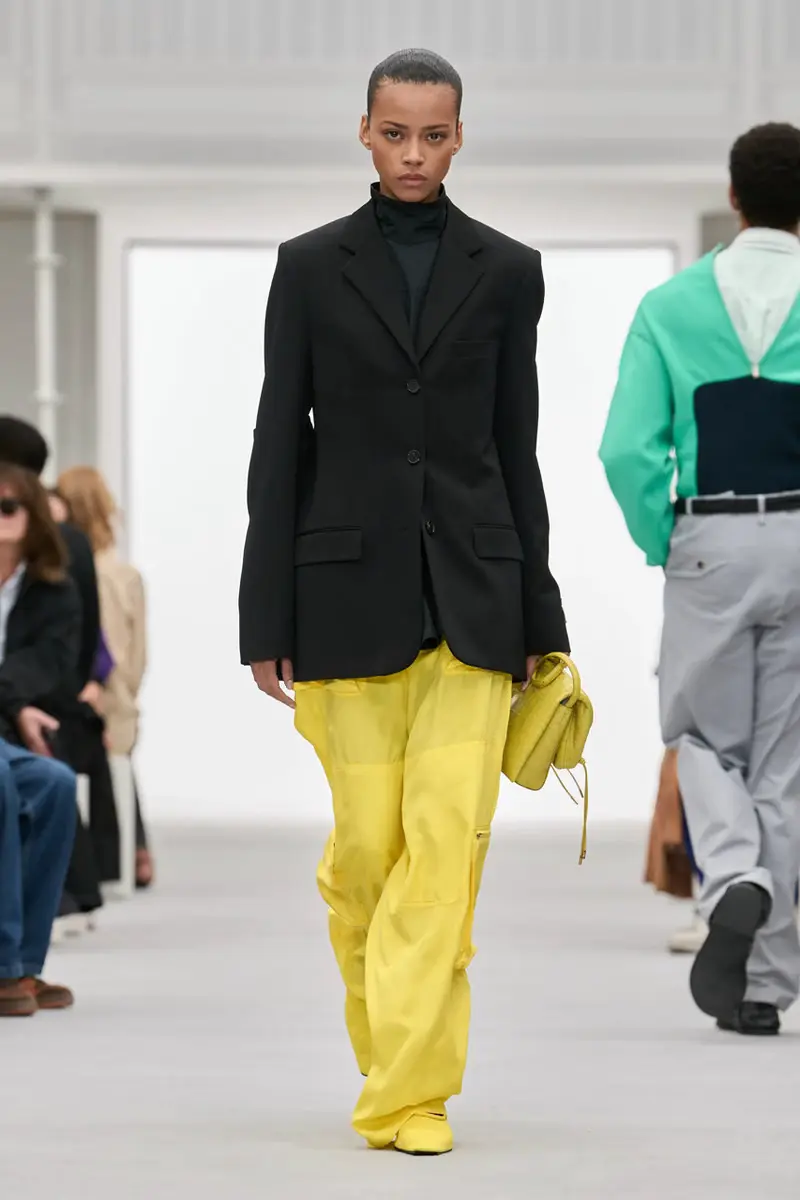
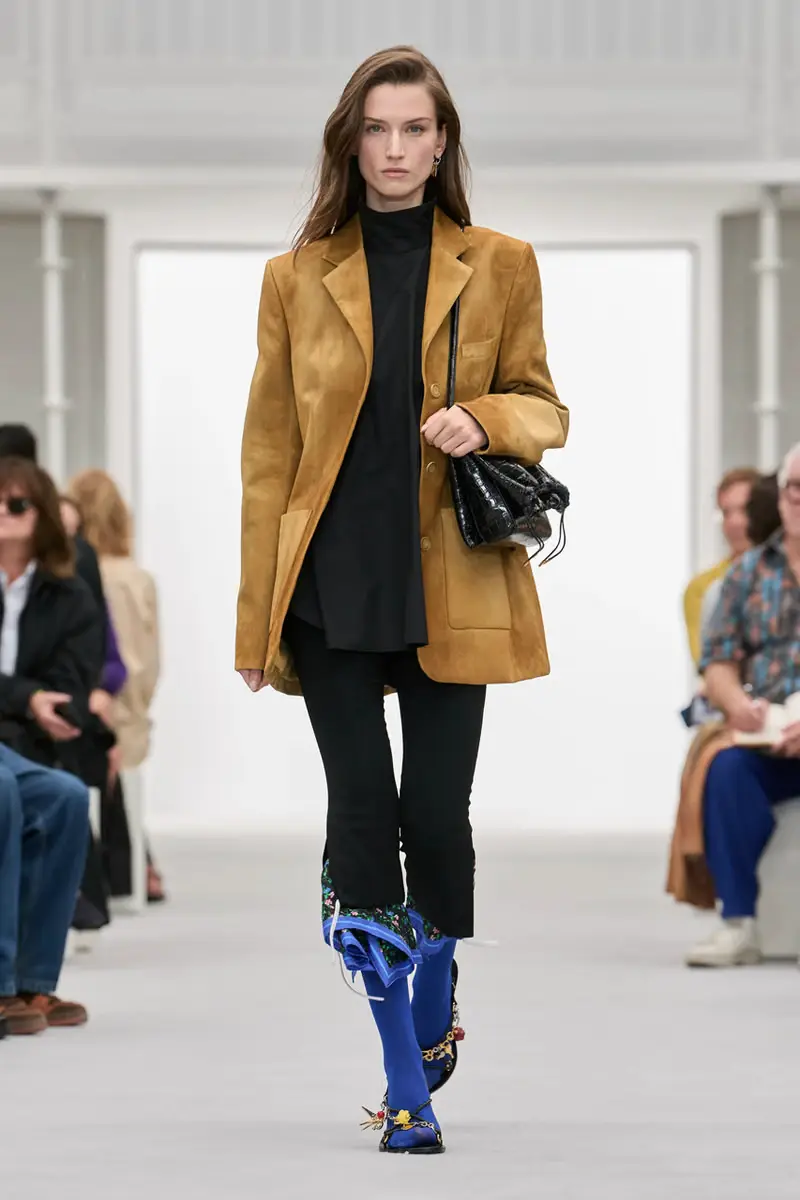
Jack McCollough and Lazaro Hernandez continued to shape their Loewe with a collection that pulled American sportswear into the house’s Spanish world. At the Château de Vincennes, polos, basketball jerseys, anoraks and prep staples were reworked with decorative flourishes, silk ties referencing Spanish painting and fluid floral pieces. Proportions were pushed, familiar pieces were taken apart and the setting gave the collection a sense of occasion. It was sporty and slightly off-kilter in exactly the right way.
Issey Miyake
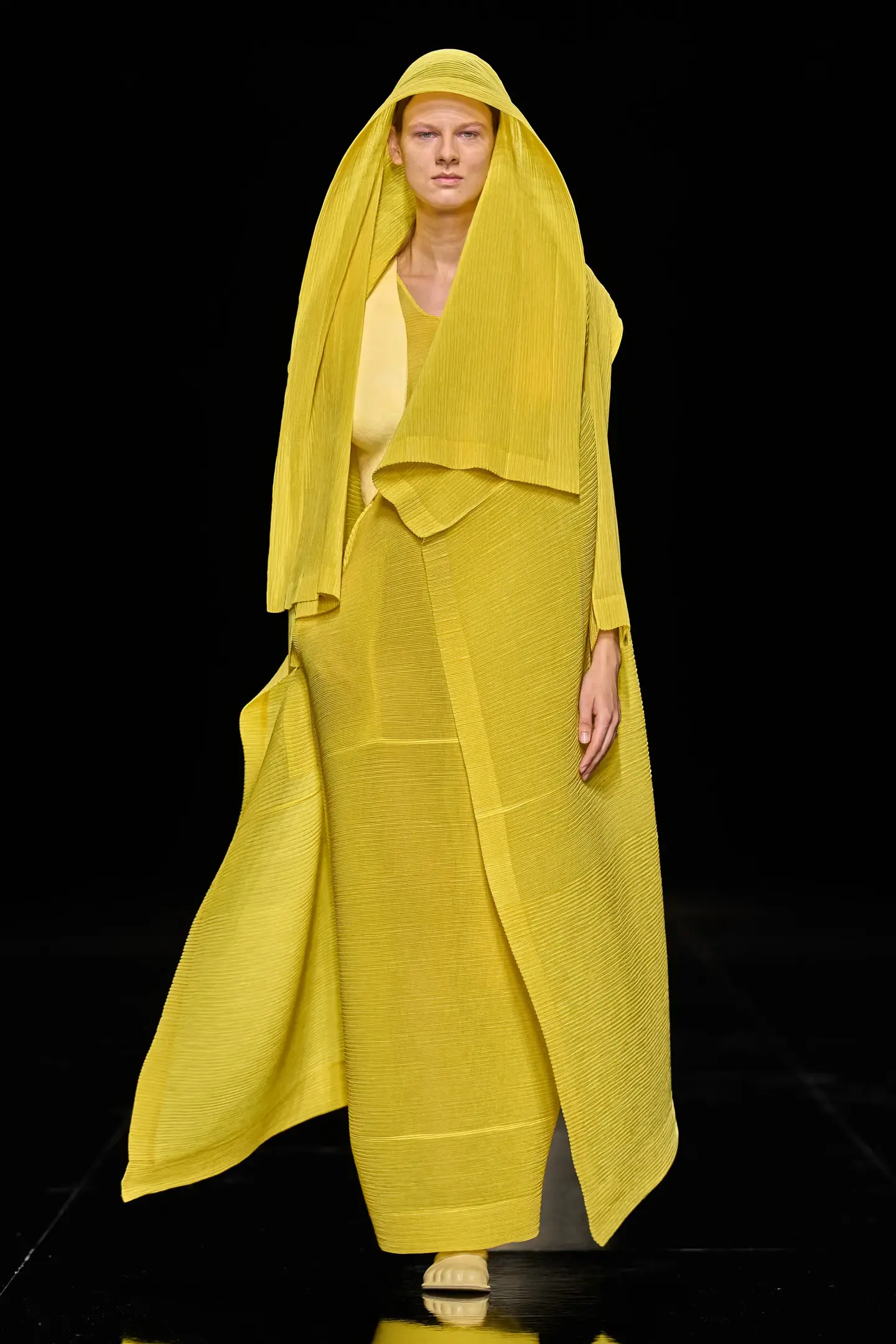
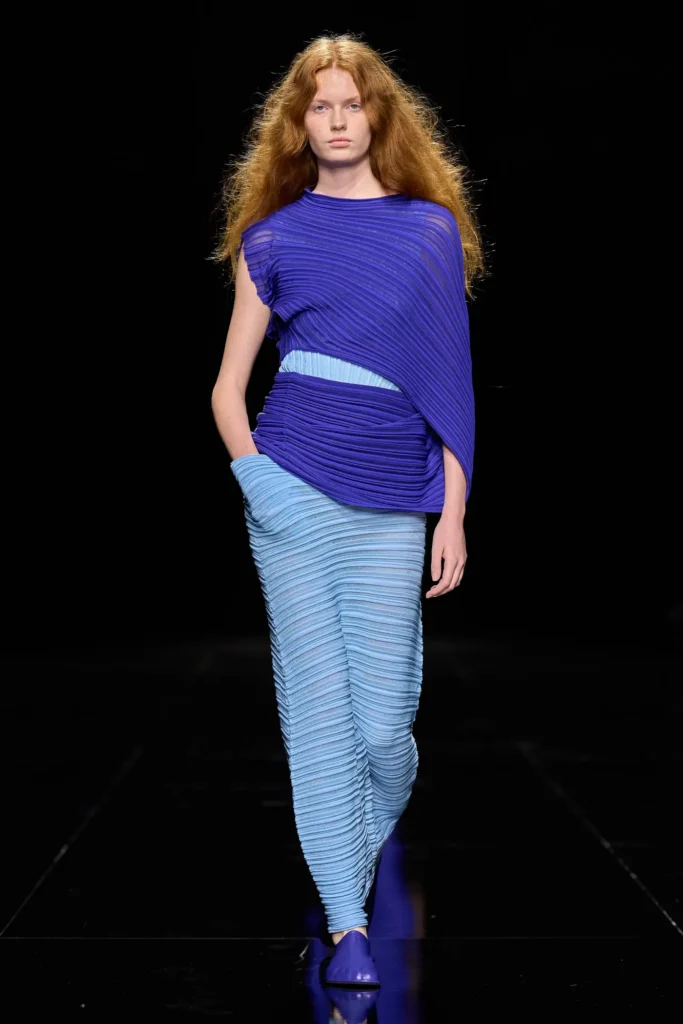
Satoshi Kondo explored the Japanese concept of ma, or the space between body and cloth, with a collection designed around movement. The show opened at the Paris Dojo with dancers manipulating a vast sheet of pale blue fabric before models emerged in billowing coats, sculptural pleats and molded bodices created with Wacoal. Scarves threaded through dresses and oversized shapes floated around the body, giving the whole collection an airy, almost weightless quality.
Casablanca
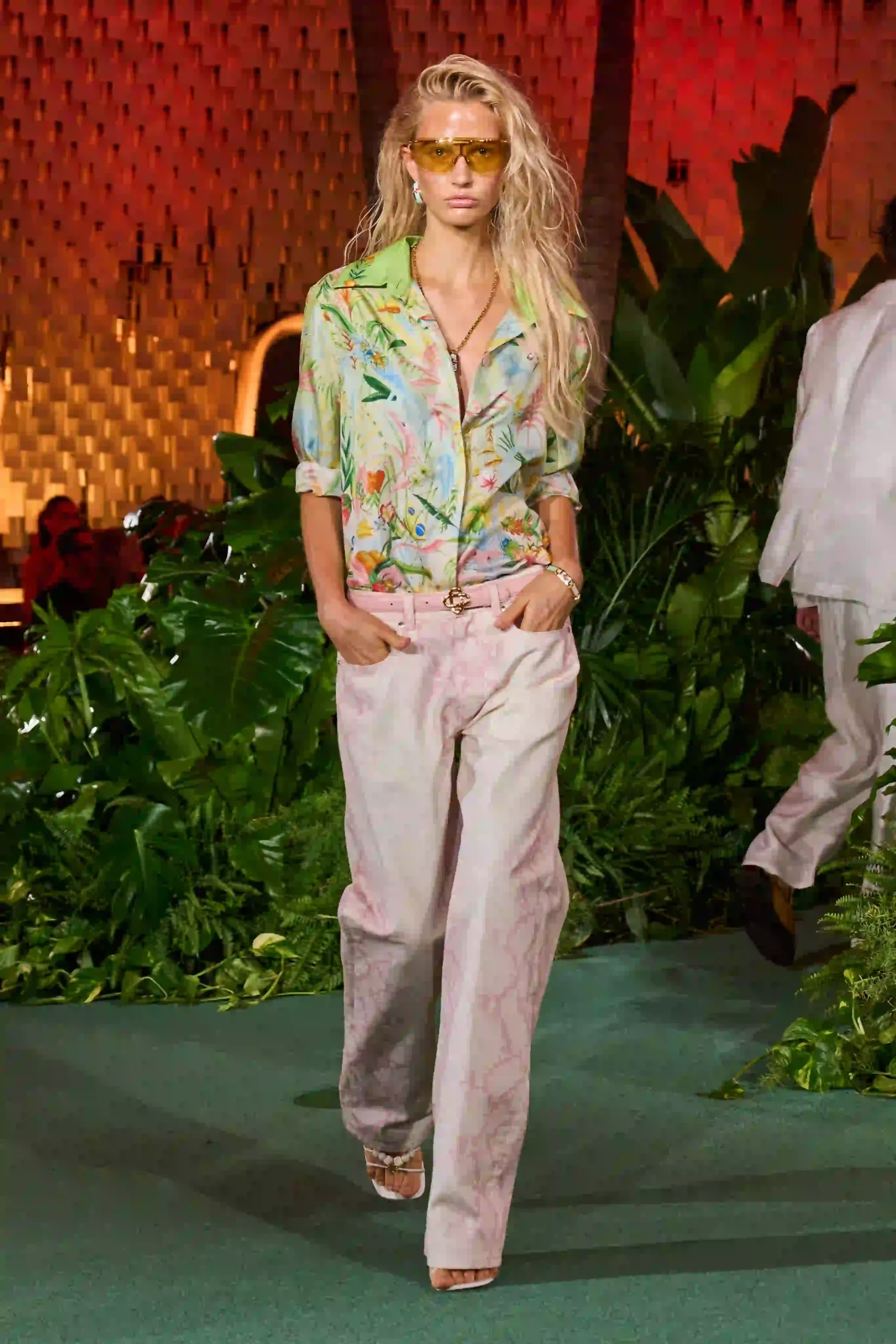
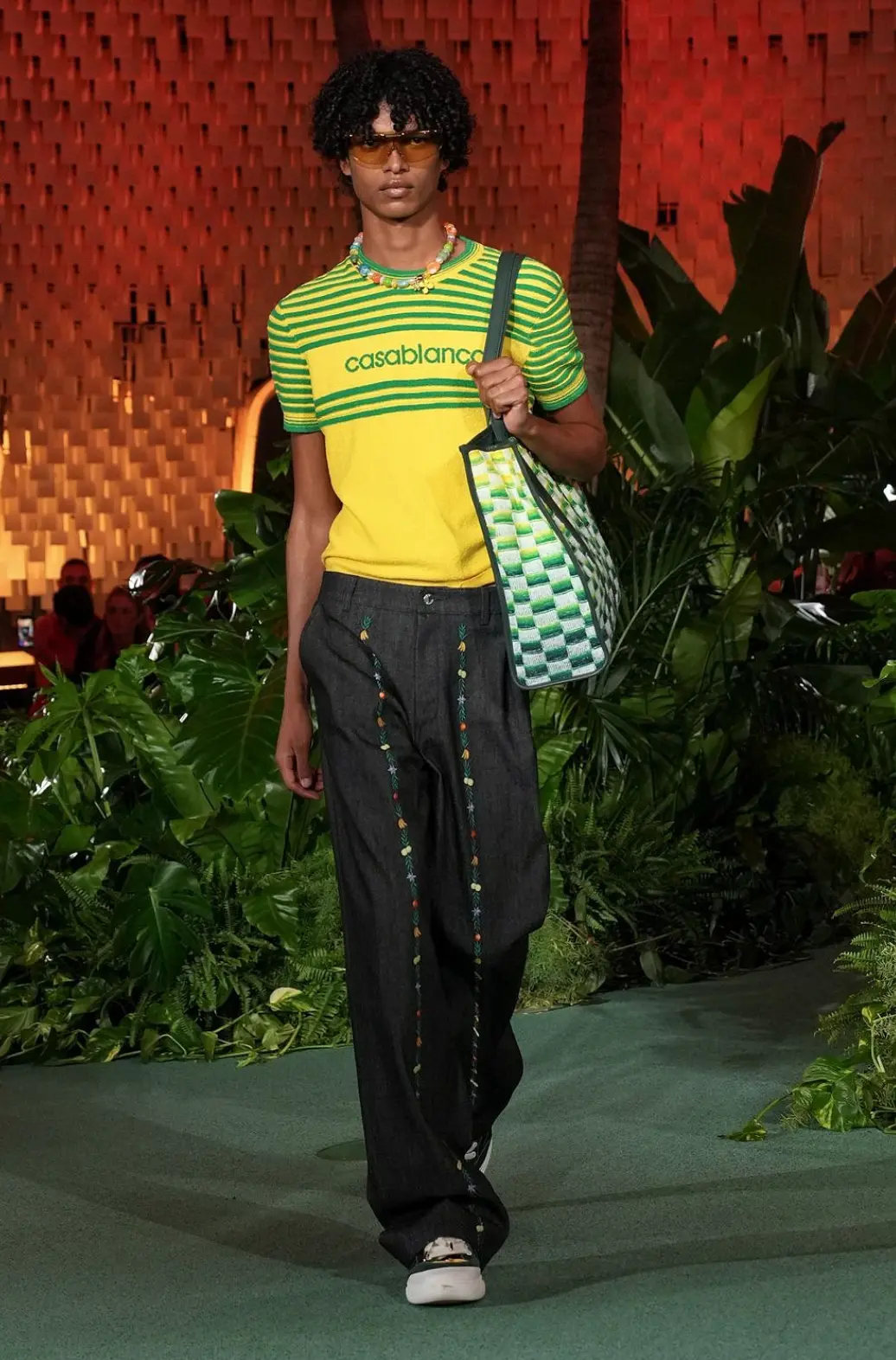
Casablanca went to Brazil for the season, staging Amor e Progresso inside Oscar Niemeyer’s French Communist Party headquarters. Models circled a pocket of Amazon-inspired greenery in football jerseys, boardshorts, crochet swimwear and silk separates. Brazil’s green and yellow ran throughout, joined by orchids, tropical prints and snakeskin finishes. The mood read somewhere between Rio, resort dressing and football culture, with Niemeyer’s curved architecture giving the whole thing a suitably cinematic backdrop.
Lanvin
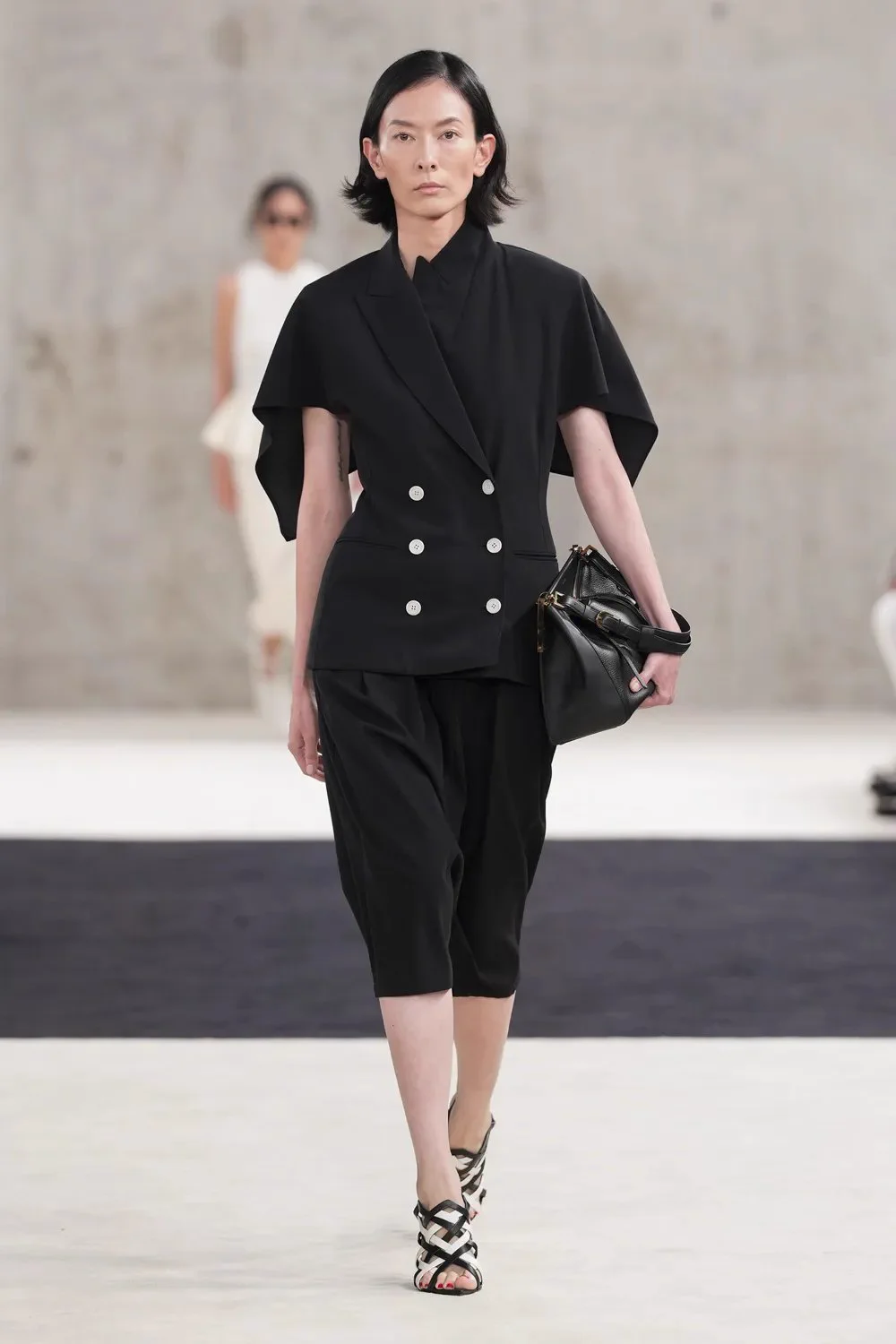
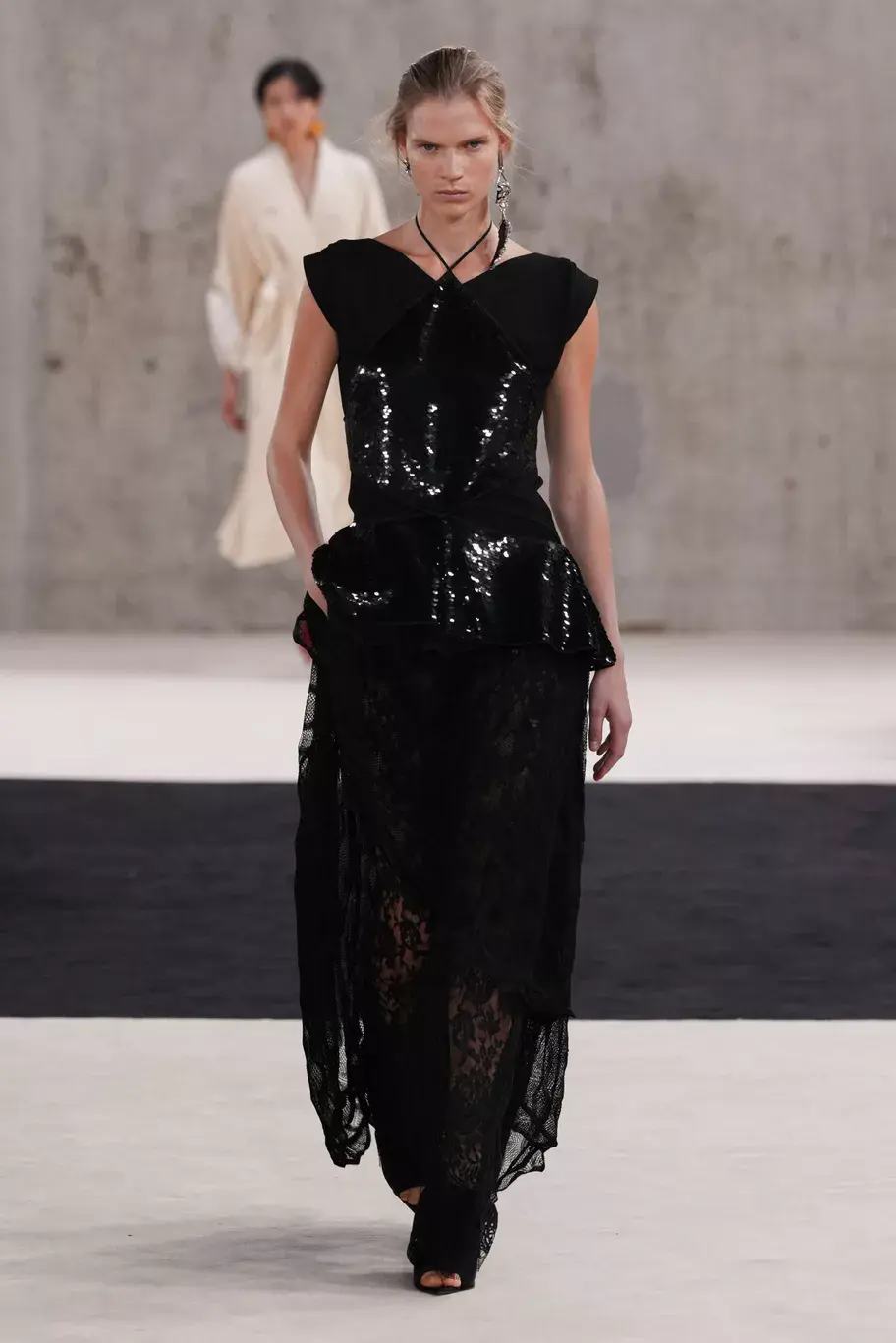
Peter Copping looked to women known for their personal style, including Tina Chow, Georgia O’Keeffe, Anjelica Huston and Elsa Peretti. That translated into cream tailoring, fluid silks, dropped waists and touches of tomato red, with Deco-inspired embroidery and textile references pulled from Jeanne Lanvin’s world. Eveningwear was art in its own right, with chiffon, charmeuse, lingerie lace, mirrors and sequins lending the collection a soft 1930s feel.
Ottolinger
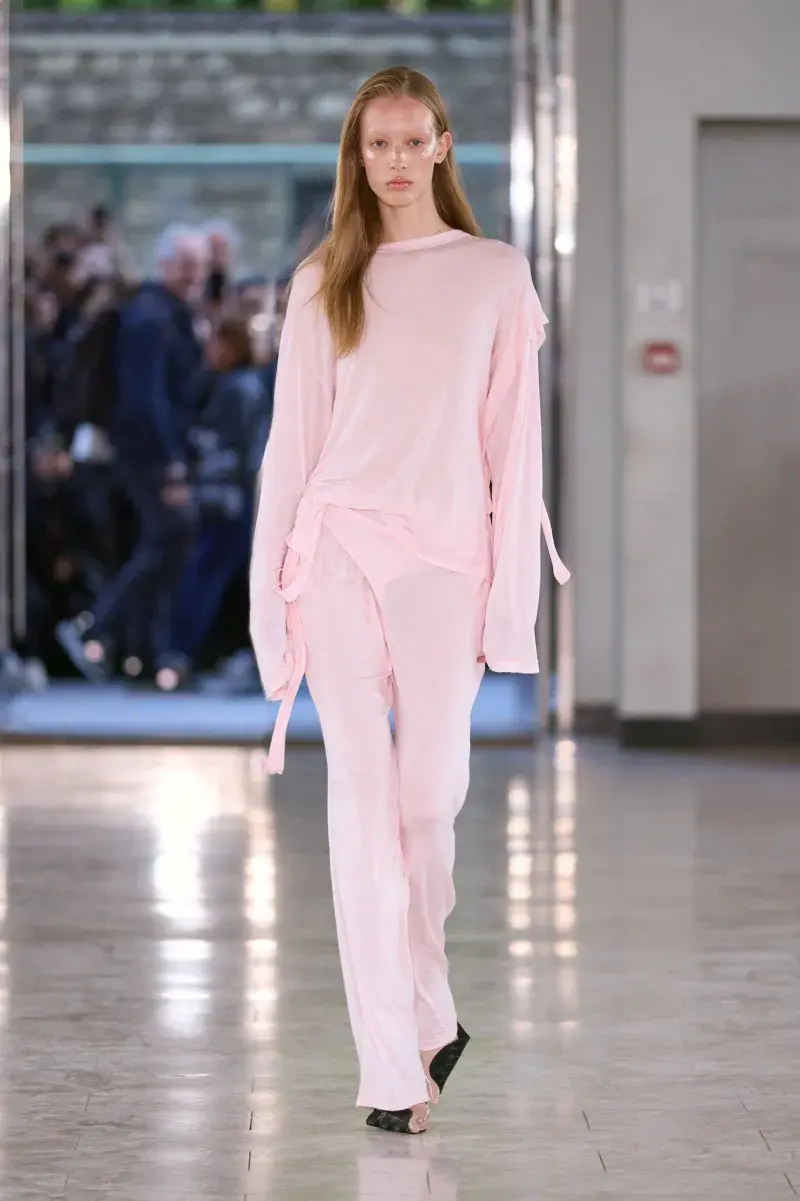
Ottolinger took over the stripped-back shell of a former Zara store for Moisturizer, a collection built around skin, softness and exposure. Cosima Gadient and Christa Bösch worked with gauzy jersey, sheer mesh, silk and denim, wrapping fabrics around the body and letting familiar pieces slip out of place. Hooded sweatshirts hovered over bare chests, waistbands climbed high across torsos and tailoring met lingerie. It felt raw, intimate and a little chaotic, which is exactly where Ottolinger tends to work best.
Givenchy
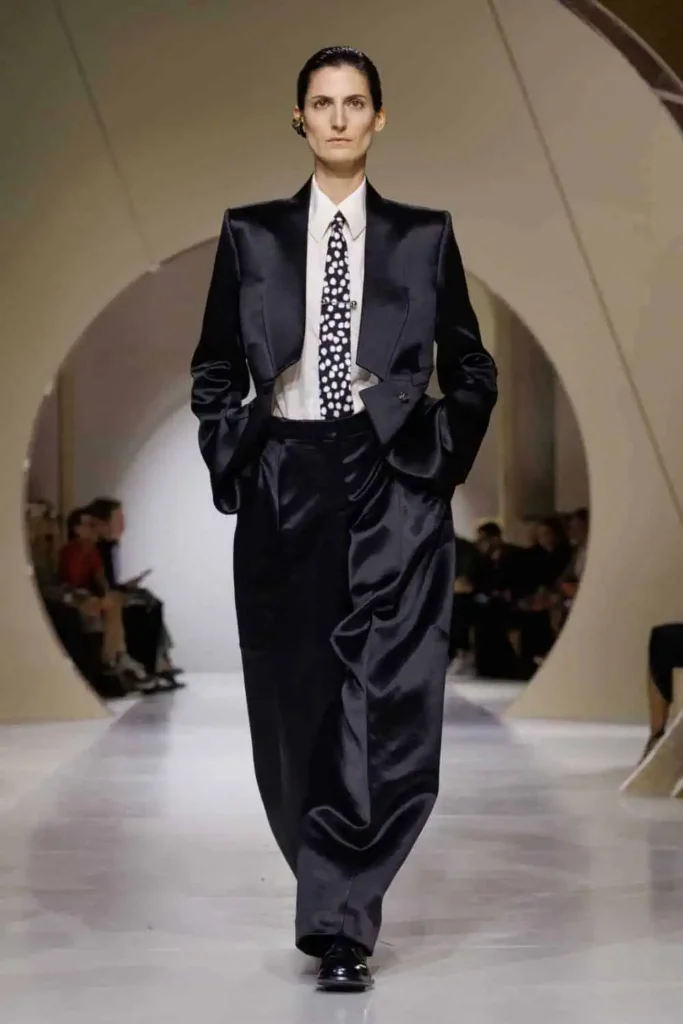
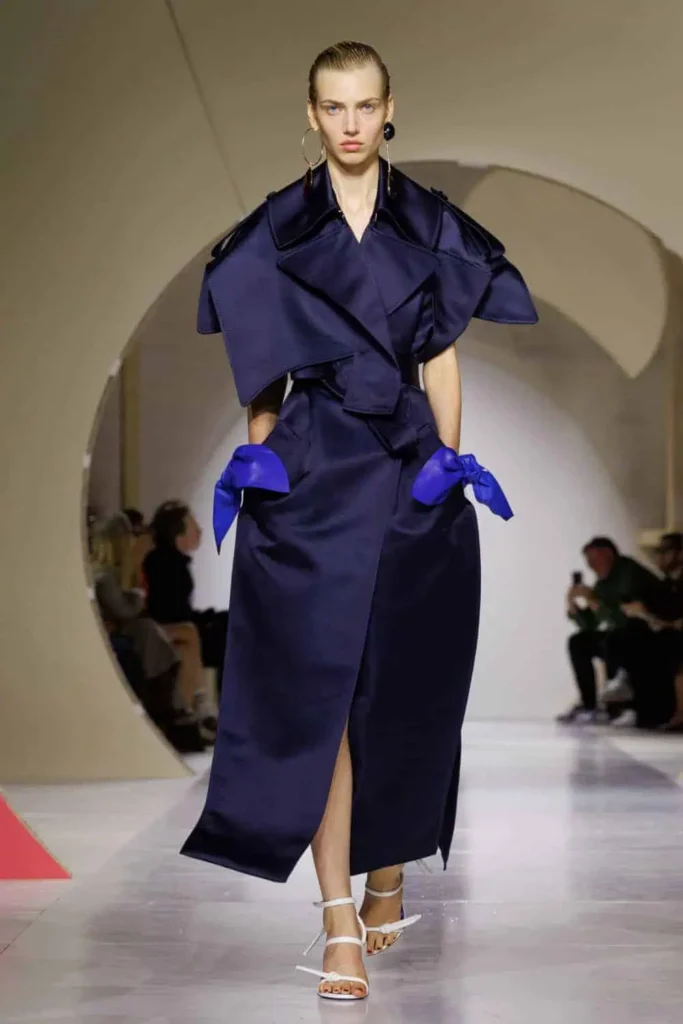
Sarah Burton focused on cut and construction at Givenchy, opening with black leather edged in yellow before moving into pinstripe tailoring, sculpted peplums and pleated eveningwear. Jackets and skirts were shaped to sit unevenly around the body, creating movement without losing the collection’s precision. Cobalt accents, pale pink and metallic jewellery broke up the darker palette, while the final embroidered pink kimono brought a more decorative note to the closing look. The collection continued Burton’s push towards a Givenchy wardrobe built around strong shoulders, controlled volume and close attention to proportion.
Yohji Yamamoto
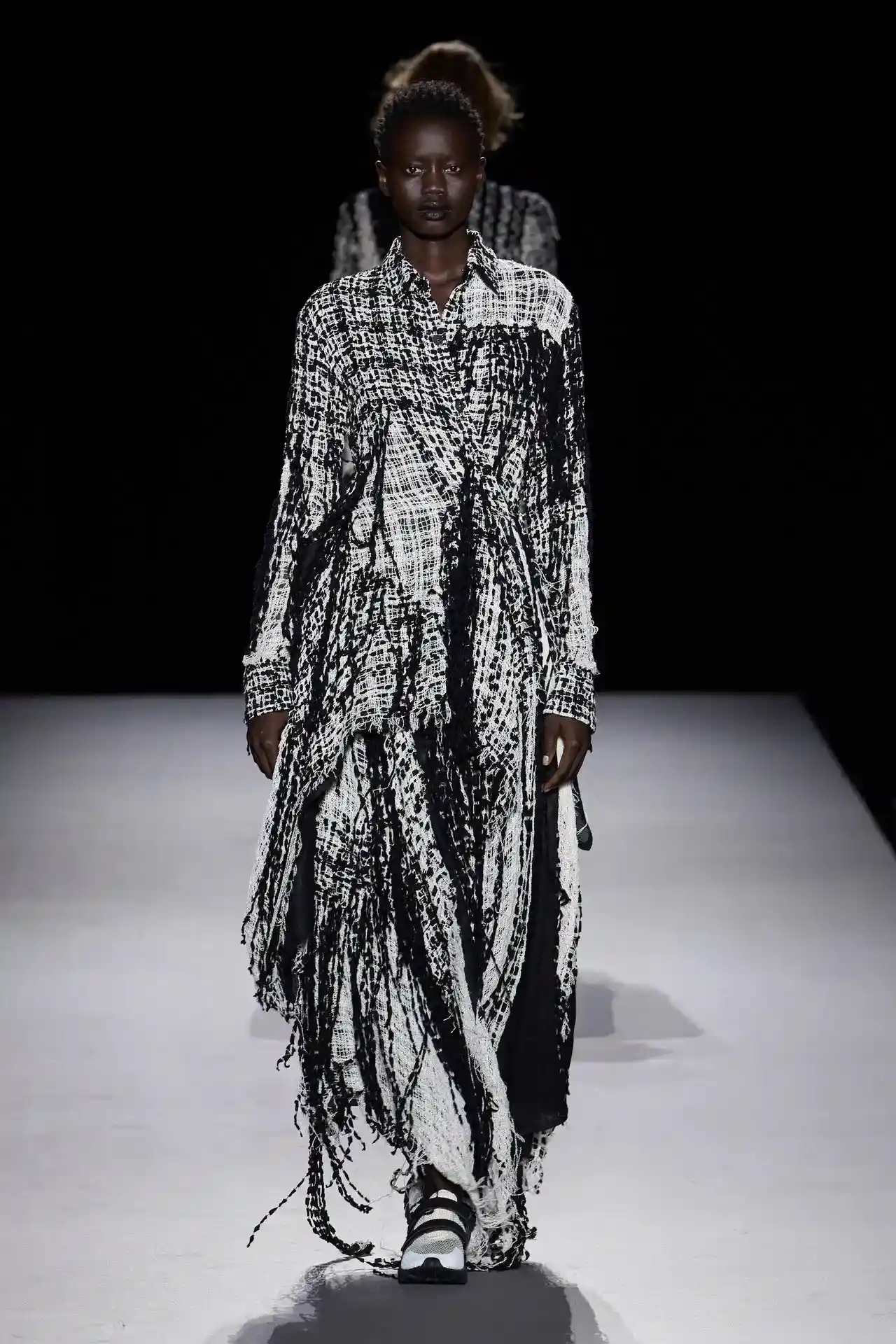
At the Hôtel de Ville, Yohji Yamamoto turned his attention to summer dressing and the realities of hotter weather. Black dresses came sliced, shredded, knotted and framed with wire. Rope details, patchworked surfaces and cut-paper shapes gave each look a handmade quality, while hybrid sandals and boots kept things grounded. Red fringe finally broke through the black in the closing looks, bringing an unexpected lift to the finale.
Victoria Beckham
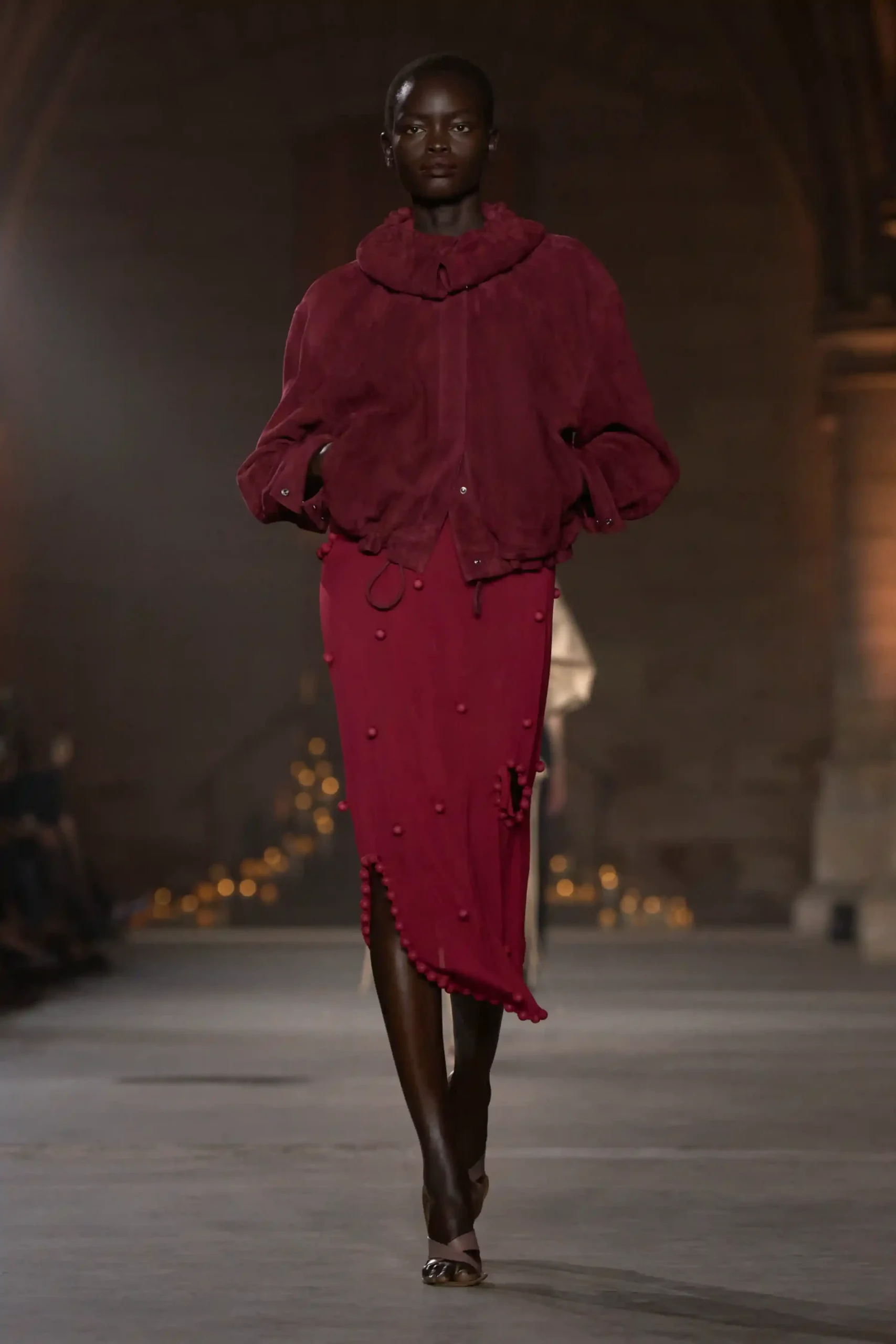
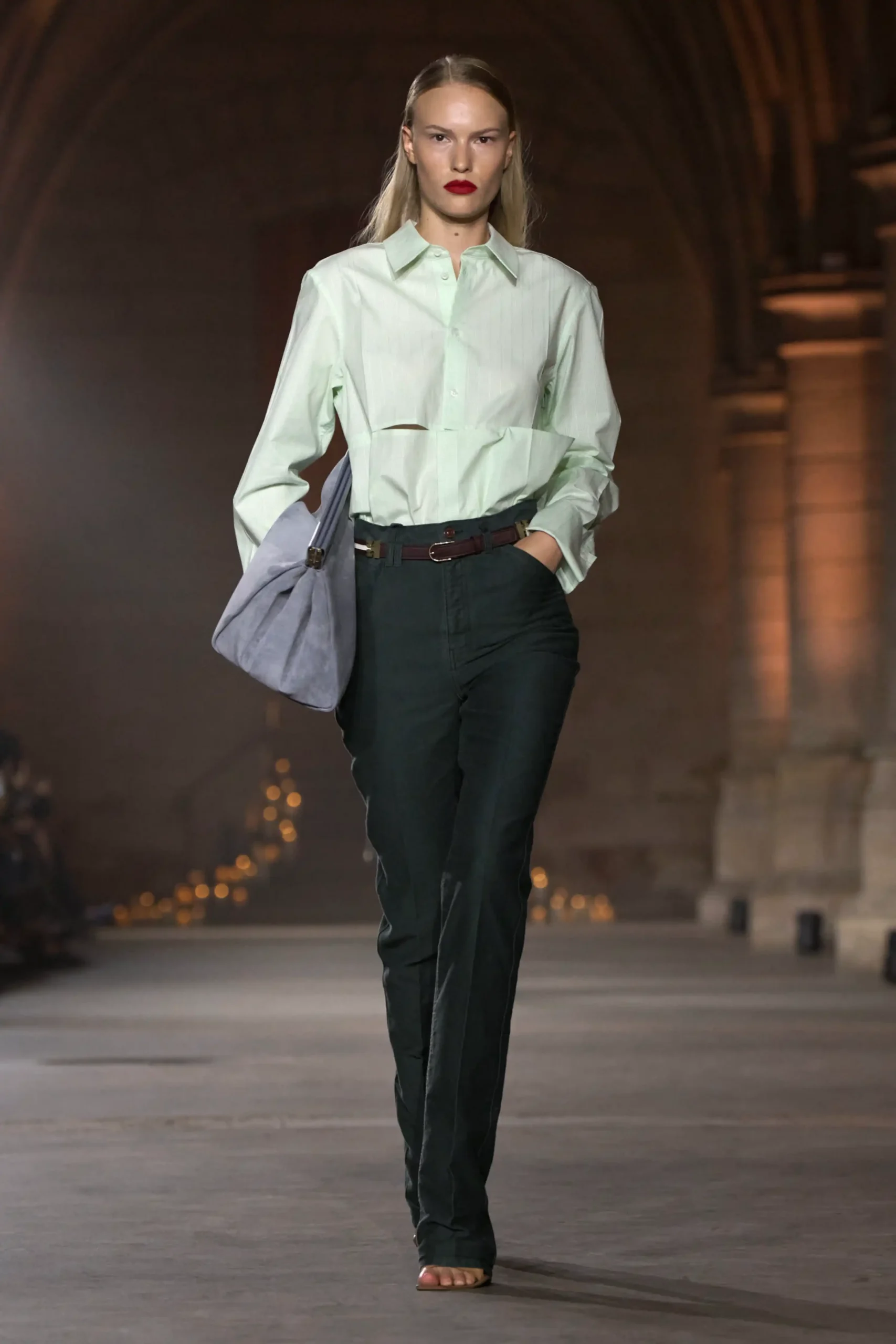
Victoria Beckham loosened things up for spring, drawing lightly from the 1920s without letting the collection become period dressing. Semi-sheer shifts, pleated dresses, chain-suspended details and fluid tailoring moved easily down the runway. Jackets stayed clean, trousers fell lower and bombers came with generous volume. A recurring red lip gave the neutral palette a punch of colour and tied the beauty look neatly back to the house’s wider universe.
Saturday, 3 October
Junya Watanabe
Junya Watanabe called the collection Funky, and Ciara opening in a chandelier-like structure set the tone immediately. Circuit boards, chains, mesh, metal breastplates and sculptural frames turned the runway into a study in construction, followed by deconstructed trenches, corsetry and exaggerated tweed. Choreography shifted with the soundtrack, moving from high-energy struts to stiff, mannequin-like pacing. The clothes felt built as much as designed, with hardware and humour carrying the show.
Celine
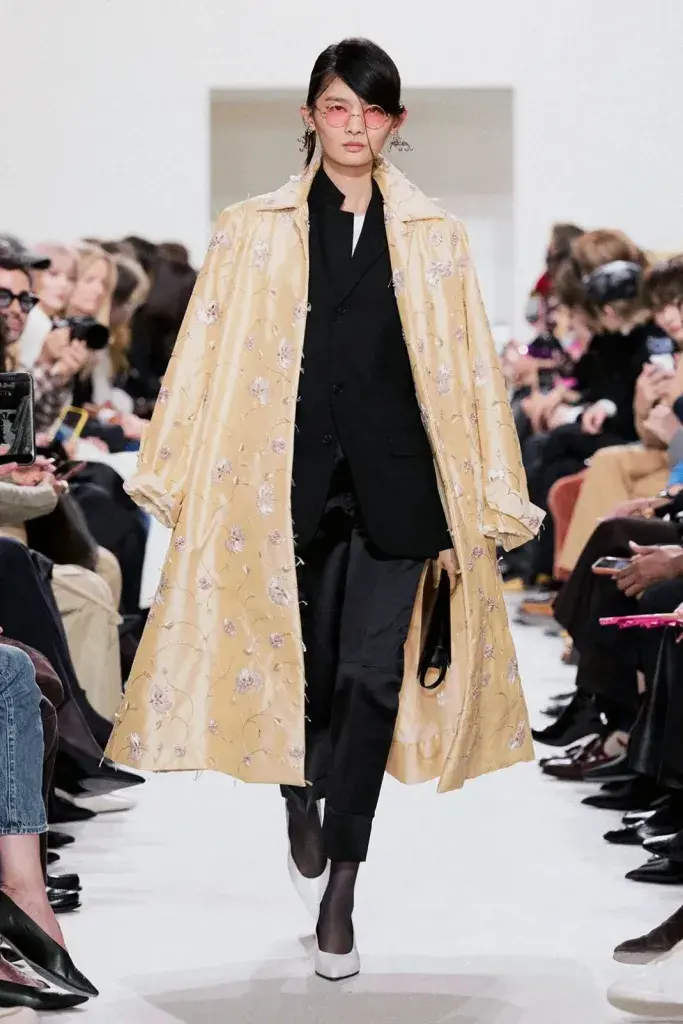
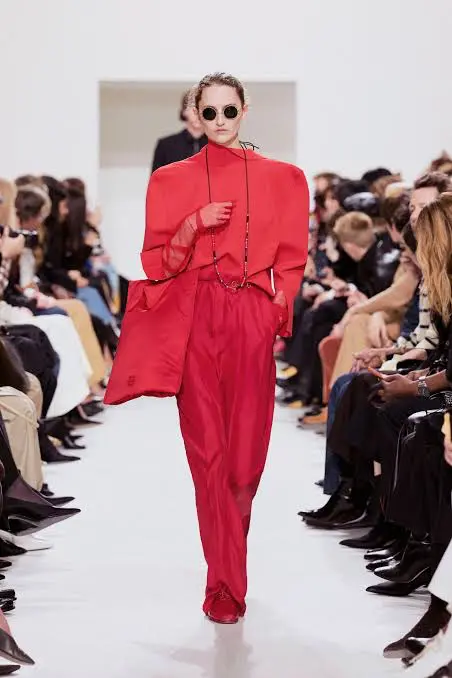
Michael Rider staged Celine at the Archives Nationales and continued to make the house feel more relaxed and personal. A clean black dress opened the show before leather jackets, satin, slouchy trousers and dressmaker coats took over. Narrow belts, chunky silver bangles, bandana-style trousers and easy footwear kept the styling loose. A voiceover from Paris Is Burning figure Dorian Corey added warmth to the mood, while Rider’s wardrobe-first approach kept everything grounded.
Noir Kei Ninomiya
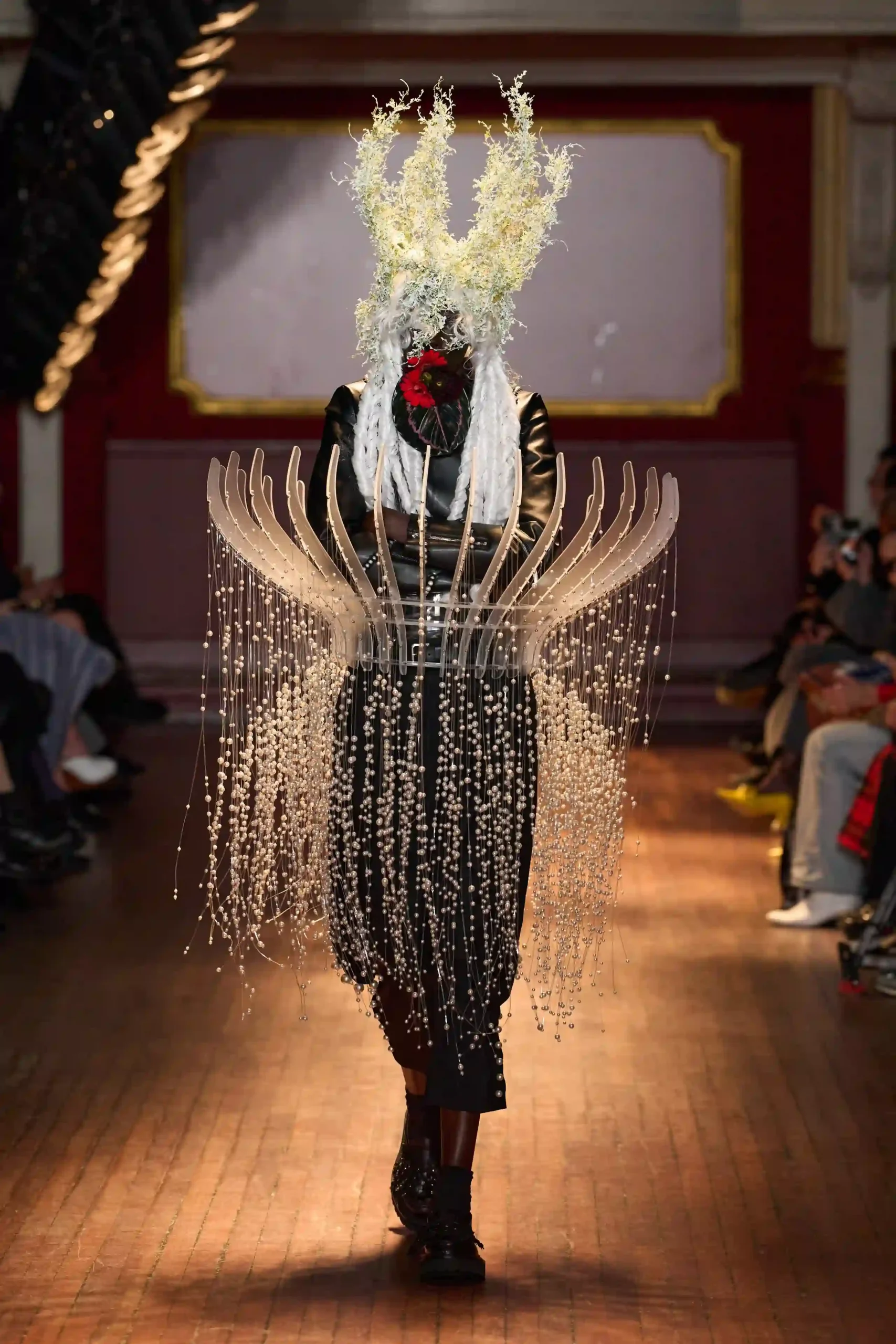
Florals for spring can be groundbreaking after all. Kei Ninomiya imagined flowers as structure this season, building a collection around what he called a “petal rebellion.” Transparent cages, pearls, coils and wire held garments away from the body, while lilies, dried flowers and tiny beaded blooms emerged from mesh constructions. Some models carried flowers between their teeth, others wore ringleted wigs with a strangely formal feel. Playing-card motifs and biker details added edge before the finale pushed the floral idea into elaborate bouquet-like forms wrapped in crinkled shells.
Vivienne Westwood
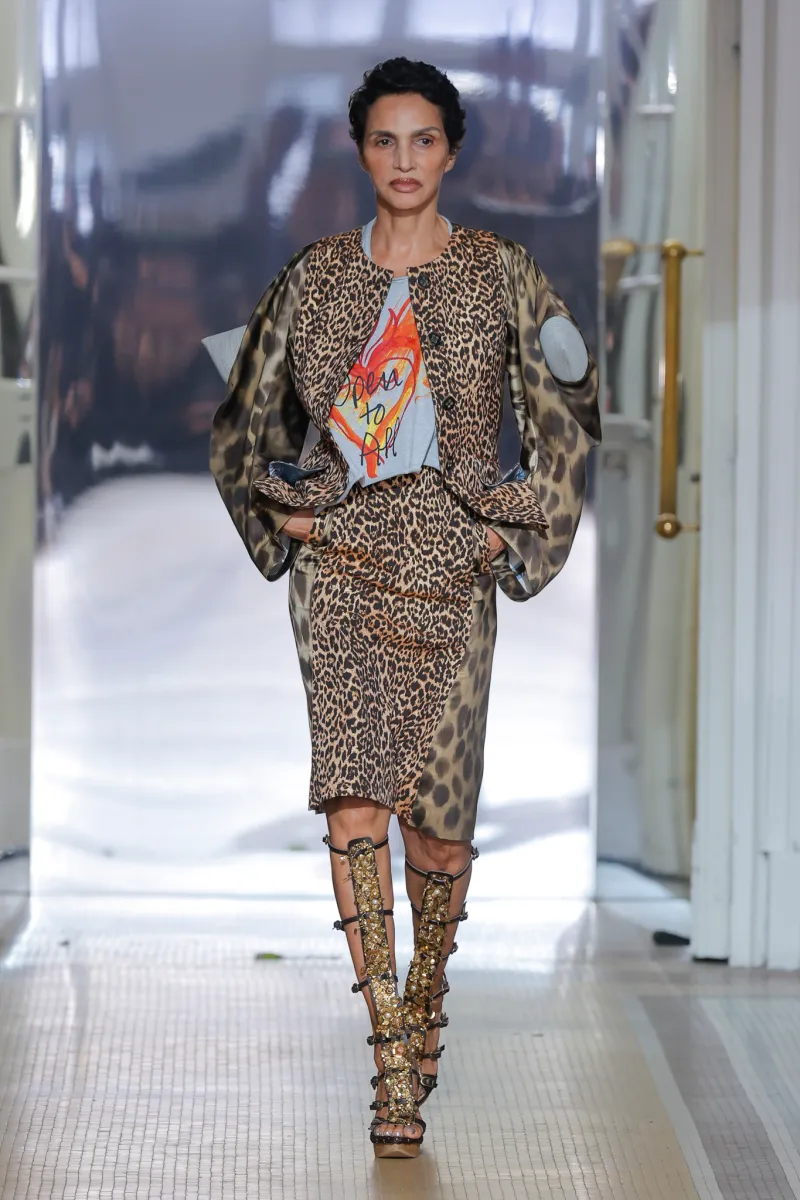
Andreas Kronthaler brought colour, history and plenty of personality to the Palais de la Femme. Farida Khelfa opened the show, Natasha Lyonne appeared on the runway and poet Stuart McKenzie performed as models moved through floral prints, Bazin cottons, beachwear and slouchy tailoring. Fabrics sourced around Barbès gave the collection a vivid palette, while historical shapes and punk references kept the Westwood codes firmly in place. The clothes changed as they moved, folding, opening and shifting with the body.
Hermès
Hermès returned to the Garde Républicaine with a collection built around lightness and movement. Nadège Vanhée worked with openwork knits, sheer dresses, mesh-backed leather and paper-thin calfskin, echoing the show notes’ references to “the shape of air” and “a sky in motion.” Utility jackets and silk pongee parkas brought structure, while belts, cuffs and scarves were worked directly into the clothes. Poppy orange, tomato red, yellow and olive cut through the opening neutrals, standing out against the bright white interior of the historic cavalry barracks.
Elie Saab
Elie Saab covered the runway in wildflowers and carried the floral theme right down to tiny buds worn on the models. The collection looked to 1930s Hollywood through satin, lace, corsetry and lingerie-inspired dressing. Bralettes, bustiers and slipping straps appeared with satin suits, liquid gowns and exposed midriffs. Pastels dominated, broken up by black, rose-toned animal print and a hit of acidic lime. The ombré gowns and embellished slips brought the expected red-carpet drama, styled with a lighter hand than usual.
Sunday, 4 October
Lacoste
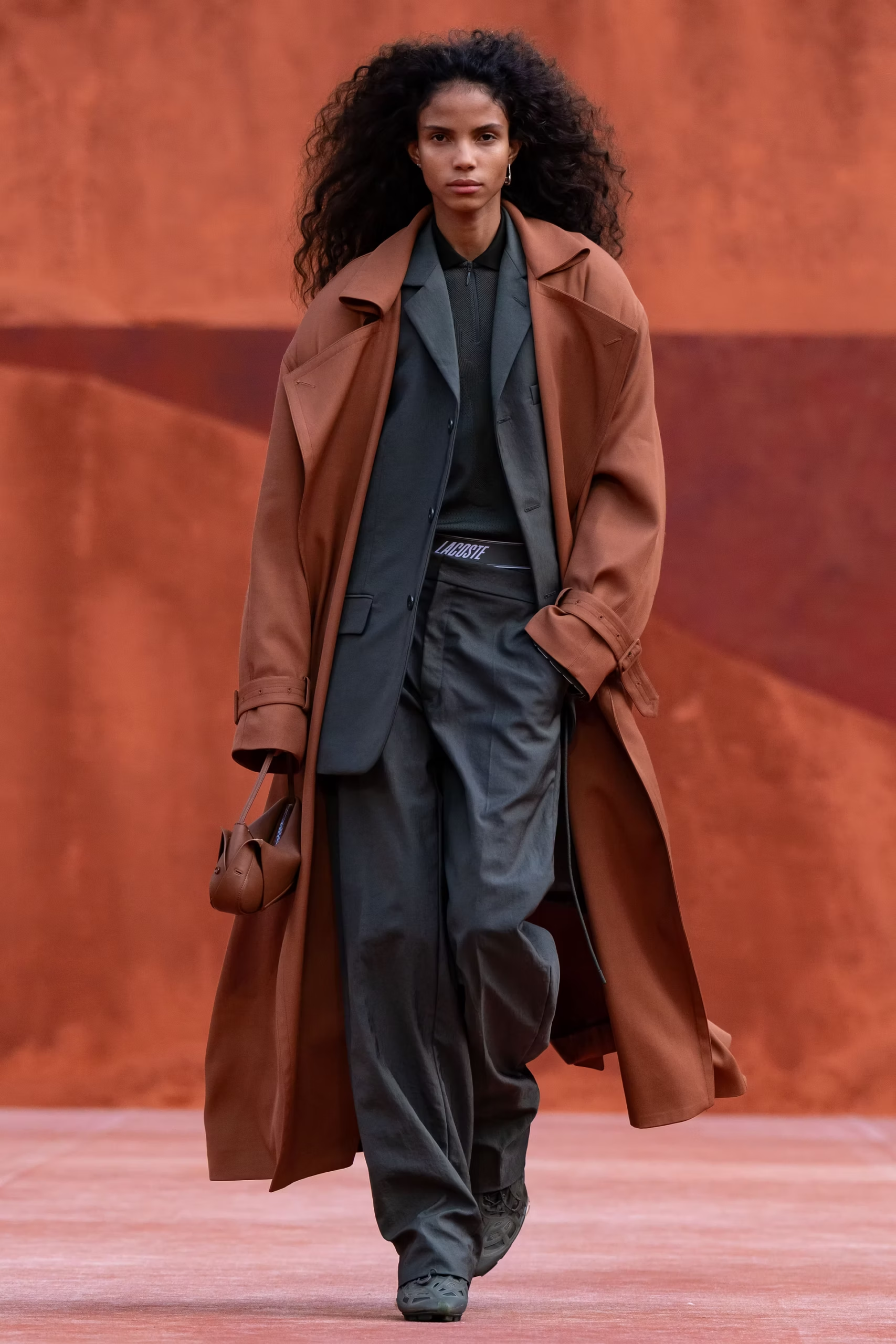
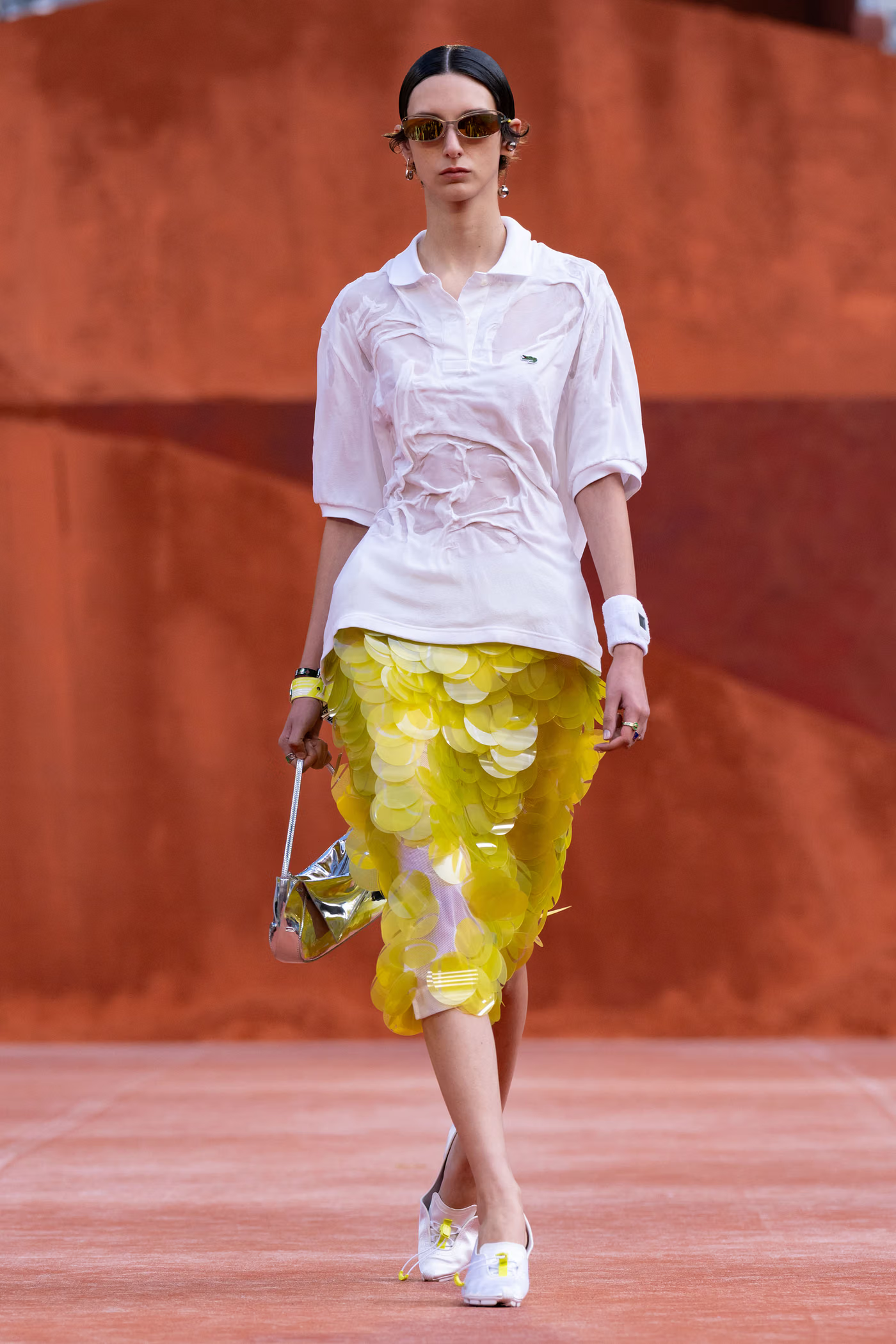
Lacoste returned to Court Philippe-Chatrier at Roland-Garros for SS27, where Pelagia Kolotouros made the famous red clay the collection’s starting point. Under the title Dress code: No white required, rolling banks of ochre earth surrounded relaxed tailoring, oversized piqué polos, semi-pleated skirts, crinkled technical fabrics and cobalt tracksuits. Clay, olive and charcoal were punctuated by tennis-ball yellow and silver, while wet-look finishes suggested clothes straight off the court. Inverted crocodiles and wired collars disrupted Lacoste’s preppy codes, with tennis-ball paillettes and the net-caged ACE-T1 sneaker carrying the sporting references into the details.
Niccolò Pasqualetti
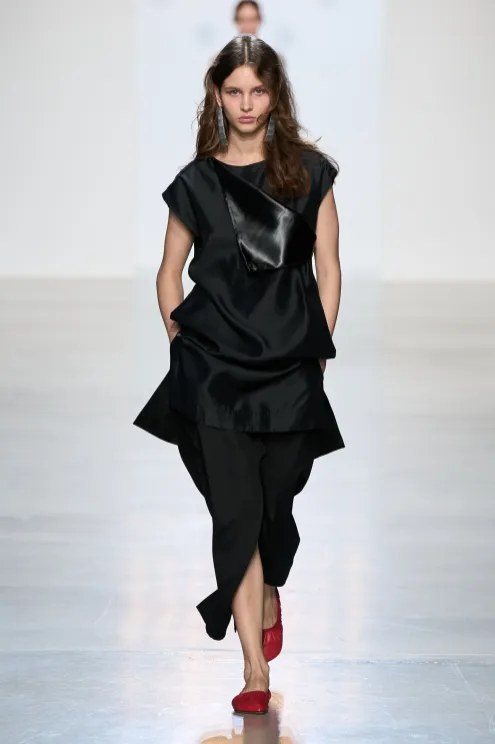
Niccolò Pasqualetti looked to Brazilian artist Lygia Clark and her interest in objects that change through interaction. Garments began as simple geometric shapes before being pulled, tied and shifted around the body. Poplin gathered through cords, skirts came built from angular panels and column dresses were sliced asymmetrically. Gauze sat against suede, mesh against gabardine and laminated silk took on the appearance of crumpled metal. The strongest looks felt precise in construction and unexpectedly fluid once worn.
Miu Miu
Miuccia Prada washed the Palais d’Iéna in royal purple for Here and Now, with chocolate-brown seating arranged like bleachers around the runway. The collection pushed everyday sportswear into dressier territory: crystal-covered bra tops layered over performance jerseys, track pants paired with tailoring and spaghetti-strap dresses worn over rugby shirts. Vintage Wrangler denim was reworked with crossed lacing, while wax-laminated suede was deliberately cracked and creased. The new Miu Miu x New Balance RC150 sneaker ran throughout, and the casting included Olivia Colman, Emma Corrin, Jamie Bell and Gigi Hadid, who closed the show.
Valentino
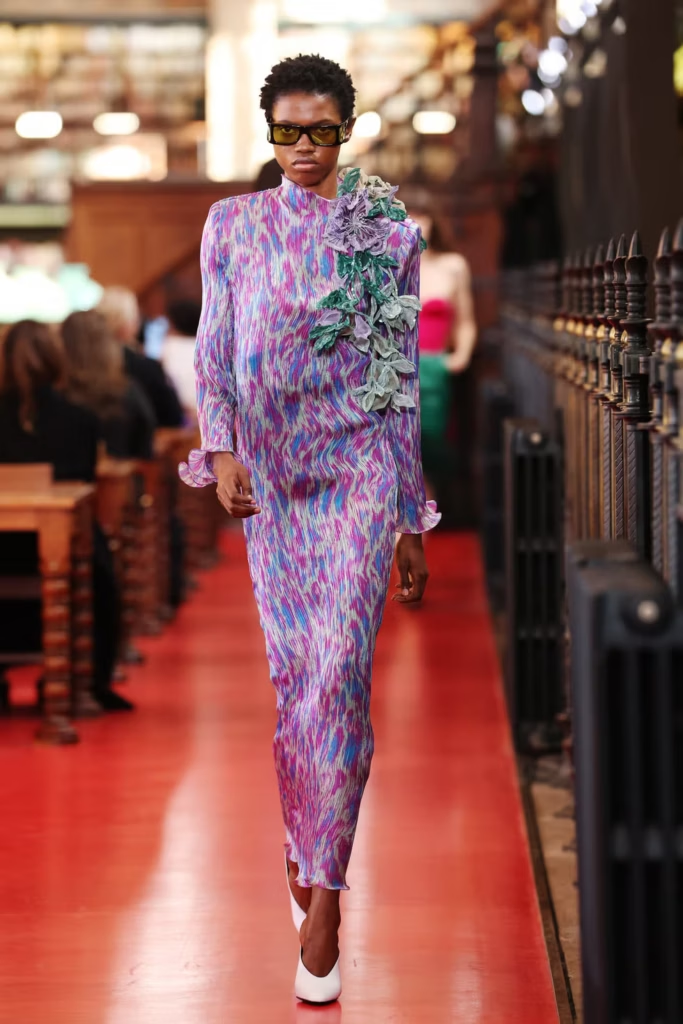
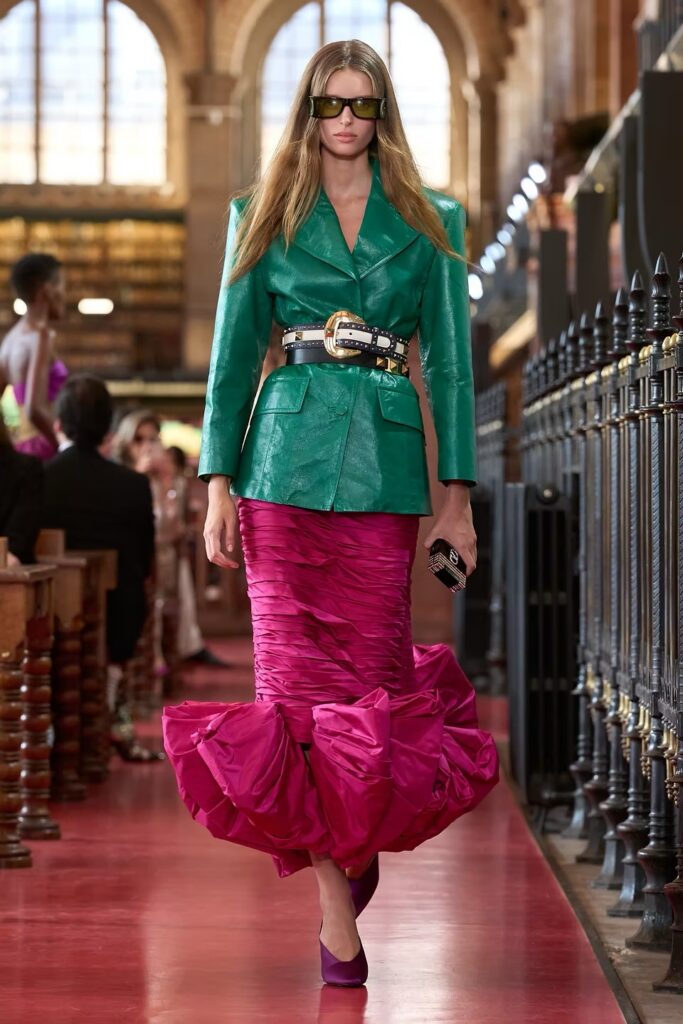
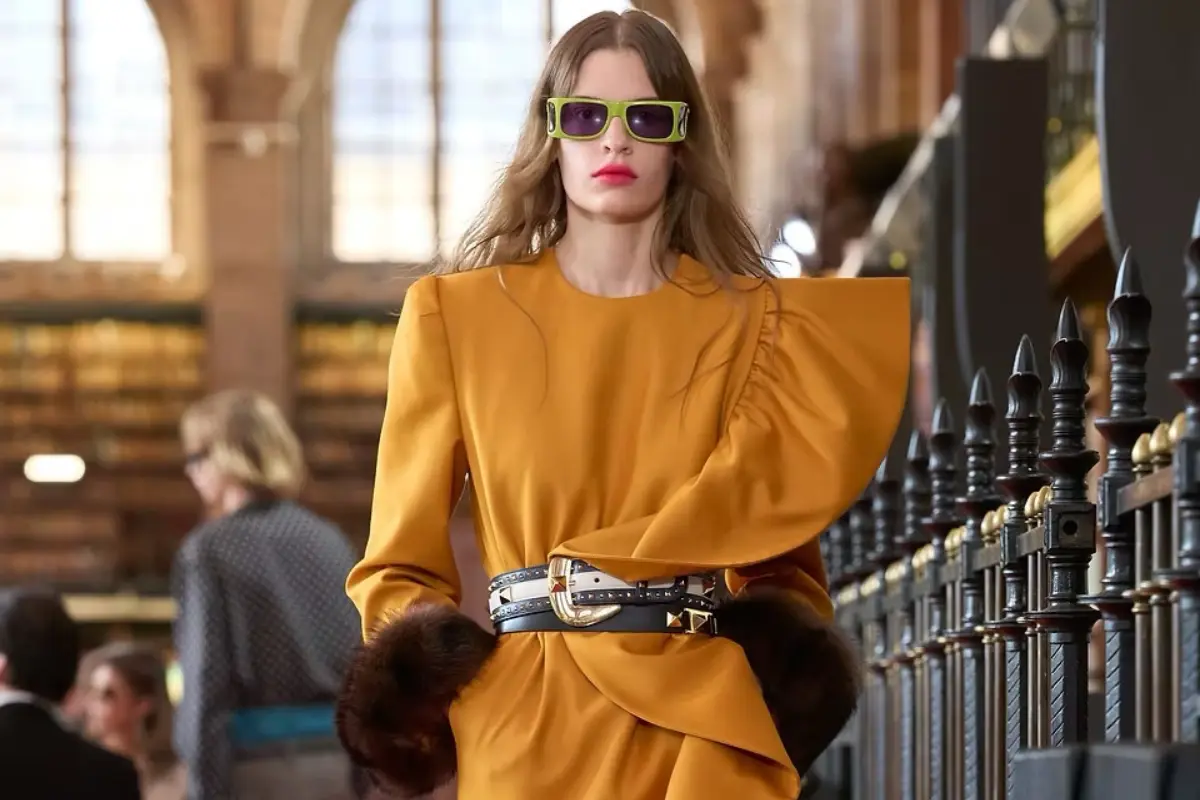
Valentino had c-o-l-o-u-r this season. Alessandro Michele staged Antibiblioteca inside the Bibliothèque Sainte-Geneviève, drawing on the idea of unread books — and unworn clothes — as containers for lives and possibilities still unexplored. Guests were even asked to bring a book for donation. On the runway, jewel-toned satin bustiers met feathered skirts, floral dévoré, rhinestones, oversized bows and stacks of jewellery, with hot pink, lilac, marigold, lemon yellow and cherry red running through the collection. Minimal satin columns, long trains and misbuttoned tailoring gave occasional pauses between the excess.
Mugler
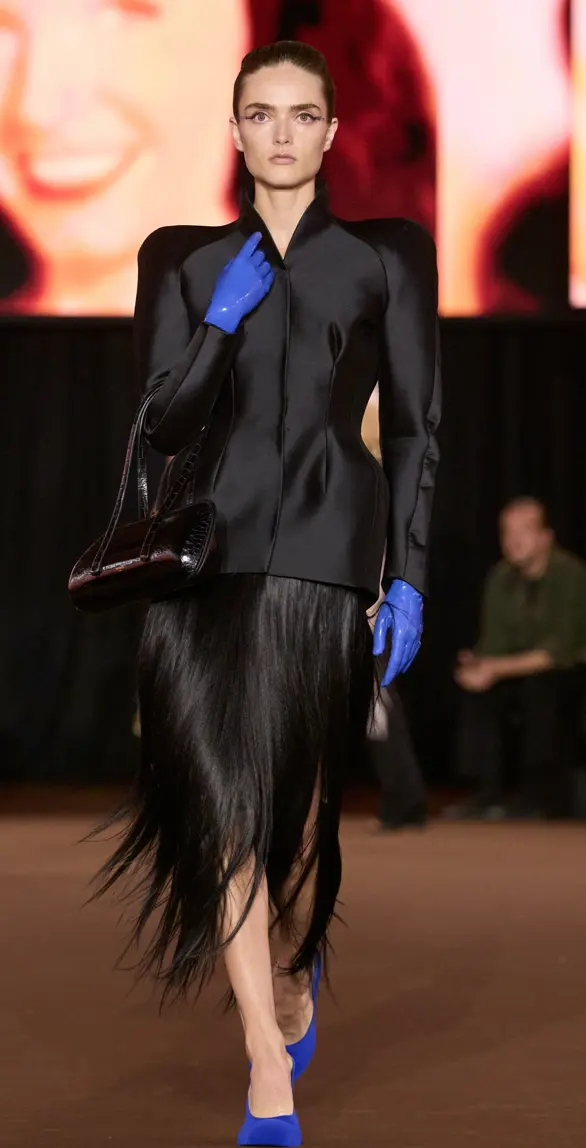
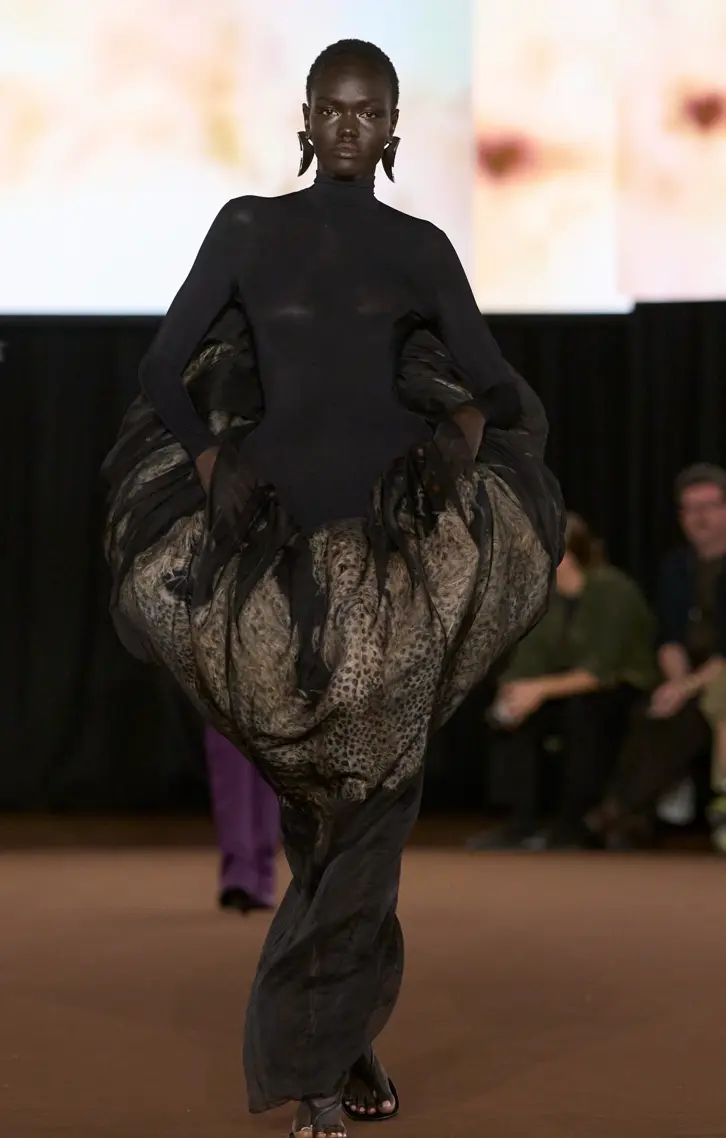
Miguel Castro Freitas continued reshaping Mugler with Naturalia X, looking to organic forms, recycled materials and the stranger side of nature. Projected imagery surrounded the runway as faux-animal surfaces, sculpted tailoring and body-conscious shapes moved through the space. Björk served as a key creative reference, with her fearless approach to self-image feeding into the collection’s mood. The result kept Mugler’s sharpness intact while pushing the house towards something wilder and less polished around the edges.
Jean Paul Gaultier
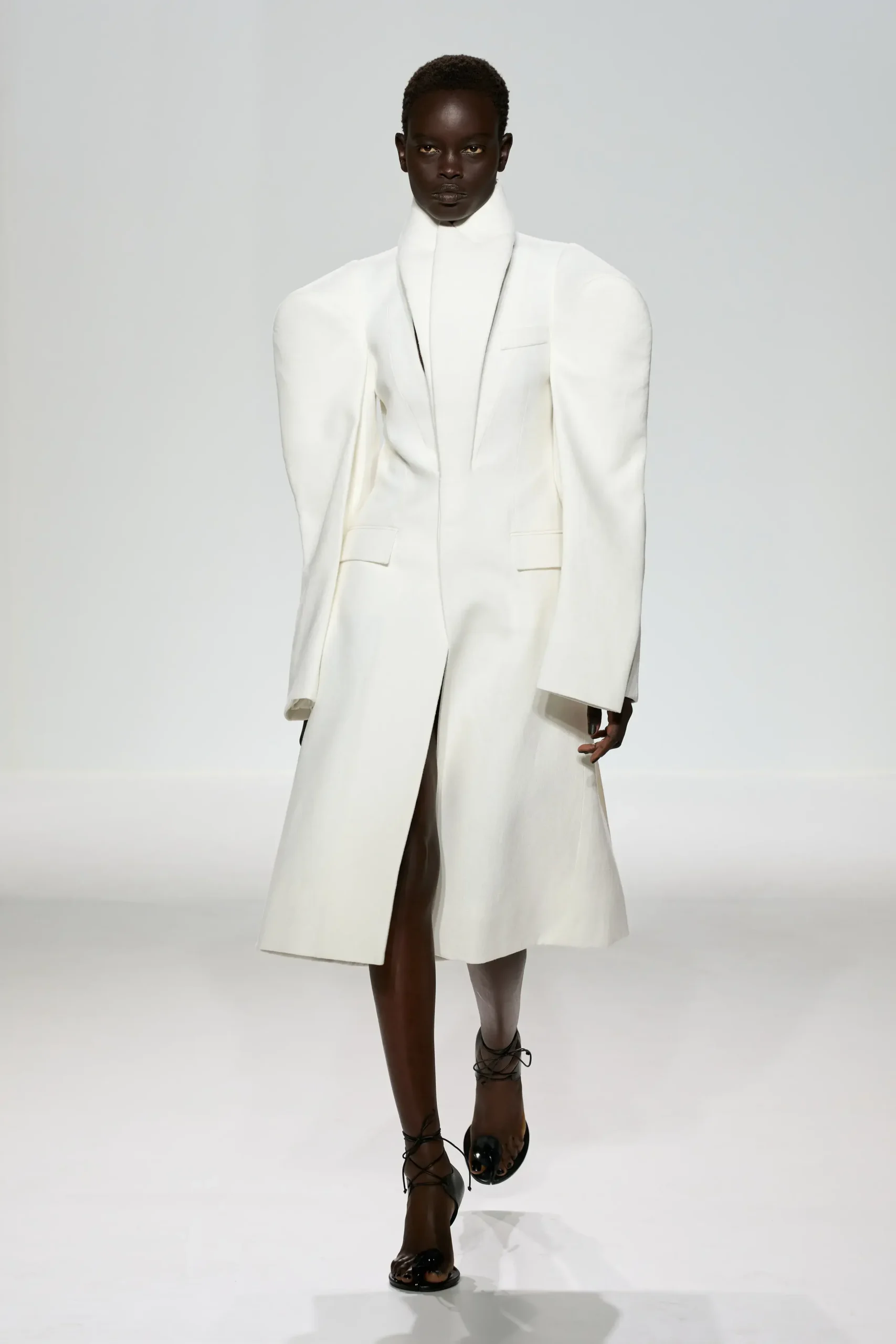
Duran Lantink closed Sunday by pushing Jean Paul Gaultier’s familiar codes into exaggerated new shapes. The show opened with a white coatdress featuring oversized shoulders and sculpted lapels, followed by warped tailoring, low-rise denim, tartan, corsetry and deliberately off-centre trousers. The cone bra appeared across cutout dresses and denim, while cage-like leather and stacked headpieces kept the theatre going. Footwear was a major focus too, with split-toe flats, heels and lace-ups marking one of Lantink’s strongest new additions to the house.