
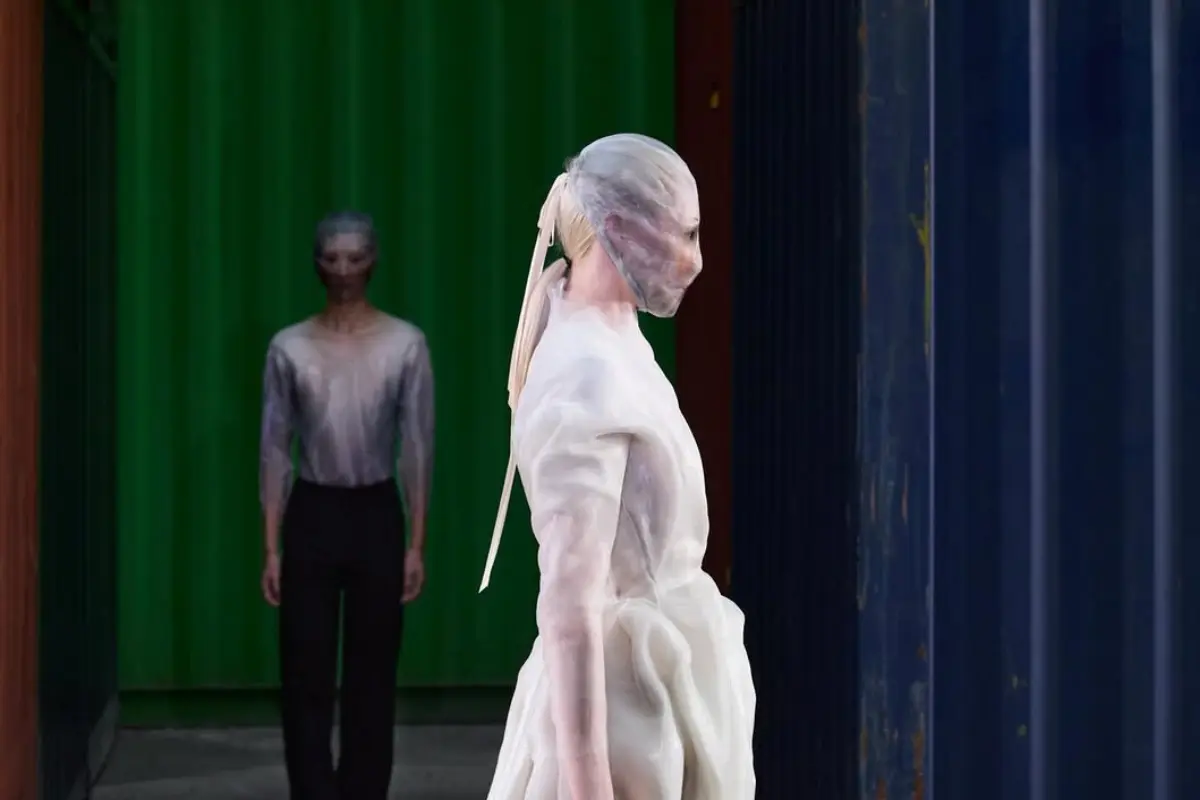
For those in Shanghai, April Fools was quickly dimmed down by Maison Margiela’s first-ever travelling runway show. Taking over the outskirts of Shanghai, Martens presented a collection of artisanal and ready-to-wear looks, a first for the brand, amongst shipping containers. Guests already knew what to look forward to, as the invite included a simple paintbrush and a can of white paint—a reference to the maison’s bianchetto technique, in which white paint was applied to fabrics, revealing cracks and wear over time.
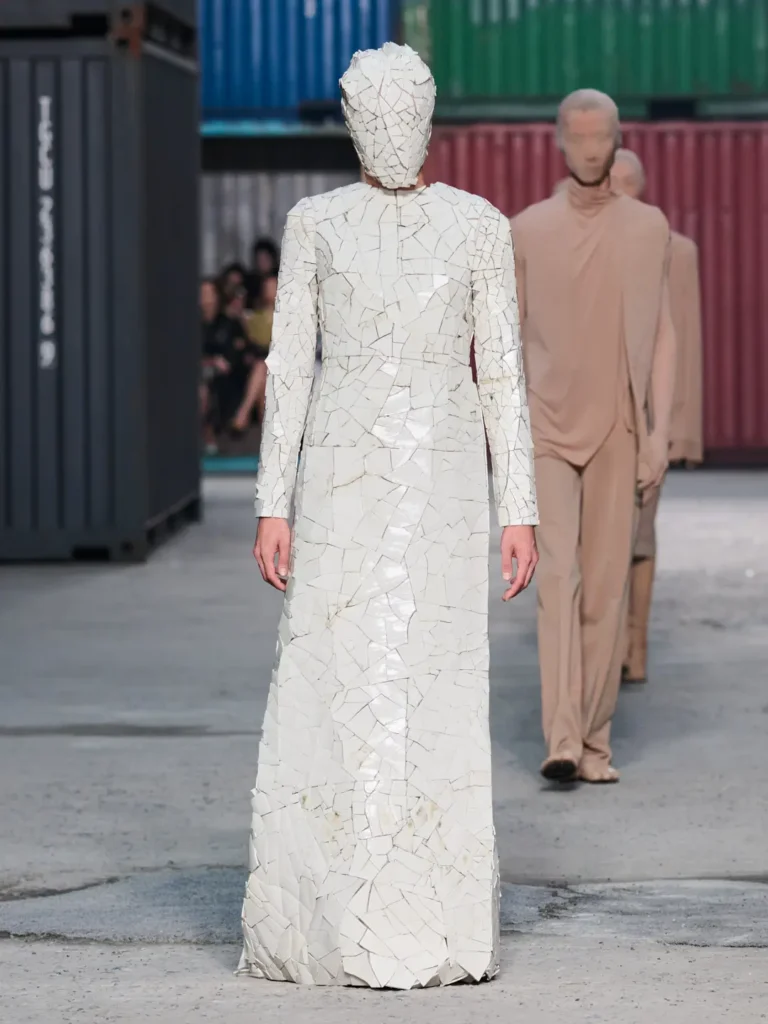
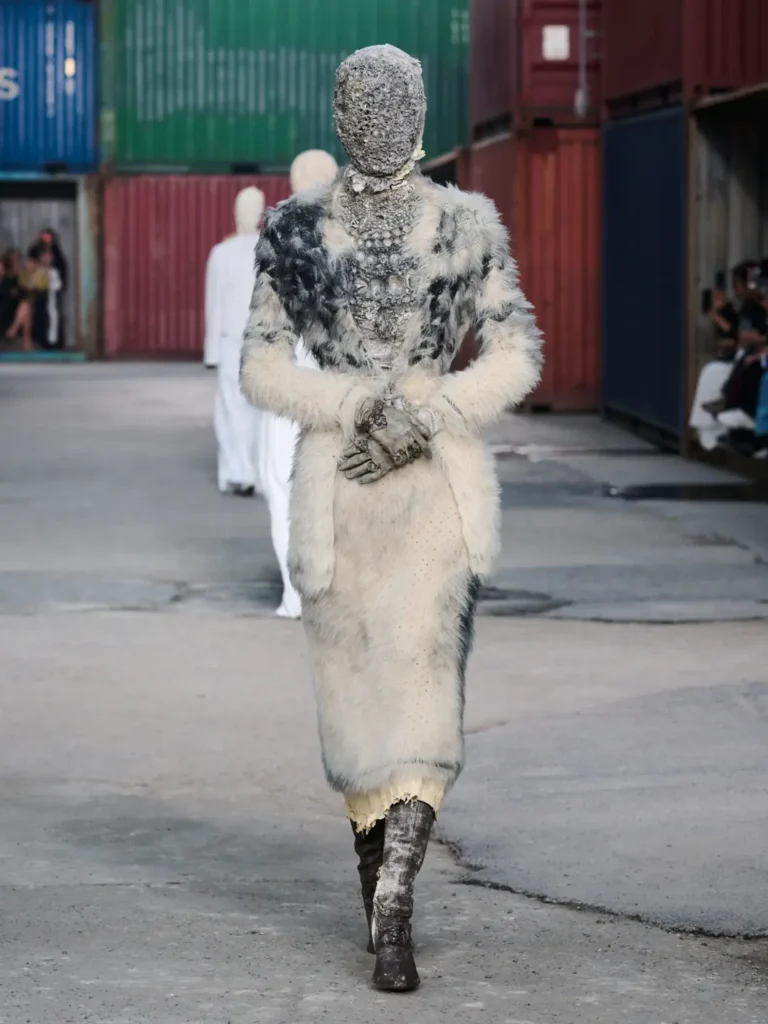
This collection both spotlights and expedites this process of deconstruction and reconstruction. Taking antique jewellery, porcelain, tapestries, and other found objects, Martens revised them, pushing the limits of craft, texture, and what can be considered a textile through artistic renovation. Jewellery was moulded into casts, leaving models walking down the runway with cast impressions. Silk dresses were coated in beeswax to create a solid yet cracked texture and form. Porcelain was broken into pieces, rounded, and then meticulously sewn to an organza dress. Tapestries found in flea markets were refashioned with sequins, breathing life into the fabric with hand embroidery. It was ingenuity born from taking a second look at found objects.
But it’s also a nod to the founder’s original process. “The starting point of Martin Margiela was really the thrift store,” Martens reportedly said. “What mattered was how you actually looked at things and change the perception of it.”
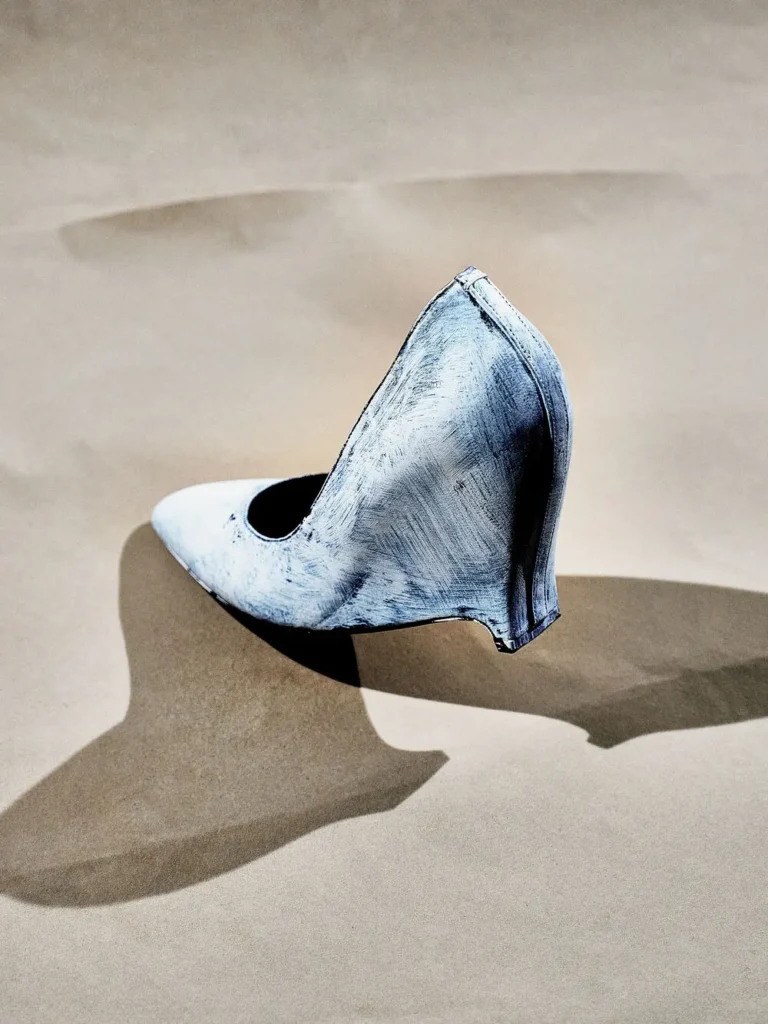
The new creations that made appearances were the accessories. A Heel-less pump with fresh white paint strokes and a pouch bag featuring bonded leather wrapped around it managed to catch eyes among the sea of re-worked garments.
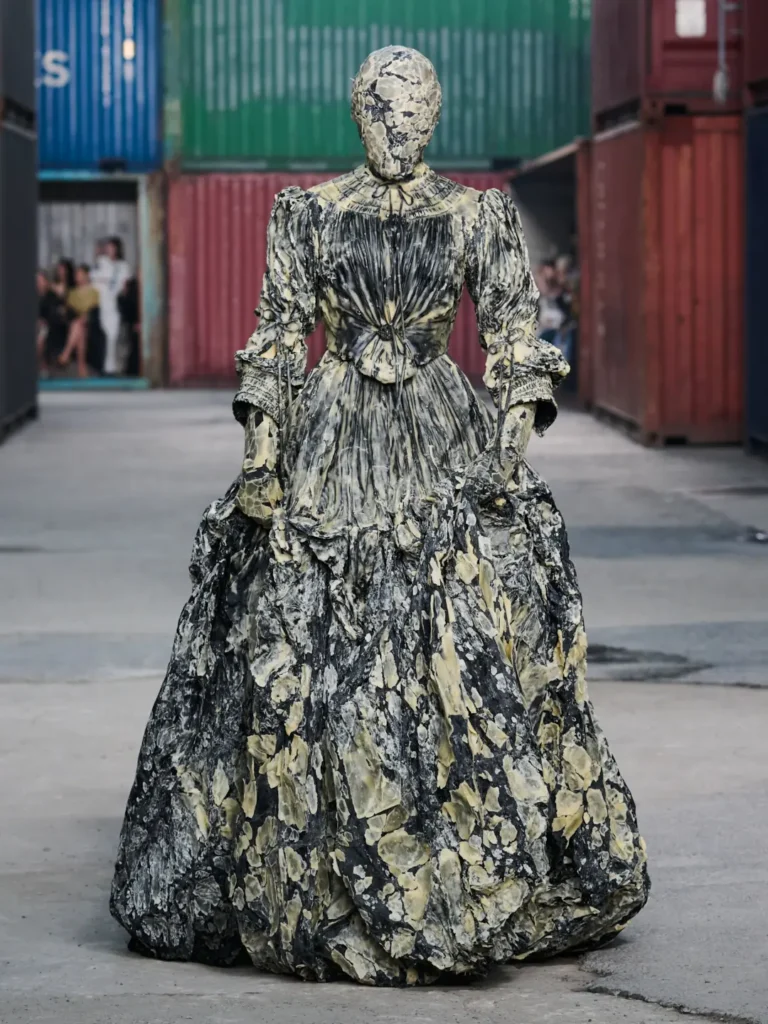
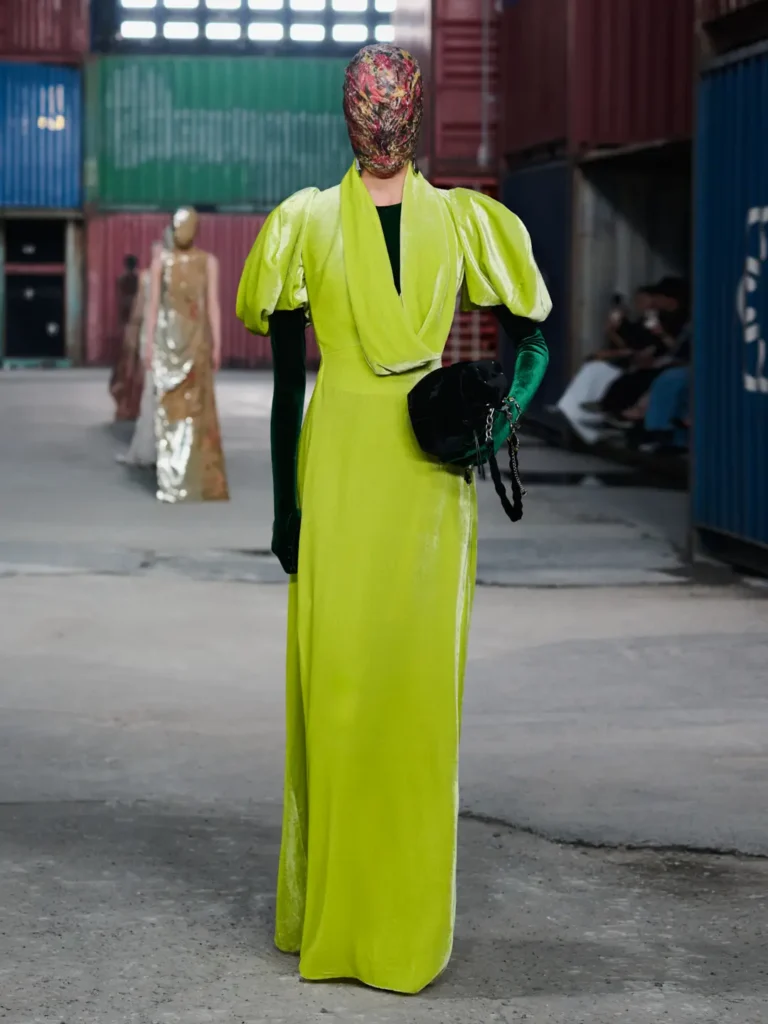
This collection also took a firm look at silhouettes, especially the Edwardian silhouette. Certain looks fashioned themselves to the traditional hourglass shape, while some jackets borrowed the silhouette’s shoulders, and a rich velvet dress borrowed the sleeves, opting for a more modern look. Although borrowing from the past, Martens retains the modest silhouette when fashioning it for contemporary audiences, making this collection modest-friendly for most dressers.
It’s an interesting direction to go, especially when culturally, fashion is slowly circling back to showing off flat stomachs and bare collarbones. But if there’s anything we’ve gathered from the maison’s current exploration on Material & Construction, it’s that mainstream isn’t their style, it never was. And in a time when clothes are piling high in landfills, Martens shows us how to reduce that pile while continuing to preserve silhouettes, craftsmanship techniques, and styles of the past. By pursuing the beauty of the secondhand, we can see how found fabrics and objects still hold so much more life to live.