I have never been able to look past it.
A woman placed against the bonnet of a car. A woman draped across a hood in an advert. A woman inserted into a music video, a film scene, a glossy campaign as ornament, as status symbol, as visual shorthand for desire. A woman there to heighten the car’s appeal, to sit beside it as another object of aspiration, sometimes almost made to compete with it in value. For as long as pop culture has been obsessed with cars, women have been pulled into that imagery as proof of male status.
So when we began shaping Setting the Pace, I knew this issue had to speak directly to that discomfort. Movement, in all its forms, has long been sold back to women through a lens that does not always grant them authorship. They are told to move beautifully, to move gracefully, to move in ways that remain pleasing to the eye. But what about moving with force? With intent? With command? What about the woman whose momentum is not decorative at all, but disruptive?
We are now witnessing an era of women who meet those questions with their lives, whose momentum belongs entirely to them, and whose presence reshapes the very worlds that once reduced them to ornament.
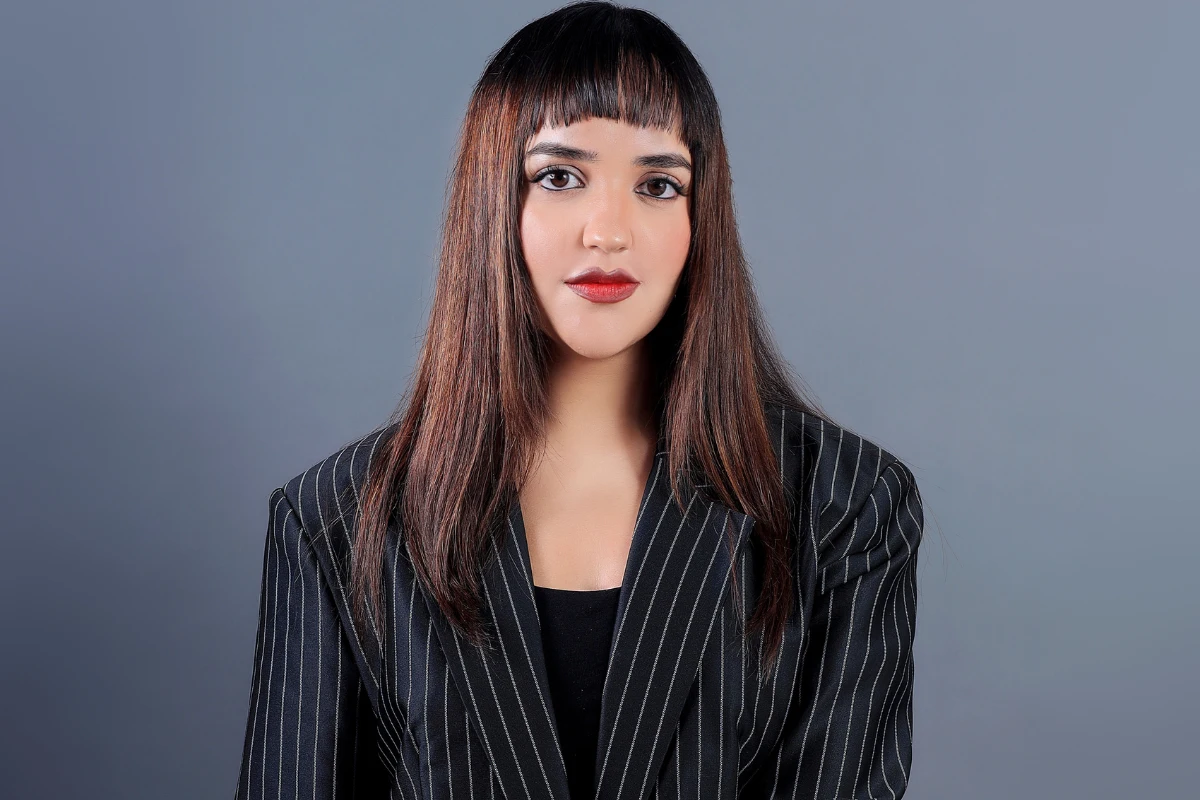
At the centre of this reversal is our cover star, Amna Al Qubaisi, who has built her career in a sport that has rarely made room for women, let alone Arab women. She became the first Emirati female racing driver, went on to claim two F1 Academy race wins, and this year became the first woman to race in the Pro class of Porsche Carrera Cup Asia with Team Jebsen. Named among TIME’s inaugural 100 Most Influential People in Sport just two weeks ago, Amna stands among a new generation of athletes shaping how the world sees women in sport.
Today’s woman does not ask us to imagine her as capable. She refuses the insult of the question altogether. Our Women in Motion to Watch interview series within this issue is proof of that narrative, bringing together women across racing, skateboarding, horseback archery, equestrian culture and creative industries who are moving through their fields with discipline, identity and self-possession.
Across the pages in the issue, that idea takes many forms. It appears in modest fashion stories built for movement, beauty edits shaped around the lives women actually lead, cultural essays on taste and visibility, travel pages for women whose worlds are always expanding, and interviews with those building, competing, creating and choosing their own pace.
This issue is for the woman behind the wheel, on the board, in the saddle, on the track, at the desk, in the airport, in the studio and in any room she was never expected to enter.
She is no longer part of the scenery.
She is behind the wheel of her own becoming.