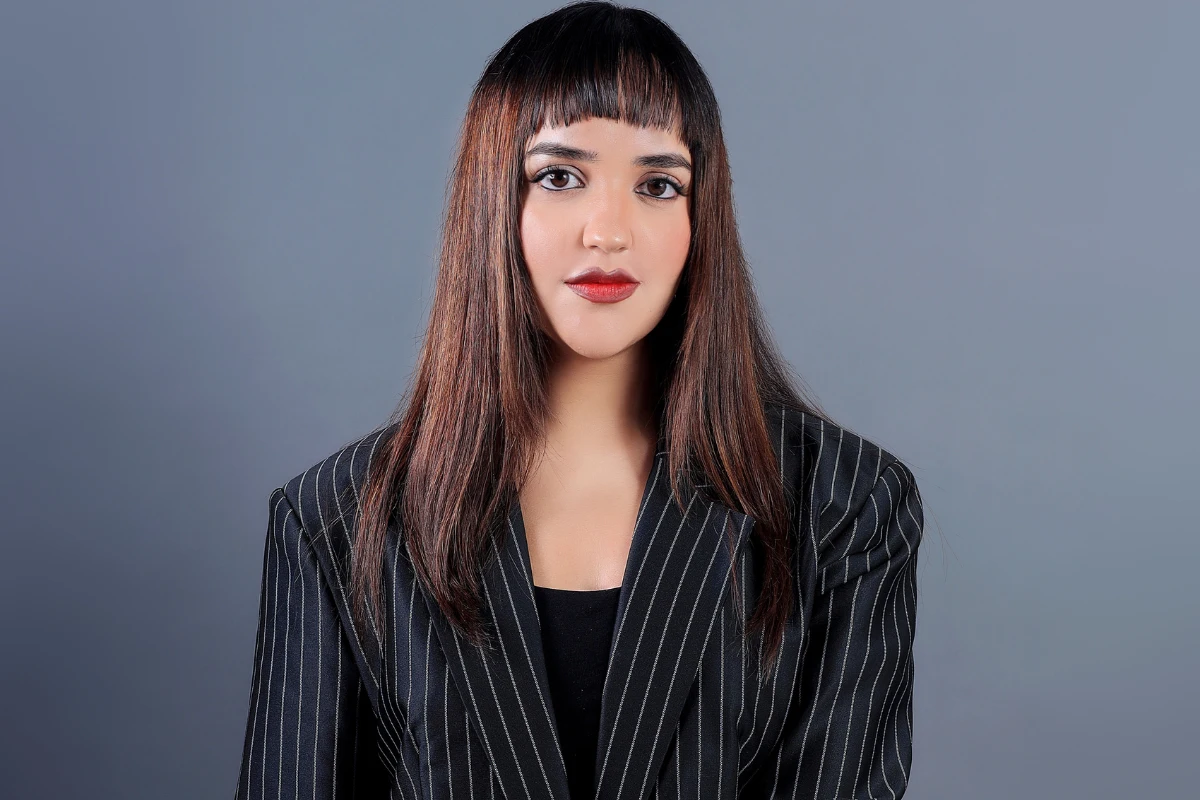
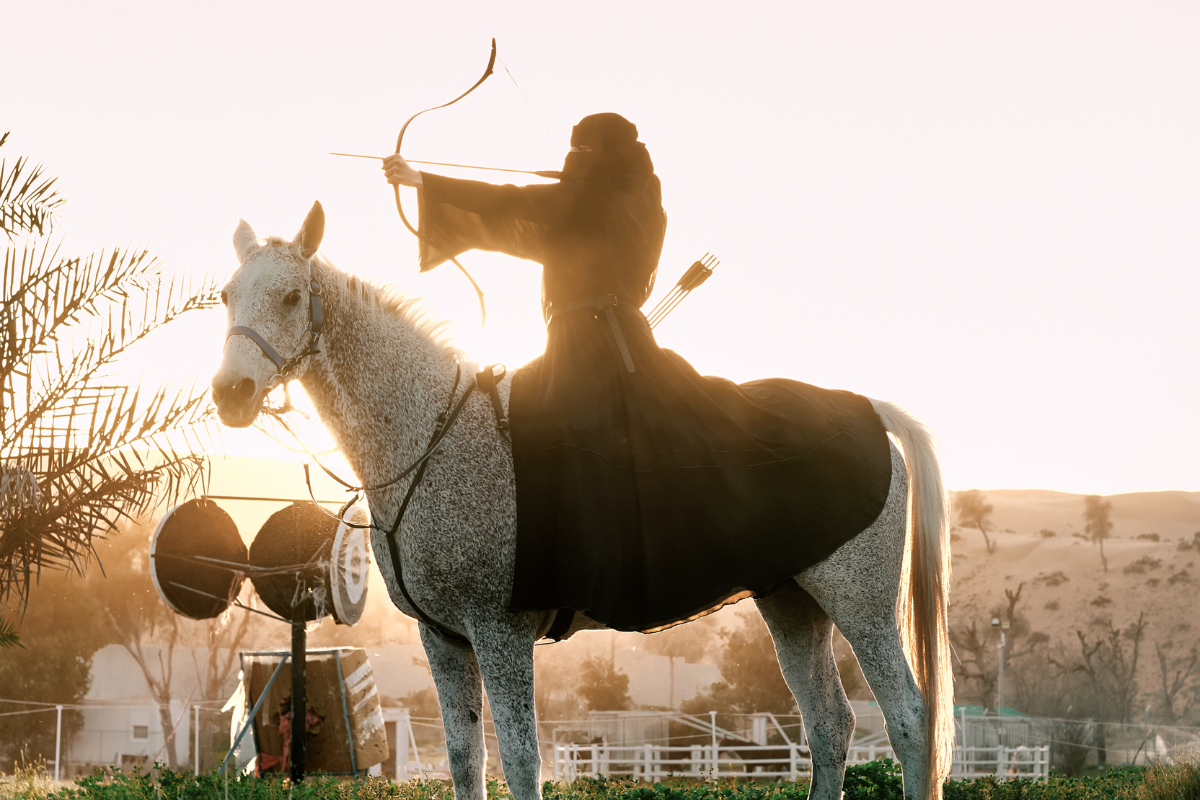
For Aamina Shifa, motion is both physical and internal. As a horseback archer, she understands movement through the speed of the horse, the focus of the bow and the discipline required to remain composed while everything around her is shifting. “Women are never static,” she says. “We are constantly evolving, expanding and redefining what we are capable of.”
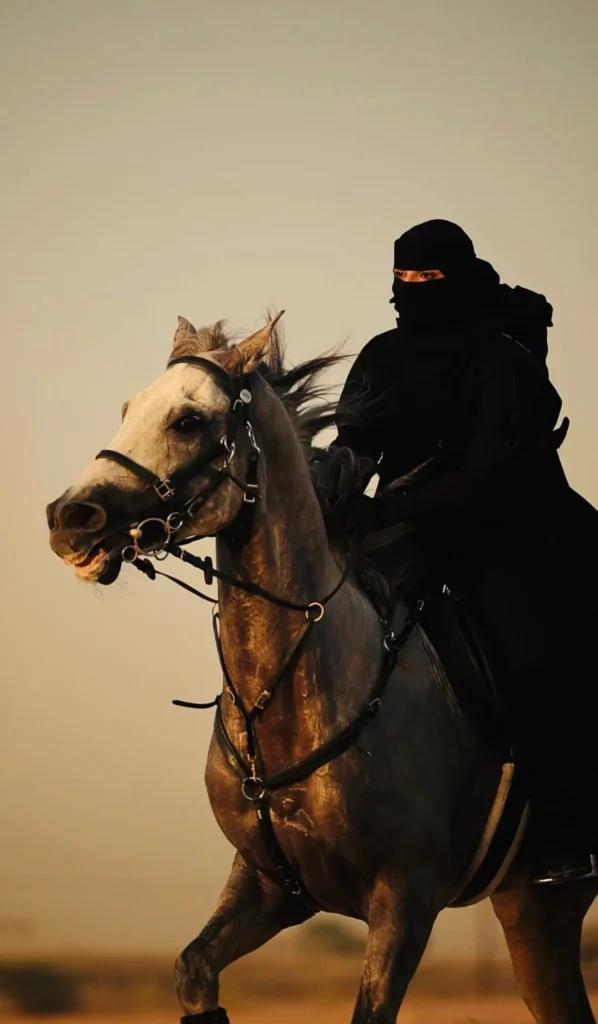
Her relationship with horses began in childhood, long before she had the language for what they offered her. She remembers them as a source of grounding, freedom, strength and healing, a presence that returned her to herself through different stages of life. Over time, riding led her to horseback archery, a discipline she describes as “everything coming together at once”: history, tradition, faith, physical skill and mental focus.
For Aamina, the practice carries a spiritual dimension. Horseback archery asks for control, but also surrender. “It is not only about skill,” she says. “It is about trust in yourself while everything around you is in motion.” In that space, the challenge becomes less about managing the outside world and more about quieting what is happening within.
Not many understand the structure it takes to be a horseback archer. Aamina often wakes around 5 AM and rides before the day begins, then moves into her work as a behaviour therapist supporting children with special educational needs. Alongside that, she is completing her Master’s, researching the connection between horses and their impact on children with additional needs. The overlap between the two worlds feels natural to her. Both require patience, sensitivity, nonverbal understanding and emotional consistency.
What people often miss, she says, is the discipline behind the image. From the outside, horseback archery can look instinctive, even effortless. In reality, it demands early mornings, physical training, consistency and a high level of self-regulation. “The most misunderstood part is the internal one,” she says. “The ability to regulate yourself under pressure and remain fully present when everything demands your attention at once.”
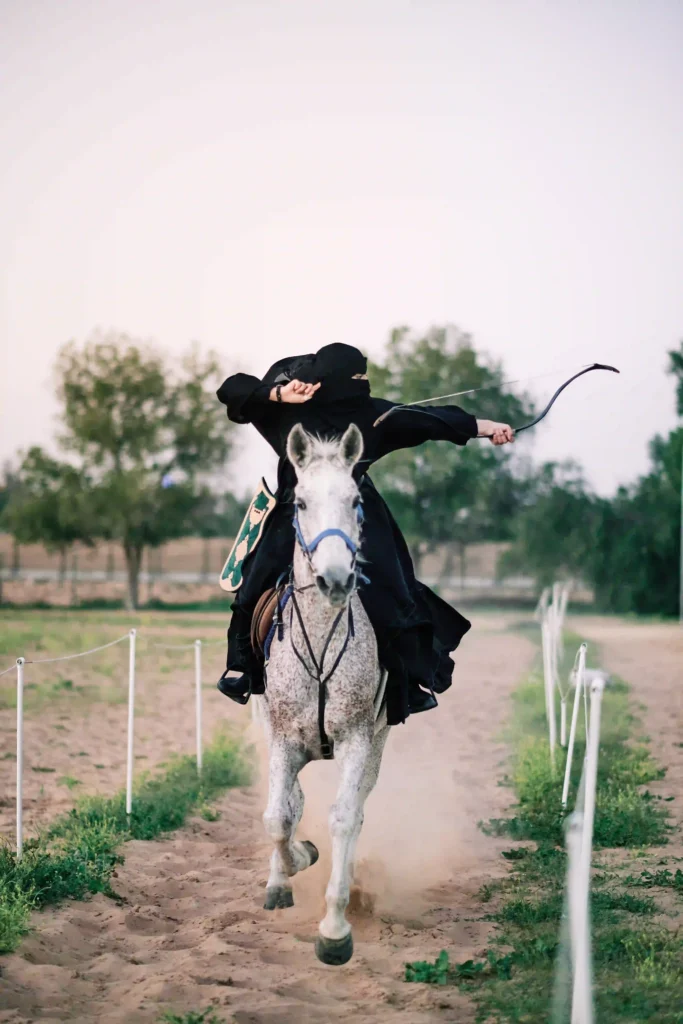
Her journey has also been shaped by visibility. Growing up, Aamina rarely saw women who looked like her in the spaces she wanted to enter. That absence stayed with her, until she began to understand how many of the limitations she had internalised were learned, rather than true. “For a long time, I believed that in order to belong in certain spaces, I had to conform,” she says. “I realised those limits were perceptions shaped by environment and expectation.”
Sharing her journey became a way to challenge that. The response from women who had also felt unseen made her understand the weight visibility can carry. “It creates permission for possibility,” she says.
What she hopes women take from her story is simple: identity and ambition do not need to sit on opposite sides. “You do not have to compromise who you are in order to pursue what you love,” she says. “Authenticity is not a barrier. It is a strength.”
This article appears in Soigné Middle East Issue 003, Setting The Pace.